Nepal is small on a map and big on the ground. Eight of the fourteen 8,000-metre peaks on the planet are inside its borders, plus the sub-tropical jungle that holds the last stable populations of greater one-horned rhinos, plus the birthplace of the Buddha, plus a culture that is equal parts Hindu and Tibetan Buddhist and is neither Indian nor Chinese in a way that becomes obvious about an hour after you land. Most visitors come for the trekking and discover the rest.
This is the top-level travel guide to Nepal — when to go, how to get there, what it costs, where to stay, and the things you need to know before booking a flight. Each major topic is its own deep-dive article linked throughout; start here for the map, follow links for the terrain.
In This Article
When to go
Nepal’s tourist year is structured around two main seasons that sit either side of the monsoon.
Autumn (late September to early December) is the prime window. Monsoon rains have cleared the air, mountain visibility is at its best, temperatures are pleasant at most elevations, and the festival calendar hits its peak with Dashain and Tihar through October and November. The first two weeks of October have the heaviest crowds and the highest prices; late October and all of November are arguably better. Cool down starts in early December.
Spring (March to May) is the second window. Rhododendron forests bloom at mid-elevation through April, making that month the prettiest for a mid-hills trek. Temperatures are mild. Pre-monsoon haze starts building by mid-May at lower elevations, but higher altitudes stay clear.
Winter (December to February) is cold but clear at altitude. Most trekking trails remain open at lower elevations; high passes (Thorong La, Renjo La, Larkya La) are snow-blocked. Lukla flights are surprisingly reliable during winter clear stretches. The Terai (Chitwan, Bardia) is ideal in winter — cool temperatures, excellent wildlife visibility.
Monsoon (June to mid-September) is the off-season for good reason. Leeches emerge below 2,500 m, landslides block roads, flights cancel at rates of 1-in-3 to mountain strips, and trails turn to mud. Exceptions: the rain-shadow regions of Upper Mustang and Upper Dolpo are dry through monsoon and actually ideal for visiting then.
Visa and entry
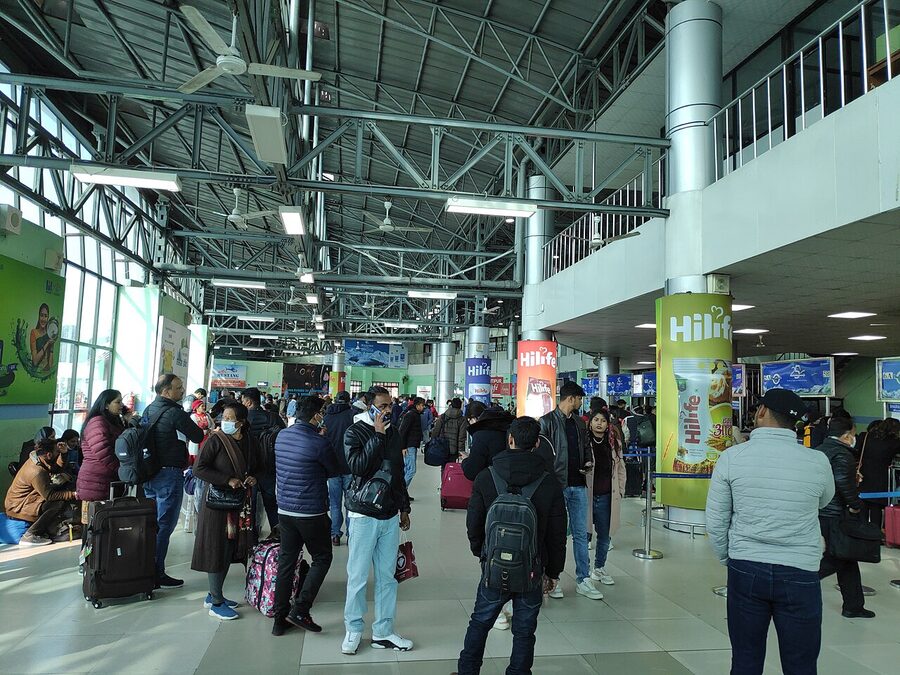
Most nationalities can get a visa on arrival at Tribhuvan International Airport in Kathmandu. Fees as of 2026:
- 15-day visa: USD $30
- 30-day visa: USD $50
- 90-day visa: USD $125
Bring USD cash in clean, undamaged bills (the immigration office rejects torn or heavily marked notes) and a passport photo. You can pre-register the visa application online at nepaliport.immigration.gov.np to shortcut one of the queues.
Indian nationals don’t need a visa. Chinese, Pakistani, Afghan, Iraqi, Zimbabwean, Syrian, Somalian and a few other nationalities need to apply in advance through a Nepali embassy — visa on arrival is not available.
Getting there
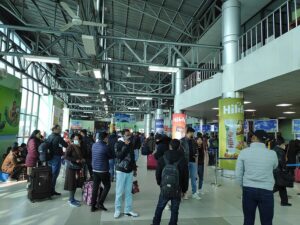
Tribhuvan International Airport (TIA) in Kathmandu is the main international entry point. A second international gateway — Gautam Buddha International Airport in Bhairawa near Lumbini — has been operating since 2022 but has minimal scheduled service. A third airport at Pokhara opened in 2023 and has been struggling to attract international routes.
The carriers that actually fly into Kathmandu in 2026:
- Qatar Airways (Doha hub) — typically best for long-haul connections
- Emirates (Dubai)
- Etihad (Abu Dhabi)
- Turkish Airlines (Istanbul)
- China Eastern and China Southern (Chinese cities)
- Nepal Airlines (Delhi, Bangkok, Kuala Lumpur, Doha, Hong Kong)
- IndiGo (Indian cities, budget option)
- Thai Airways (Bangkok)
- Singapore Airlines (via Bangkok)
Direct flights from Europe or North America don’t exist. Plan on one stop minimum, usually Middle East or India.
Moving around inside Nepal
Road travel in Nepal is slow. The highway network is narrow, follows river valleys, and suffers regularly from landslides in the monsoon. Getting between cities by bus or car takes 6-10 hours for distances a map would suggest are a 3-hour drive.
Domestic flights are the faster option for any trip that crosses the country. The main corridors are Kathmandu to Pokhara (25 min), Kathmandu to Lukla (35 min, weather permitting), Kathmandu to Nepalgunj (45 min, gateway to far-west), and Kathmandu to Bharatpur (25 min, gateway to Chitwan). The full breakdown of airlines, routes, costs, and the honest safety context lives in our domestic airlines guide.
Tourist buses (Kathmandu-Pokhara, Kathmandu-Chitwan) are comfortable, safer than local buses, and a sensible option when you have time. Greenline and Jagadamba are the main tourist-bus operators. NPR 1,500-2,500 per seat.
Where to go — the one-paragraph map
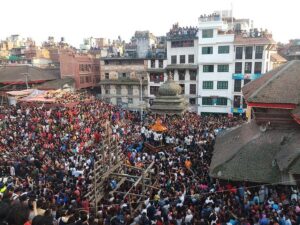
Kathmandu: the capital, the UNESCO-listed old city, three Durbar Squares, Boudhanath, Swayambhunath, Pashupatinath. Most visitors stay 2-3 days on arrival; a good trip gives it 4-5. See our Kathmandu guide.
Pokhara: the second city, a lakeside base for Annapurna-region treks. Quieter than Kathmandu, oriented around the lakeside tourist zone, good food and cafés.
Annapurna region: the most-trekked zone in Nepal. Short Poon Hill loops, 10-day Annapurna Base Camp treks, the 2-week Annapurna Circuit, peak climbs on Chulu and Singu Chuli.
Everest region (Solu-Khumbu): the EBC trek, Gokyo Lakes, Three Passes, the Tenzing-Hillary Airport at Lukla. Inside Sagarmatha National Park, a UNESCO World Heritage Site.
Langtang: the closest major trekking region to Kathmandu, quieter than Annapurna, rebuilding after the 2015 earthquake.
Manaslu, Mustang, Dolpo: the restricted-permit zones with the most dramatic Tibetan-Buddhist culture. Require specialist permits and agency bookings.
Chitwan and Bardia: the Terai national parks — jungle safaris, rhinos, tigers, Tharu villages. See our national parks guide.
Lumbini: the birthplace of the Buddha, a UNESCO site in the western Terai with monastic gardens and the Mayadevi Temple.
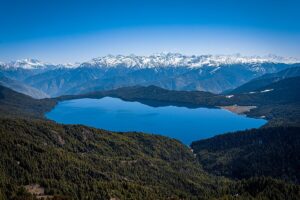
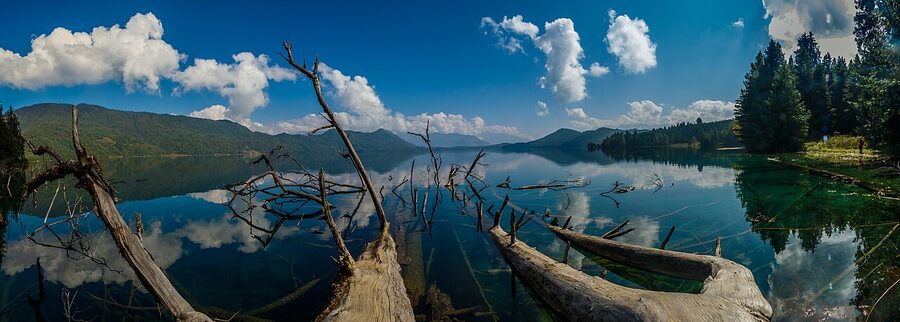
Western Nepal (Karnali, Rara, Jumla): remote and wild. Rara Lake is the flagship — see our Rara guide for the full trek itinerary.
What to actually do
Most visitors come for one of three things:
- Trekking: the main draw. See the trekking guide for a region-by-region breakdown. For peaks beyond walking, the trekking peaks guide covers the 27 NMA-permitted climbs.
- Wildlife safari: Chitwan and Bardia — rhinos, tigers, gharial, elephants, 500+ bird species.
- Cultural tourism: Kathmandu Valley’s seven monument zones, Lumbini, and the village tourism network in Gurung, Tamang, and Tharu communities.
Many trips combine all three: a week in Kathmandu and surrounds, a week trekking, a long weekend in Chitwan or Bardia. Three weeks gets you meaningful time in all three. Two weeks forces a trade-off.
Money and costs
Nepal uses the rupee (NPR). 2026 rates: USD 1 ≈ NPR 132, EUR 1 ≈ NPR 145, GBP 1 ≈ NPR 165. ATMs in Kathmandu, Pokhara, and the Terai towns work reliably and dispense up to NPR 35,000 per transaction with fees around NPR 500. Outside the major cities, ATMs are rare or nonexistent.
Typical daily costs (per person, 2026):
- Budget: NPR 2,500-4,000 ($19-30) — shared-room or hostel, local restaurants, local buses
- Mid-range: NPR 6,000-12,000 ($45-90) — 3-star hotels, tourist restaurants, occasional taxi
- Comfortable: NPR 12,000-25,000 ($90-190) — good hotels, private transfers, full-service trekking
- On trek: NPR 4,500-7,500 ($35-55) — teahouse plus meals plus guide-porter share
Cash is king outside the main tourist areas. Credit cards work at hotels and higher-end restaurants; nowhere else. Keep USD cash as fallback.
Food — the basics
Dal bhat (rice, lentils, vegetable curry) is the national dish and the standard meal on any trek. Momos (dumplings) are found everywhere. Newari food — the cuisine of the Kathmandu Valley — is the regional standout, with dishes like chatamari (rice-flour crepes), choila (spiced grilled meat), and yomari (stuffed dumplings). Thakali cuisine from the Kali Gandaki valley is a distinct and arguably finer strand, served across Nepal at Thakali-operated restaurants.
What to avoid: tourist-restaurant Italian food, “Continental breakfasts” at cheap hotels, tap water anywhere. Bottled water is universally available at NPR 30-50 per litre; refill stations with UV-filtered water exist in Thamel and Pokhara lakeside and save a pile of plastic.
Health and altitude
The major health concerns in Nepal are altitude sickness, water-borne illness, and food hygiene. Not a lot else.
Altitude: any trek above 3,500 m puts you in acute mountain sickness territory. Standard symptoms (headache, nausea, sleeplessness) typically appear after 48-72 hours at altitude. The rule is: if symptoms get worse and don’t resolve with a rest day, descend. Diamox (acetazolamide) is used prophylactically by many trekkers — buy it in Kathmandu pharmacies over the counter.
Water: never drink tap water. Bottled or properly filtered/UV-treated only. Boiled tea and coffee are fine.
Food hygiene: stick to cooked food in the early days to let your stomach adjust. Street food is generally fine if the stall is busy (high turnover means fresh food).
Vaccinations: Hepatitis A and Typhoid are universally recommended. Japanese Encephalitis if you’re going to the Terai in monsoon. Rabies pre-exposure if you’re spending more than 3 weeks in rural areas (there are stray dogs).
Travel insurance: non-negotiable. Must cover helicopter evacuation up to 6,000 m for trekking. World Nomads and IMG Global both have Nepal-appropriate policies; most standard European insurances do not.
Safety
Nepal is genuinely safe for foreign travellers. The crime rate against tourists is low by South Asian standards, violent crime is rare, and even women solo-travelling typically report fewer hassles than in neighbouring India. The main safety concerns are environmental (altitude, weather, flight cancellations) rather than criminal.
The exceptions:
- Mountain trekking has inherent risk — avalanches, falls, altitude sickness. See our peaks guide for honest context on this.
- Domestic aviation has a worse-than-average safety record — see the airlines guide.
- Road travel is the statistically most-dangerous thing you’ll do in Nepal. Hill roads, old buses, night driving — avoid overnight buses and use tourist-category transport between cities.
- Political demonstrations happen periodically in Kathmandu. They’re rarely violent but can snarl traffic and close roads for a day.
A realistic two-week Nepal plan
For a first-time visitor with two weeks, a workable plan:
- Days 1-3: Kathmandu. Old city, Durbar Squares, Boudhanath, Swayambhunath. Let the altitude adjust you.
- Days 4-5: Bus or fly to Pokhara. Lakeside, paragliding, Sarangkot sunrise.
- Days 6-13: Annapurna Base Camp trek (8 days round-trip from Pokhara, including the drive to and from Nayapul). Or swap for 10-day Everest Base Camp if the flights cooperate and you prefer Everest — that adds risk to your schedule.
- Day 14: Back to Kathmandu, buffer day for flight delays, fly out.
With three weeks: add a 3-night Chitwan extension after the trek. With four: add Lumbini and one village-tourism stay.
Pre-trip checklist
- Passport valid for 6+ months from entry date
- Travel insurance with helicopter evacuation cover
- USD cash for visa on arrival ($30/$50/$125 depending on duration)
- Passport-size photo for visa
- Hepatitis A + Typhoid vaccinations (and rabies pre-exposure if doing rural trekking)
- Trekking or non-trekking boots depending on trip type (trekking boots broken in minimum 100 km before arrival)
- International flights booked at least 6 weeks out for peak season (Oct-Nov)
- Domestic flights can be booked in Kathmandu or through your trekking agency; no need to pre-book
- Diamox (altitude medication) — buy in Kathmandu or bring from home
- Power adapter (Nepal uses Type C, D, M — a universal traveller adapter covers it)
What to read next
Once you’ve got the shape of a trip in mind, the specific deep-dives pick up where this overview stops:
- Kathmandu Travel Guide — where to stay, what to see, what to skip in the capital
- Trekking in Nepal — full routes-permits-seasons guide
- Nepal National Parks — all 13, with entry fees and wildlife reality
- Domestic Airlines — routes, fares, fleets, safety context
- NMA Trekking Peaks — the 27 peaks you can climb on an NMA permit
- Nepal’s UNESCO World Heritage Sites — all 4 of them (not 10, despite the brochures)
- Village Tourism — homestay programmes and community tourism
- Rara Lake — a worked example of a remote-region trip
Nepal rewards careful planning more than spontaneous travel does. The logistics reward research, the trekking season demands booking windows, the flight schedules need buffer days. Do the planning up front and the country does the rest.