Nepal has a separate category of mountain that exists between trekking and mountaineering — the “trekking peak.” These are lower summits, between roughly 5,500 m and 6,584 m, that you can climb with a guide, basic technical skills, and a permit from the Nepal Mountaineering Association rather than the Ministry of Tourism. There are 27 of them currently open, and they’re the most realistic way a fit trekker without a serious climbing background can actually stand on top of a Himalayan peak.
This guide covers all 27 NMA trekking peaks, what’s involved in climbing them, current permit fees, which ones are actually beginner-friendly versus which are technical climbs that happen to have a permit discount, and how to combine them with a standard trek so you get something more than just a walk to the tea house.
In This Article
- What actually counts as a trekking peak
- The 27 NMA peaks
- Group A (higher-altitude and technical)
- Group B (more accessible)
- Permit fees (2026)
- The five most-climbed trekking peaks
- Island Peak (Imja Tse) — 6,189 m
- Mera Peak — 6,476 m
- Lobuche East — 6,119 m
- Chulu West — 6,419 m
- Pisang Peak — 6,091 m
- The easier options — genuine entry-level peaks
- What gear you actually need
- Timing — spring vs autumn
- How to actually plan one of these
- Combining with a trek
- The honest reality
What actually counts as a trekking peak
The term “trekking peak” is a Nepal-specific legal category, not a difficulty rating. The Nepal Mountaineering Association (NMA) manages a list of 27 peaks under 6,584 m that can be climbed on their permit system, which is simpler and cheaper than the Ministry of Tourism permit required for expedition peaks above that threshold.
What this means practically:
- Trekking peaks require an NMA permit, a registered climbing guide, and basic mountaineering gear. Climbing grades range from F (easy) to AD (fairly difficult) under the French alpine system. Most require a single day of actual climbing on top of a standard trek.
- Expedition peaks (6,585 m and above, including all 14 eight-thousanders) require a Ministry of Tourism permit, which costs substantially more, requires a larger support team, and is a different kind of trip entirely.
The “trekking peak” name is misleading if you take it literally. Some NMA peaks are genuinely easy — Yala Peak and Tharpu Chuli are basically just steep walking at altitude. Others, like Cholatse or Kusum Kangaru, are properly technical mountaineering that happen to have a permit discount. Don’t assume an NMA listing means it’s approachable.
The 27 NMA peaks
The NMA splits its 27 peaks into two administrative groups that roughly map to difficulty and altitude. Group A is the harder, generally higher set (mostly 6,000 m+ with technical sections); Group B is the easier/lower set.
Group A (higher-altitude and technical)
- Mera Peak — 6,476 m — Everest region. Technically the highest NMA peak. Long walk-in from Lukla through Zatrwa La; the actual climb is glacier travel and a steep summit headwall. Not technical but very long and high.
- Kusum Kangaru — 6,367 m — Khumbu. Technical mixed climbing, one of the hardest on the list. AD+ grade.
- Kwangde — 6,011 m — Khumbu. Serious technical climb despite the relatively low altitude; steep ice and rock.
- Cholatse — 6,440 m — Khumbu, dramatic summit. TD grade technical routes. Genuinely hard.
- Lobuche East — 6,119 m — Khumbu, near EBC. PD+ grade, most popular technical entry point for experienced trekkers.
- Ombigaichan — 6,340 m — Khumbu. Less climbed, remote.
- Nirekha — 6,069 m — Khumbu. Technical.
- Chulu West — 6,419 m — Annapurna Circuit. Long approach, glacier climb, PD+ grade.
- Chulu East — 6,584 m — Annapurna. Same massif as Chulu West, slightly harder summit block.
- Urkinmang — 6,151 m — Langtang. Remote.
- Yala Peak — 5,732 m (included in Group A despite the low altitude because of its Langtang location designation).
Group B (more accessible)
- Island Peak (Imja Tse) — 6,189 m — Khumbu. The single most popular NMA peak in Nepal and the standard EBC-plus-peak combination. PD grade, one serious day on the summit ridge with fixed ropes.
- Pokalde — 5,806 m — Khumbu. Easier than Island Peak, often used as an acclimatisation climb on an Island Peak itinerary. F/PD grade.
- Kongma Tse (Mehra) — 5,849 m — Khumbu. Rarely climbed alone, sometimes paired with Pokalde.
- Pisang Peak — 6,091 m — Annapurna Circuit. Sits directly above Pisang village on the circuit route. PD grade, a single long summit day.
- Chulu Far East — 6,059 m — Annapurna. Easier than Chulu East/West, good combination with an ACT trek.
- Singu Chuli (Fluted Peak) — 6,501 m — Annapurna Sanctuary. PD+, technical ridge.
- Hiunchuli — 6,441 m — Annapurna Sanctuary. Historically tricky, has had route variations close and reopen.
- Tharpu Chuli (Tent Peak) — 5,663 m — Annapurna Base Camp. F/PD grade, probably the easiest 5,000+ NMA peak. A steep snow walk rather than a climb.
- Mardi Himal — 5,587 m — Annapurna. Officially a trekking peak but most “Mardi Himal” trips stop at the 4,500 m viewpoint rather than the actual summit.
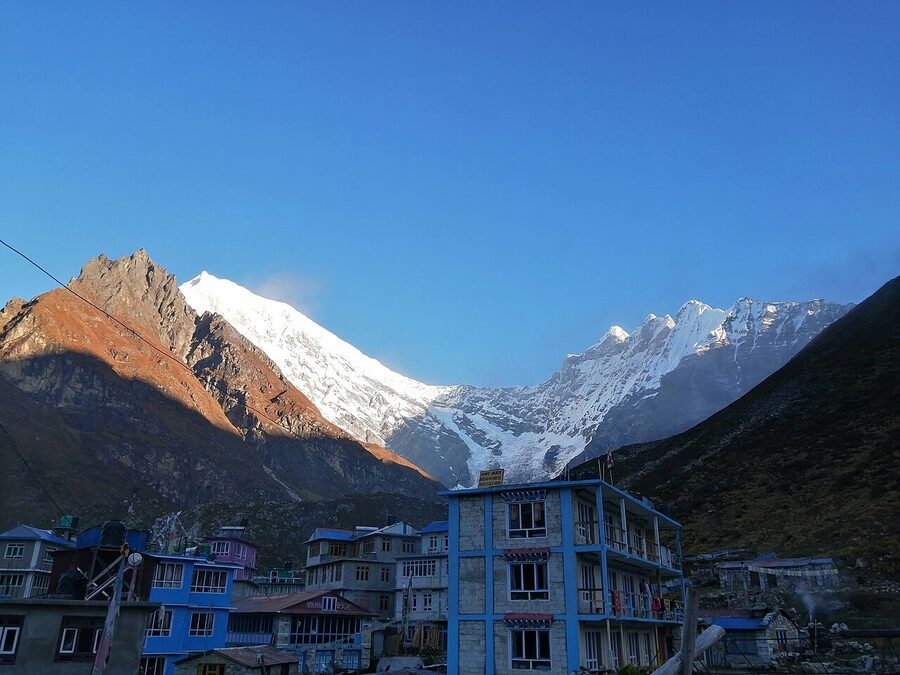
- Naya Kanga (Ganja La Chuli) — 5,846 m — Langtang. Easy-ish but committed; the approach is serious.
- Paldor — 5,896 m — Ganesh Himal. Remote, rarely climbed.
- Yubra Himal — 6,035 m — Langtang. Remote.
- Yangri — 6,035 m — Langtang. Remote.
- Phurbi Ghyachu — 6,637 m (top border of the category).
- Gyalzen Peak — 6,151 m — Rolwaling.
- Pharchamo — 6,273 m — Rolwaling. Combined with the Tashi Lapcha pass trek.
- Ramdung — 5,925 m — Rolwaling.
Permit fees (2026)
NMA fees were restructured in 2023 and apply across the board. Fees are charged per group (not per person) up to 7 climbers, plus an additional fee per person above that. Seasons are: Spring (Mar-May), Autumn (Sep-Nov), Winter & Monsoon (Dec-Feb & Jun-Aug).
| Group | Spring | Autumn | Winter/Monsoon |
|---|---|---|---|
| Group A (1-7 pax) | $400 | $200 | $100 |
| Group A additional pax | $55 each | $27 each | $14 each |
| Group B (1-7 pax) | $250 | $125 | $70 |
| Group B additional pax | $40 each | $20 each | $11 each |
Three qualifiers before you use these numbers:
- Garbage deposit: $500 refundable deposit against trash removal on top of the climbing fee. You get it back if your team hauls out everything it brings in, which a good operator will. Skip the operator who glosses over this fee — the deposit is what funds Khumbu garbage management.
- Peak climbing insurance: required for all NMA permits. Your operator typically arranges a local porter/guide insurance through the Trekking Agencies Association of Nepal. Budget $100-150 per climb.
- The permit fee is a small part of the total cost. A guided Island Peak climb with a local operator runs $2,400-$3,500 per person fully catered (15-20 day trip including Everest Base Camp). The permit is ~$50-70 of that. Don’t try to save money on the permit; it’s not the lever.
The five most-climbed trekking peaks
27 peaks on the official list, but the reality is that about 80% of trekking-peak climbs in Nepal happen on five mountains. These are the ones with established infrastructure, known route information, and operators who run them regularly.
Island Peak (Imja Tse) — 6,189 m
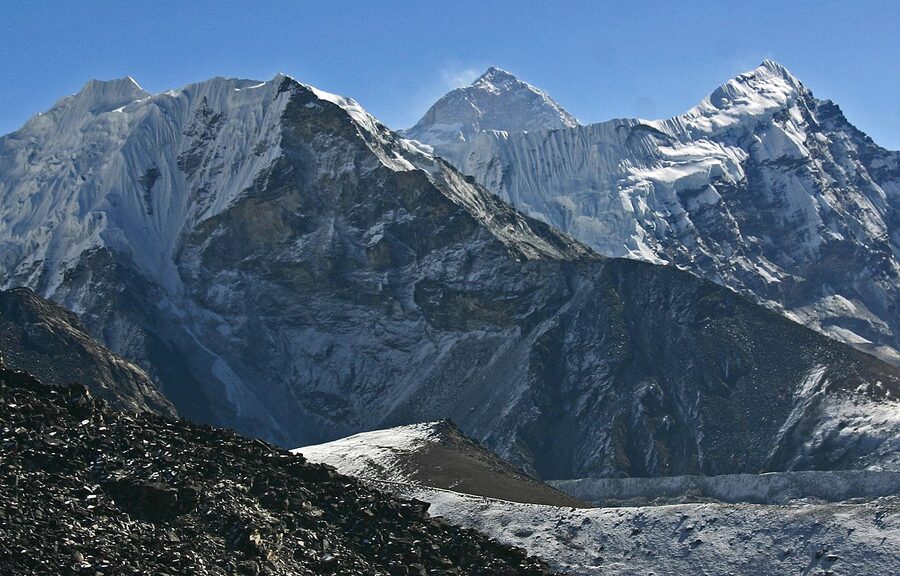
The single most popular NMA peak. Combined with an Everest Base Camp trek, it gives you something to climb at the end of a walk most people take anyway. The summit day is long — a 2 AM start from base camp, six to eight hours of glacier travel and fixed-rope climbing, then back down — but the technical difficulty on the normal route is moderate (PD grade). About 40% of attempts summit; weather and altitude are the usual reasons they don’t.
Typical trip: 15-18 days including EBC. Cost with a good operator: $2,500-$3,500 per person. Best season: mid-April to late May, or late September through early November.
Mera Peak — 6,476 m
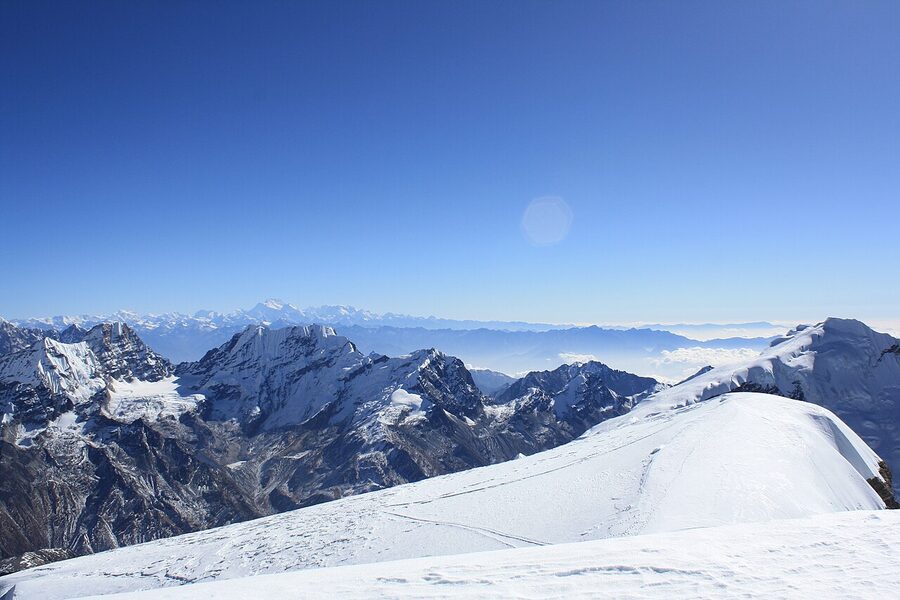
The highest of the NMA trekking peaks and often described as “non-technical.” That framing is true for the route but wildly misleading about the experience. Mera is a full altitude-and-endurance objective — the standard approach from Lukla takes two weeks with a summit day that starts around 1 AM and tops out at 6,476 m. There are no fixed ropes to clip into, just a long snow slope that you have to have the fitness and acclimatisation to walk up.
Summit success rate is actually higher than Island Peak (~60-70%) partly because attempts are fitter trekkers who self-select, and partly because the technical difficulty genuinely is lower. Expect $2,600-$3,700 on a full package, 18-21 days.
Lobuche East — 6,119 m
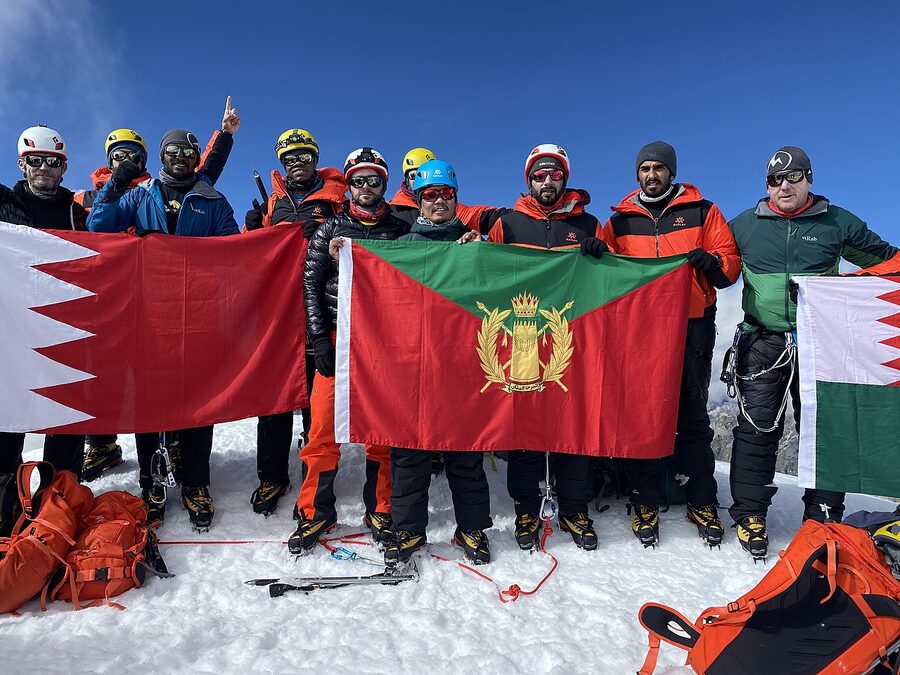
The “proper mountaineering” option for people doing an EBC trek. Lobuche is technical enough (PD+, one pitch of steep ice on the summit ridge) that it’s not beginner territory, but the altitude is lower than Island Peak and the views are arguably better — it sits right next to Everest Base Camp and you look straight across at Pumori.
Most operators won’t take clients on Lobuche without previous glacier experience or prior completion of Island Peak. Budget $2,800-$3,900.
Chulu West — 6,419 m
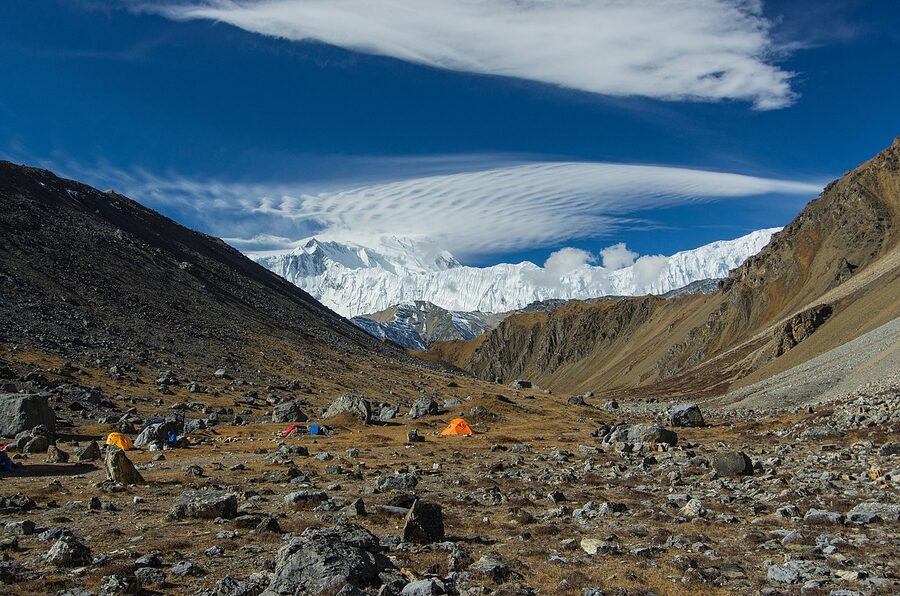
The best trekking peak on the Annapurna side. Long 22-day package combining the Annapurna Circuit with a climb up the Chulu massif. More committed than the Khumbu options because the ascent involves glacier travel with crevasse risk; a rope team setup is mandatory. PD+ grade on the normal route.
Less-crowded than any of the Everest-region peaks. If you’ve done the Circuit before and want to come back for something with more teeth, this is it.
Pisang Peak — 6,091 m
Sits directly above Pisang village on the Annapurna Circuit, which makes it one of the most convenient NMA peaks to combine with a trek. Single long summit day from a high camp at 5,200 m. The final section is a moderately angled snow slope with fixed ropes in the sketchier bits; PD grade. About 50% of attempts summit.
The easier options — genuine entry-level peaks
If you’ve done a Himalayan trek, feel confident on steep snow, and want to stand above 5,500 m without signing up for the technical end of the spectrum, these are the genuine beginner peaks:
- Tharpu Chuli (Tent Peak) — 5,663 m: accessed from Annapurna Base Camp. Essentially a steep snow walk with crampons and an ice axe; no roped climbing on the normal route. Good fitness and basic self-arrest practice are enough.
- Yala Peak — 5,732 m: Langtang. Same category — steep snow, some fixed rope on the final 30 m. Combines with the standard Langtang Valley trek for a relatively short 10-12 day total trip.
- Mardi Himal — 5,587 m: Annapurna. Technical on the proper summit but most “climbs” end at the 4,500 m viewpoint.
- Pokalde — 5,806 m: Khumbu. Easiest technical NMA peak, often used as a warm-up for Island Peak.
A Tent Peak or Yala climb is the realistic first move for a trekker who wants to start in this category. The grade is F (easy), the packages cost $1,800-$2,400, and you learn the gear and the altitude in a low-consequence environment.
What gear you actually need
Your operator will provide most climbing hardware on the peak itself (rope, fixed anchors, sometimes crampons and harness). What you need to bring or rent in Kathmandu:
- Double boots (La Sportiva Nepal Evo, Scarpa Phantom, Kailas Summit — any rigid 2-boot insulated system suitable for -20°C temps). Rent in Thamel for $8/day.
- Mountaineering crampons: 12-point, suitable for your boots. Rent for $3-4/day.
- Ice axe: 55-60 cm straight. Rent $2/day.
- Harness + slings + carabiners: operator-provided on most packages.
- -20°C sleeping bag: bring or rent ($3/day).
- Sunglasses (CAT 4): non-negotiable above 5,000 m. Sun glasses that aren’t CAT 4 will not protect you from snow blindness. Buy quality; rent is risky.
- Helmet: operator-provided.
- Expedition down jacket (800+ fill, hooded). Rent $5/day.
Renting in Thamel is genuinely fine for boots, crampons, ice axe, down jacket. What you should own (or buy in Kathmandu): your own sunglasses, your own baselayers, your own high-quality socks, and any medication. The rental hoods on down jackets fit questionably, so if you’re doing this more than once, own the jacket.
Timing — spring vs autumn
Spring (mid-April to late May) is the classic climbing season. Warmer temperatures, settled weather after the winter, routes in condition. Climbing camps are full; Island Peak can have 40+ people on a summit push.
Autumn (late September to early November) is arguably better for conditions — crisper air, stable weather, less crowded. Temperatures are colder but the windows are more reliable. If you can pick, go in the first half of October. The summit attempts that get shut down by weather are more likely to get a second window.
Winter (December-February) technically works on a few of the lower peaks but is serious cold and short days. Monsoon (June-August) is right out — cloud cover, precipitation, avalanche risk all peak.
How to actually plan one of these
Almost everybody books these as a package with a Kathmandu-based operator. Walk-up / solo climbs on NMA peaks are not really done — the permit system requires a registered guide and a minimum group size for most peaks. Direct book is fine if you have a climbing background and want independence; realistically a package is the sensible default.
A reasonable 2026 package price range:
- Tent Peak or Yala: $1,800-$2,400
- Island Peak (with EBC): $2,500-$3,500
- Mera Peak: $2,600-$3,700
- Lobuche East (with EBC): $2,800-$3,900
- Chulu West (with ACT): $2,700-$3,600
That includes permits, guides, insurance, porters, meals on the mountain, teahouse lodging on the trek portion, airport pickup, and Kathmandu-Lukla flights. What’s not included: your international flights, personal gear, tips (expect $200-300 split across the team), and any extension days due to weather.
The single biggest decision is which operator. Avoid anyone with prices more than 20% below the range above — they’re cutting on guide quality, insurance, or garbage-deposit compliance. Look at the Summit Certificates the operator can show for the peak (the NMA issues these for successful climbs), their gear inspection thoroughness, and whether they’re willing to discuss turnaround decisions honestly.
Combining with a trek
Most people do a trekking peak as a bolt-on to a trek rather than a standalone climb, because the acclimatisation schedule needs at least 10 days of walking at altitude before a summit push. The natural pairings:
- EBC + Island Peak: 16-18 days. The classic. You get Everest Base Camp and a summit.
- EBC + Lobuche East: 18-20 days. Technical, experienced-climber version of the above.
- Mera + Amphu Lapcha + Island Peak: 24-28 days. Serious — two peaks and a high pass.
- Annapurna Circuit + Chulu West: 22-24 days.
- ABC + Tent Peak: 12-14 days. The easiest full package.
- Langtang + Yala: 10-12 days. The shortest real NMA peak trip.
For background on the flights and access logistics that determine which of these is practical from your schedule — see our domestic airlines guide — and for the broader context of Nepal’s parks (where most of these peaks live) see the national parks overview.
The honest reality
Nepal trekking peaks are a real thing — they’re proper mountains, the altitudes are genuine, and summit days are hard. But they’re also achievable for fit people who are willing to train for 6 months, hire a good operator, and respect the altitude. Summit success rates on the accessible peaks are about 60-70%. The 30-40% that don’t summit are usually weather-affected — not lack of fitness.
Don’t romanticise them as “mini-expeditions” — they’re their own thing. A Tent Peak climb isn’t a step toward Everest; it’s a satisfying two-week project in its own right. Pick a peak that matches what you actually want from the trip (views, technical challenge, remoteness, combined with a specific trek), not what sounds most impressive when you’re back home.