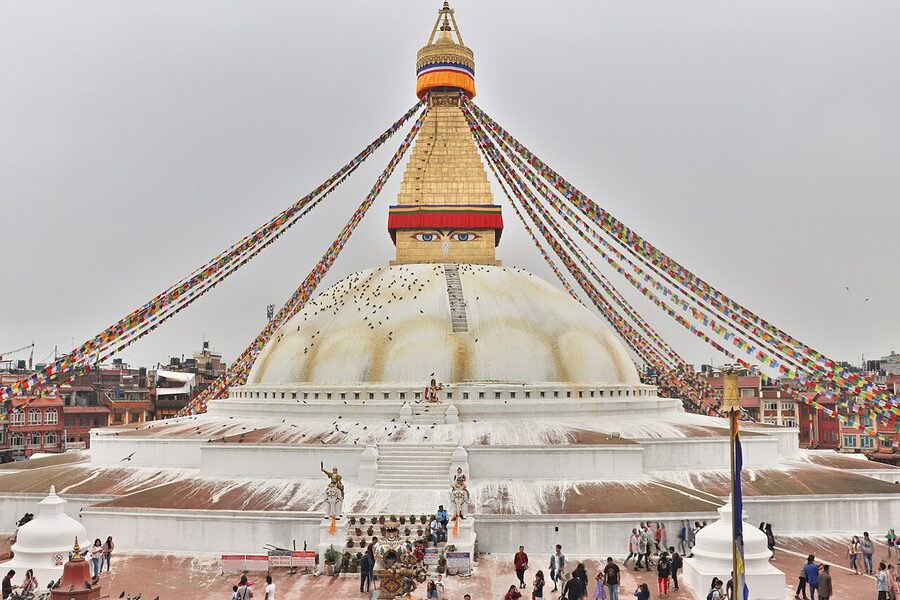
Nepal has something like 50 officially observed festivals on its Hindu-Buddhist calendar, plus dozens more regional ones. A country where the majority Hindu population and the Buddhist minority share monasteries, saints, pilgrimages, and sometimes the same rituals produces a festival schedule that’s genuinely dense. Landing in Kathmandu during Dashain or Indra Jatra is a completely different experience from landing in April.
This guide covers the festivals that matter to travellers — when they fall, what actually happens, and whether they’re worth timing a trip around.
In This Article
- The big three — Dashain, Tihar, and Indra Jatra
- Dashain (September–October, 15 days)
- Tihar (October–November, 5 days)
- Indra Jatra (September, 8 days)
- Major festivals at a glance
- Mani Rimdu — the trekking-trail festival
- Bisket Jatra — for Bhaktapur
- Festivals by region
- Should you plan a trip around a festival?
- Etiquette for foreign travellers
The big three — Dashain, Tihar, and Indra Jatra
Dashain (September–October, 15 days)
The single biggest Hindu festival in Nepal, and a national shutdown on a scale westerners aren’t prepared for. Government offices close for up to 10 days, families travel home from cities, and Kathmandu empties by about Day 7.
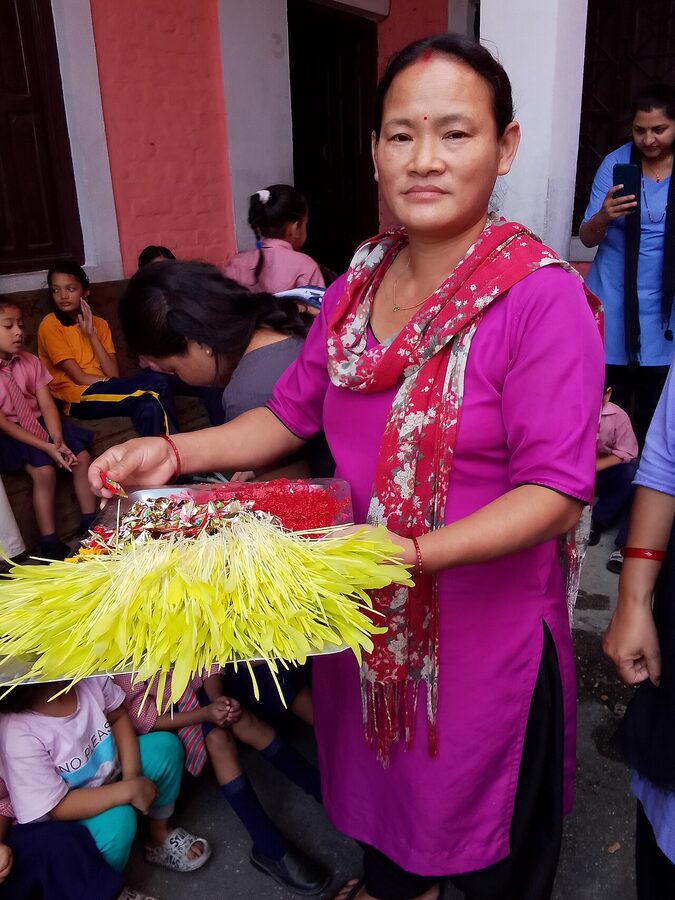
What happens: Dashain celebrates the goddess Durga’s victory over the buffalo demon Mahishasura. The first nine days (Navaratri) are smaller observances; Day 10 (Vijaya Dashami) is the main event, where elders apply tika (red vermilion paste and rice) to the foreheads of younger family members, give blessings, and slip them money.
For travellers: a paradox. Kathmandu feels depopulated and slightly apocalyptic (shops closed, traffic gone), but you can visit the Durbar Squares without crowds. Trekking trails are fine but teahouse staffing can be thin. The Dashain bird-kite competitions across Kathmandu rooftops are a visual highlight. Timing a trip for the final 3 days of Dashain (Days 8-10) plus immediately after gives you a genuine cultural experience. Timing a trip for the full 15 days means half the country is shut.
2026 dates: approximately 12-28 October (exact dates shift with lunar calendar).
Tihar (October–November, 5 days)
The “festival of lights” — Nepal’s version of Diwali, but with a distinct twist involving worship of animals. Each of the five days honours a different animal: crows (as messengers of the underworld), dogs (as loyal companions), cows (as Lakshmi’s earthly form), oxen (as farming partners), and finally brothers on Bhai Tika (day 5).
What happens: houses and courtyards lit with rows of clay oil lamps (diyo) at sunset each evening. Rangoli patterns painted on doorsteps. On Kukur Tihar (day 2), Kathmandu’s street dogs get marigold garlands and red tika on their foreheads, and people feed them. On Bhai Tika (day 5), sisters give their brothers tika and a braided sacred thread; brothers give back gifts and money. It’s warm, familial, and visually spectacular.
For travellers: excellent. Less shutdown than Dashain, more visible ritual, and the Kathmandu Valley looks stunning at night. Worth timing a trip around.
2026 dates: approximately 8-12 November.
Indra Jatra (September, 8 days)
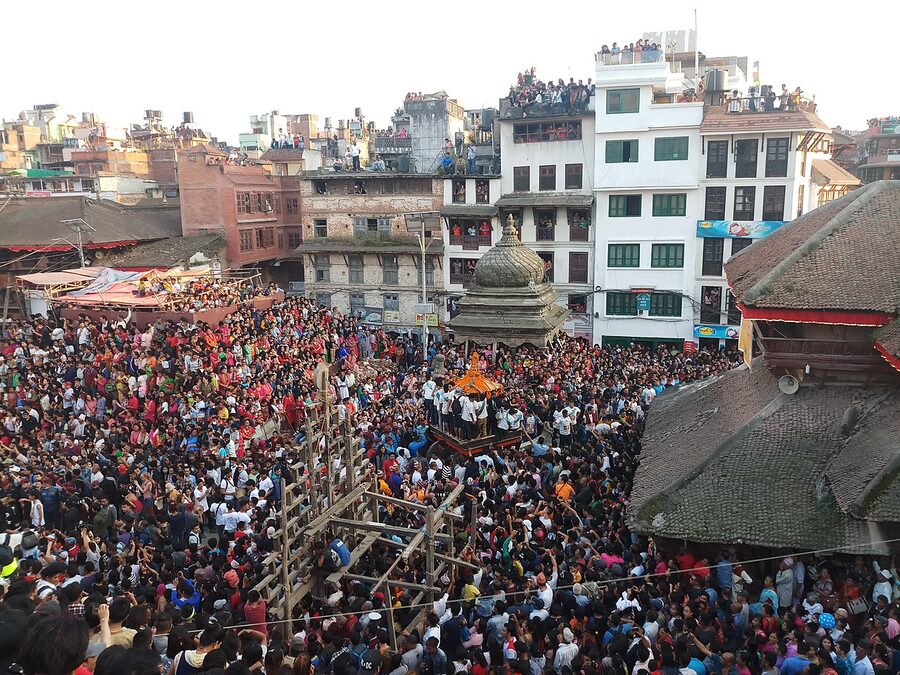
Kathmandu-specific. The biggest festival in the Kathmandu Valley — a week of chariot processions, masked dances, religious ceremonies, and street life that transforms Durbar Square from a tourist attraction into the ritual centre of a living city.
What happens: the Kumari (the Kathmandu Valley’s “living goddess,” a young girl chosen for the role) is taken out of her palace on a chariot drawn by teams of men. The Lakhe — a fierce red-masked demon-hunter — dances through the streets. Sweet rice-beer (chhaang) flows from a wooden spout on Durbar Square on specific days. The Kathmandu king (in historical times) would receive a blessing from the Kumari that validated his rule for the year.
For travellers: the best week to be in Kathmandu if you can time it. The atmosphere is electric and the tourist stops suddenly make sense as living religious spaces rather than historical exhibits.
2026 dates: approximately 6-13 September.
Major festivals at a glance
| Festival | When (approx) | Duration | Notes |
|---|---|---|---|
| Maghe Sankranti | 14-15 January | 1 day | Winter-solstice harvest festival, pilgrimage to riverbanks |
| Losar (Tibetan New Year) | February-March | 3 days | Celebrated in Tibetan Buddhist communities — Boudhanath is the epicentre |
| Holi | March | 1 day (Terai) / 2 days (hills) | The colour festival. Smaller than India’s version but genuine |
| Chaitra Dashain | March-April | 1 day | Small version of Dashain, less significant |
| Nepali New Year | 13-14 April | 1 day | Bisket Jatra in Bhaktapur is the main celebration |
| Bisket Jatra | Mid-April | 4 days | Bhaktapur. Huge tug-of-war with wooden chariot. Worth a trip. |
| Buddha Jayanti | April-May | 1 day | Buddha’s birthday. Lumbini + Boudhanath celebrations. |
| Janai Purnima | August | 1 day | Brahmins replace their sacred thread; Gosaikunda pilgrimage |
| Gai Jatra | August | 1 day | “Festival of cows” — Kathmandu Valley, memorial for the dead |
| Teej | August-September | 3 days | Women’s festival of devotion — red saris everywhere |
| Indra Jatra | September | 8 days | Kathmandu. Major festival. |
| Dashain | September-October | 15 days | Biggest Hindu festival |
| Tihar | October-November | 5 days | Festival of lights |
| Mani Rimdu | October-November | 3 days | Tengboche monastery (Khumbu) — Sherpa Buddhist masked dances |
Mani Rimdu — the trekking-trail festival
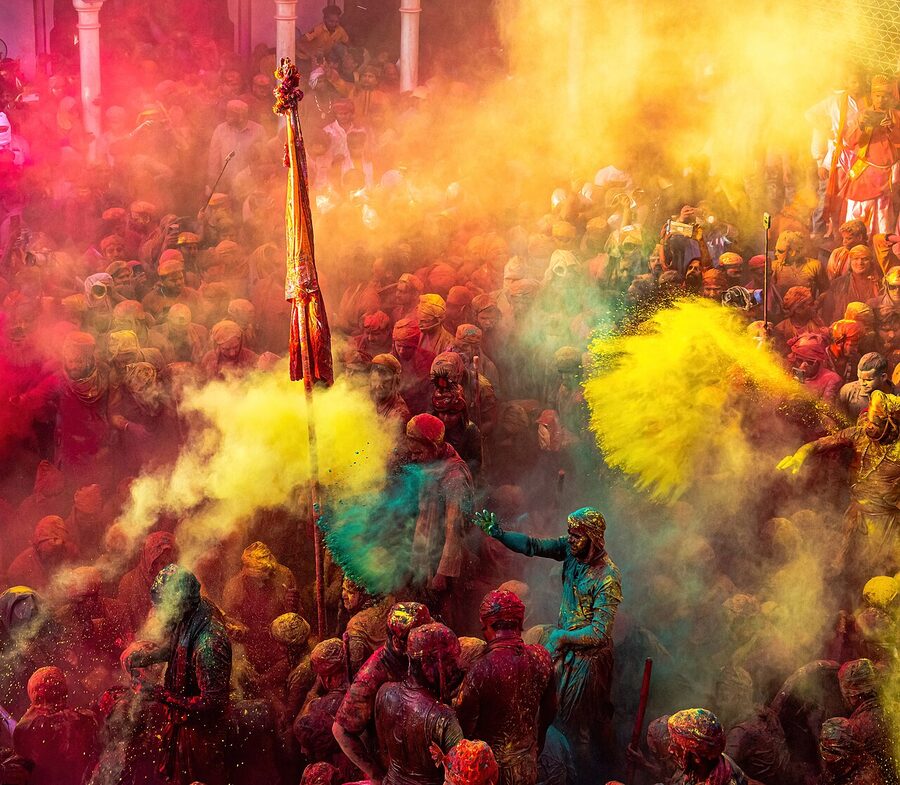
If your EBC trek timing can be arranged around it, Mani Rimdu at Tengboche monastery (3,860 m, standard Day 4 EBC stop) is a genuinely special experience. Three days of masked dance performances by the Sherpa monks, culminating in a ritual destruction of a butter-and-rice effigy representing worldly evil. Usually falls in late October or early November — check the Tengboche monastery calendar 3-4 months ahead.
Bisket Jatra — for Bhaktapur
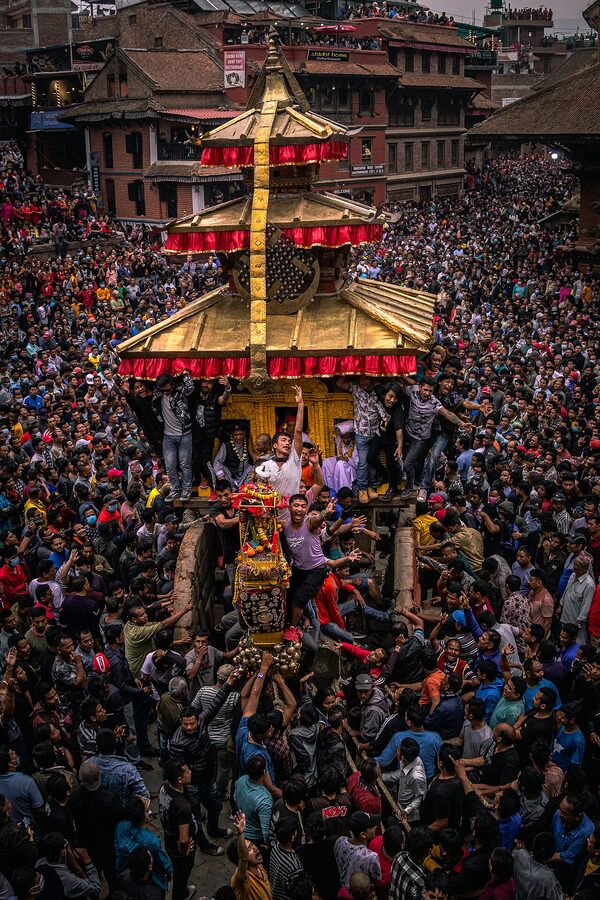
The Nepali New Year festival in Bhaktapur, unique to the city. A massive wooden chariot containing the god Bhairav is pulled through the streets in a tug-of-war between competing village factions — crashes into buildings aren’t uncommon and are considered part of the ritual. If you’re in Nepal for the April Nepali New Year, Bhaktapur is where to be.
Festivals by region
- Kathmandu Valley: Indra Jatra (Sept), Dashain, Tihar, Bisket Jatra (Bhaktapur, April), Gai Jatra (Aug). Heaviest festival calendar in Nepal.
- Solu-Khumbu (Everest region): Mani Rimdu (late Oct/early Nov at Tengboche monastery, also separately at Chiwong and Thame monasteries), Dumje (May/June)
- Mustang: Tiji festival in Lo Manthang (May) — 3-day Tibetan Buddhist ritual dance, one of the most photographed cultural events in Nepal
- Pokhara region: most national festivals observed, plus Gurung cultural events
- Terai: Chhath (October/November) — major Hindu harvest festival on riverbanks, especially along the Gangetic plains border with India
Should you plan a trip around a festival?
Depends on the festival and the trip type:
- Yes, definitely: Indra Jatra (Sept), Tihar (Nov), Mani Rimdu (if you’re EBC trekking), Tiji (if you’re doing Mustang in May).
- Yes, with caveats: Dashain is visually spectacular but most of Nepal shuts down for a week. Holi is fun but much smaller than the Indian version.
- Not worth arranging a trip around: most of the others are regional or subtle enough that you’ll experience them passively if you’re there at the right time.
Etiquette for foreign travellers
- Photography is usually fine but ask first for specific rituals, especially at religious sites. A smile + a camera-gesture before shooting covers most situations.
- Remove shoes entering temples and monasteries. Always.
- Dress modestly at religious festivals — covered shoulders and knees.
- Don’t step over prasad offerings or point feet at shrines.
- Cremation ghats at Pashupatinath during festival times — no photography, keep distance.
- Offer a small donation at a monastery or temple if you stay for a ceremony — NPR 50-200 is appropriate.
For the broader seasonal planning context (which festivals fall in which month, which weather they overlap with), see our best time to visit Nepal guide. For the cities and valleys where these festivals are concentrated, start with the Kathmandu guide.