Getting into Nepal is genuinely easy. Most nationalities get a visa on arrival at Tribhuvan International Airport in Kathmandu, the paperwork is straightforward if you arrive prepared, and the whole process takes 20-40 minutes on a quiet day. The system does have traps though — wrong USD bills rejected, stamp fees not included in visa fees, extension rules that tighten every few years — and this guide covers all of them.
This is the practical 2026 Nepal visa guide: costs, documents, how the on-arrival process actually works, the online pre-registration shortcut, extensions, and the rare nationalities that can’t get on-arrival and have to plan ahead.
In This Article
Visa types and costs
Three durations of tourist visa, all available on arrival for eligible nationalities:
| Duration | Fee | Good for |
|---|---|---|
| 15 days | USD 30 | Quick Kathmandu + short trek |
| 30 days | USD 50 | Standard 2-week-to-1-month trip — the default choice |
| 90 days | USD 125 | Extended trekking, longer cultural stay |
Visas are multiple-entry by default — you can leave Nepal (to Tibet, India, or onward) and return within the visa validity window without paying again.
Who can get visa-on-arrival
Most nationalities — if you hold a passport from a country the Nepali government maintains diplomatic relations with, you can get the visa at the airport or at any land border with India or Tibet.
Exceptions — nationalities that CANNOT get visa on arrival. Must apply in advance at a Nepali embassy:
- Nigeria
- Ghana
- Cameroon
- Ethiopia
- Iraq
- Palestine
- Syria
- Somalia
- Liberia
- Swaziland (Eswatini)
- Zimbabwe
- Afghanistan
Indian nationals don’t need a visa at all — free entry with a valid passport or government photo ID. Unique arrangement under the 1950 Indo-Nepal treaty.
If in doubt, check with the nearest Nepali embassy before flying.
The documents you actually need
- Passport valid for at least 6 months from your entry date. This is enforced. A passport with 5 months of validity will be turned back.
- At least one blank page in your passport for the visa stamp.
- USD cash for the visa fee. Exact amounts preferred ($30 / $50 / $125). Bills must be:
- Clean — no tears, excessive marks, or tape
- Post-2009 series (newer “big head” bills with security strip)
- Not marked with pen annotations
Some airport counters accept credit cards or other major currencies (EUR, GBP, JPY, AUD) at posted exchange rates, but USD in clean bills is the simplest path.
- One passport-size photograph. The airport has photo booths in the immigration queue area if you don’t have one, but they charge NPR 500+ and add 15 minutes to your queue time. Bring your own.
- Completed arrival form filled out on the plane or at the kiosk.
The online pre-registration shortcut
Nepal operates an online pre-registration system at nepaliport.immigration.gov.np. Completing it before you fly:
- Submit biographical details + passport photo
- Get a barcode printout
- At arrival, use the “online applicants” lane (much shorter)
- Pay the fee, get the stamp, leave
The system works but has a spotty UI — expect the site to time out, drop images, or glitch. Allow yourself 30 minutes to complete it, not 5. The shortcut at immigration is real though — on a busy day you can save 30-45 minutes.
What the on-arrival process actually looks like
After you deplane at Tribhuvan International Airport:
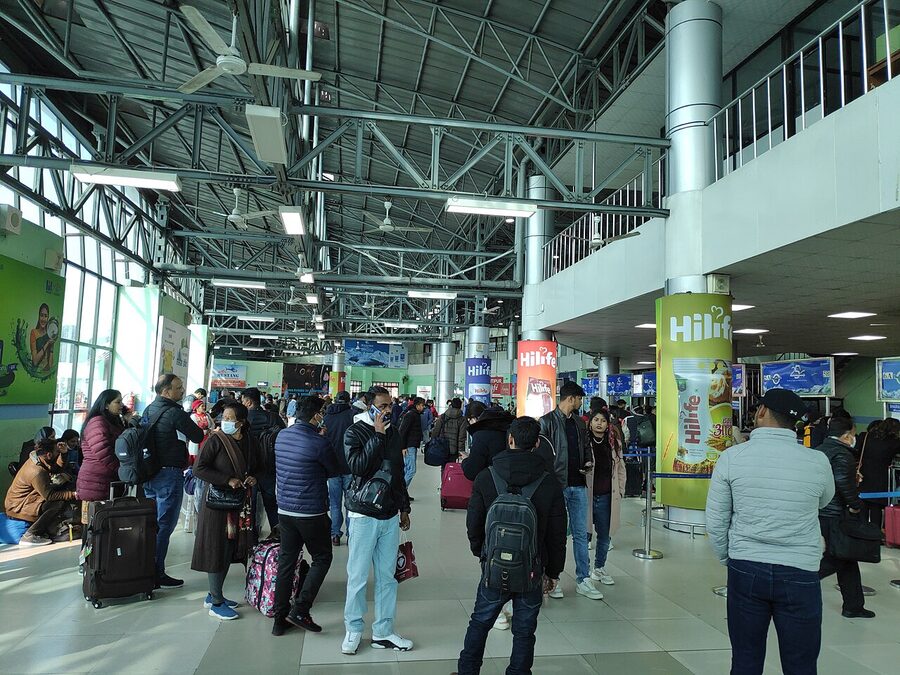
- Walk through the arrival hall to the visa section (clearly signposted)
- Fill out the electronic kiosk (or show your online-submitted barcode) — biodata, passport photo, accommodation address
- Get a printed receipt from the kiosk
- Pay the visa fee at a counter — cash in USD (preferred), EUR, GBP, JPY, or AUD
- Take the paid-fee receipt + your passport to the immigration desk
- Officer enters your details, stamps your visa, you walk to baggage claim
Total time: 20-40 minutes on a quiet day, 60-90 on peak arrival (usually mid-afternoon when multiple international flights arrive together). If you have a late-night flight, the process is usually faster.
Extending your visa
Extensions are handled at Nepal’s Department of Immigration in Kalikasthan, Kathmandu, and at the Pokhara immigration office. Extension fees as of 2026:
- Additional 15 days: USD 45
- Additional 30 days: USD 45 (same fee as 15, so do 30)
- Each additional day beyond 30: USD 3/day
Maximum total stay per calendar year: 150 days. Go beyond that and the next extension requires leaving and re-entering.
How to extend:
- Walk into the Immigration office (Kalikasthan, Kathmandu) between 10 AM and 4 PM Sunday-Thursday
- Fill out the extension form (available at the office or on the immigration website)
- Submit with your passport, one photo, and cash payment
- Collect your extended passport in 2-3 hours (same day if you arrive early)
Bring exact USD or NPR cash. Credit cards sometimes work but are unreliable. The office is typically busy — budget half a day for the round trip including travel time.
Entering from India or Tibet overland
All of Nepal’s land border crossings issue visas on arrival on the same terms as the airport. Popular crossings:
- Sunauli / Belahiya (India) — main Delhi/Varanasi route into Lumbini/Pokhara
- Kakarbhitta — far east, Darjeeling connections
- Birgunj / Raxaul — Patna/Kolkata route
- Nepalgunj / Rupaidiha — far west, Lucknow connections
- Mahendranagar — far west, rarely used by tourists
- Tatopani / Kodari (Tibet) — closed to tourist traffic since the 2015 earthquake. Check current status before planning.
- Gyirong / Kerung (Tibet) — operational as of 2026, requires China-Tibet permits
Bring the same documents as for the airport. Land crossings sometimes take longer due to queue management but the visa itself is the same.
Extra things to know
Indian re-entry note: if you’re going Nepal → India and back to Nepal, Indian authorities may ask for proof of onward travel or accommodation. Always carry printed bookings.
Children under 10: free visa, no fee. Still need to fill out the forms and have a photo.
SAARC nationals (Bangladesh, Bhutan, Maldives, Pakistan, Sri Lanka): free 30-day visa on arrival, same documents required.
Free Trekkers’ Entry Stamp: if you’re arriving specifically to trek and your stay is under 15 days, the 15-day visa plus TIMS card is typically sufficient. Longer treks need the 30-day.
Volunteer or business visas require pre-arrival application at a Nepali embassy. Can’t be obtained on-arrival.
Restricted area permits (Upper Mustang, Upper Dolpo, Manaslu, Humla, Tsum) are separate from the tourist visa — they’re issued in Kathmandu once you’re in-country, through your trekking agency.
Common mistakes to avoid
- Dirty or torn USD bills: the single most common reason for visa delays at the airport. Clean notes only.
- Missing passport photo: the airport booth is slow and expensive. Bring your own.
- Wrong visa duration: 15-day is often too short for a proper trek. 30-day is the safe default.
- Overstaying: USD $5 per day fine + possible entry ban. Don’t push the visa validity.
- Not having proof of onward travel: rarely checked but legally required. Keep a flight confirmation handy.
For the broader Nepal trip planning, see our top-level travel guide. For the Kathmandu airport experience, see the Kathmandu guide. For what to actually do once you’re in, the trekking guide covers the main activity.