Rara is the lake everyone in Nepal plans to visit and almost nobody does. It sits 2,990 metres up in the Karnali hills, a sapphire oval that changes colour depending on whether the sun’s out and whether you’re prepared to hate it for being so cold. On a good October morning it looks photoshopped. You stand at the waterline, turn around in a full circle, and count one other person. Maybe.
The reason most people don’t come is simple — getting here is a proper Himalayan-grade logistics puzzle. You fly twice to get in, your second flight gets cancelled about a third of the time, and the final day of the trek involves a long descent through pine forest where the path has been washed out by yaks. In exchange, you get the quietest national park in Nepal, a lake that’s a Ramsar wetland, a chance of spotting a red panda, and zero queues for anything.
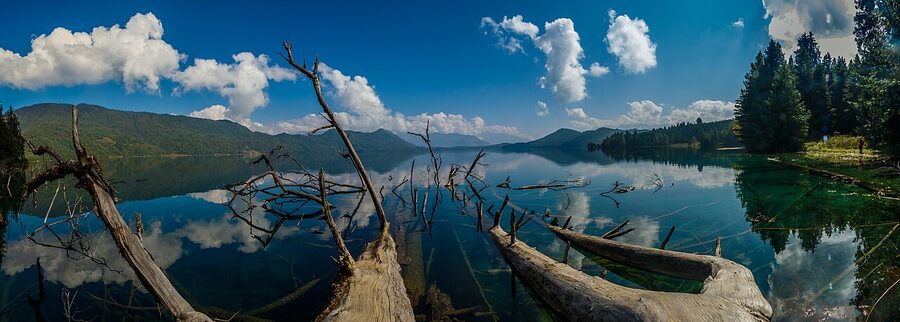
This guide is the thing I wish I’d had before going — a practical plan with the actual costs, the flight routes that work, and the honest bits nobody else tells you. It replaces an old itinerary page we had here for years on this domain (rest in peace, /itinerary/84/nepal-rara-national-park.html). If you landed here from an old link on somebody’s 2016 travel blog, welcome — the trail’s still there and so is the lake.
In This Article
- The quick facts
- What is Rara National Park, actually?
- How to get to Rara (the hard part)
- Flight cancellation reality
- The 7-day Rara Lake trek, day by day
- Day 1 — Jumla to Chere Chaur (2,985 m) — 5 hours
- Day 2 — Chere Chaur to Nauri Ghat (2,895 m) — 6 hours
- Day 3 — Nauri Ghat to Rara Lake (2,990 m) — 6–7 hours
- Day 4 — Full day at Rara Lake
- Day 5 — Rara Lake to Pina (2,440 m) — 5 hours
- Day 6 — Pina to Gamgadhi or Talcha ridge (~2,800 m) — 4 hours
- Day 7 — Fly out from Talcha
- When to actually go
- Permits, fees and what you actually pay
- Wildlife: what you’ll actually see
- The lake, up close
- Villages around the park
- Where to stay at the lake (manage expectations)
- Real costs, broken down (2026)
- Common mistakes and honest notes
- Frequently asked questions
- Can I do Rara without a guide?
- How hard is the trek really?
- Is winter actually worth the risk?
- Can I combine Rara with another trek?
- Do I need travel insurance?
- What’s the local language around the park?
- Is it worth it?
The quick facts
Before we go deeper, here’s what you actually need to know, pinned in one place.
| Park | Rara National Park — Nepal’s smallest, 106 km² |
|---|---|
| Location | Mugu & Jumla districts, Karnali province, far-west Nepal |
| Lake elevation | 2,990 m (9,810 ft) |
| Max trek altitude | 4,039 m at Chuchemara Peak (optional) |
| Best season | September to early November, then April–May |
| Permits | NPR 3,000 foreigners / NPR 1,500 SAARC + TIMS NPR 2,000 |
| Standard trek length | 7 days on the trail, 10–11 days total with flights |
| Realistic budget | $800–1,400 for a solo or couple trekker, all-in from Kathmandu |
| Established | 1976 (designated Ramsar wetland in 2007) |
What is Rara National Park, actually?
Rara National Park covers 106 square kilometres in the Karnali region of far-western Nepal. That makes it the country’s smallest national park by area, which is misleading because the lake inside it is Nepal’s largest — 10.8 km², 167 metres deep, and oval-shaped with a shoreline circuit you can walk in half a day. The park was designated in 1976, partly to protect the lake and partly because it contains the upper catchment of the Mugu Karnali river, which drains out via the Nijar Khola stream.
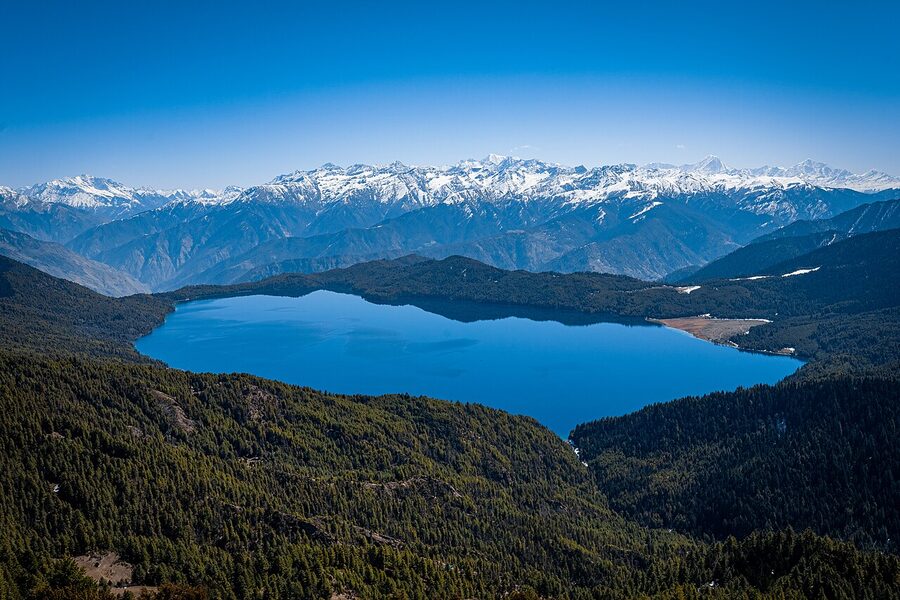
Three peaks ring the lake. Chuchemara (4,039 m) is the highest and the one you can actually climb — there’s a rough trail from the south shore and the views are ridiculous. Ruma Kand (3,731 m) and Malika Kand (3,444 m) are more of a backdrop than a climb. The whole park sits in a transition zone between sub-alpine forest and high-altitude meadow, which is why it packs 1,070+ plant species and 11 different forest ecosystems into such a small area. Sixteen of its 88 vascular plants grow nowhere else on Earth.
Wildlife numbers on paper are staggering — 51 mammals, 240+ bird species, plus the usual reptiles and fish. What you’ll actually see is a different question, and I’ll come back to it.
How to get to Rara (the hard part)
I’ll be direct: 90% of people who make it to Rara fly. The overland route exists and I’ve met a few people who’ve done it, but the road from Surkhet climbs, drops, and climbs again over some of the worst surfaces in Nepal, and a Jeep from Nepalganj can take two full days to reach Jumla if the weather’s bad. If you’ve got a month and a romantic attachment to landslides, go for it. Otherwise, fly.
The sensible route is two flights. From Kathmandu, you fly first to Nepalganj (the regional hub in the southwest lowlands) on a full-size jet — Buddha Air, Nepal Airlines, or Yeti Airlines run this leg. Expect about NPR 9,000–11,000 ($68–83) one-way, and it’s a 1-hour flight. Don’t book the same-day connection to Jumla; land in Nepalganj and stay overnight. The onward flights to Jumla leave at stupid-o’clock the next morning for a reason — mountain weather closes in by late morning.
From Nepalganj, two airports serve the Rara area:
- Jumla (JUM) — the traditional start/end of the Rara Lake trek. Operated by Tara Air, Summit Air, and Sita Air on DHC-6 Twin Otters. ~NPR 14,000–17,000 ($105–128) one-way. 30-minute flight. Small airstrip at 2,370 m — landings feel exciting if you’ve never done a STOL approach before.
- Talcha (DOP) — much closer to the lake, about a 3-hour walk to the shore. Also Twin Otters, same airlines. ~NPR 15,000–19,000 ($113–143) one-way. This option cuts 2 days off the trek if you fly in here.
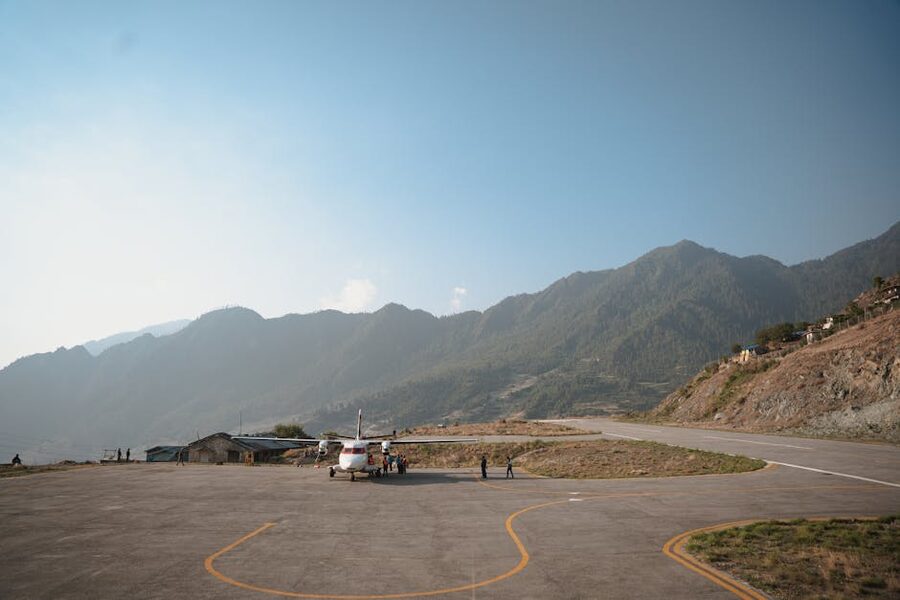
My recommendation: fly in to Jumla, trek to the lake, trek out to Talcha, fly out from there. You get the classic approach through pine forest, you don’t backtrack, and you shave a day off the return. Most operators book it this way by default.
Flight cancellation reality
Flights to Jumla and Talcha get cancelled a lot. Cloud cover, crosswinds, or a small electrical problem on a Twin Otter — any of these will kill your day. From my own attempts and what the airline desks quietly admit, you’re looking at roughly a 25–35% cancellation rate in the shoulder months (November, March). In peak season (mid-October) it drops to maybe 10–15%. In winter it spikes to 50%+.
Build 2 buffer days into your itinerary. Not 1. Two. If you’re flying back out on a tight schedule, you will regret it.
The 7-day Rara Lake trek, day by day
This is the classic Jumla-in, Talcha-out itinerary — 7 days on the trail, which slots into a 10- or 11-day round trip from Kathmandu with buffer days. It’s the route the local operators know best and where the teahouses are reliably open in season.
Day 1 — Jumla to Chere Chaur (2,985 m) — 5 hours
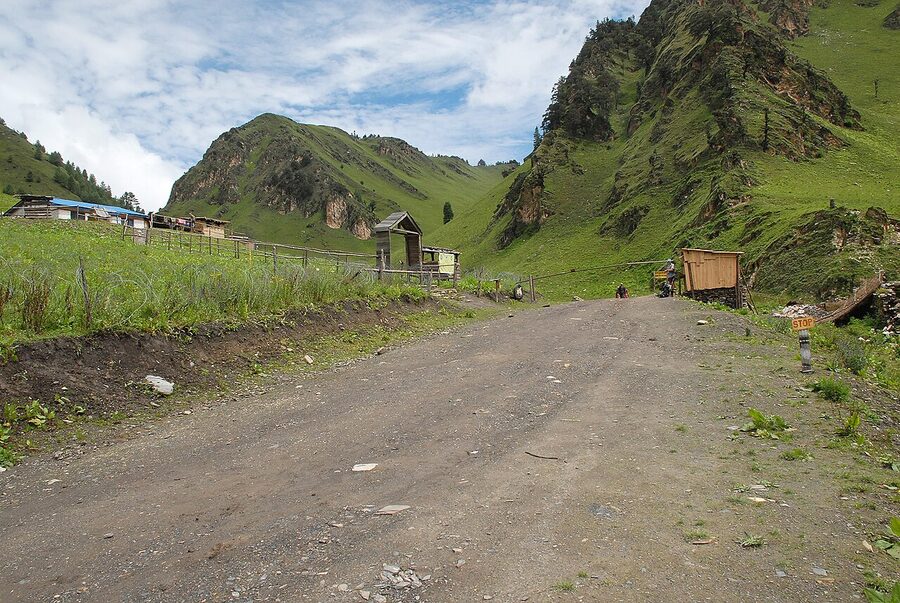
You land in Jumla, grab breakfast in town (the tea is genuinely great, the sel roti is better), then start walking in the afternoon once your porter is sorted. The first half is a muddy track through farmland. You climb about 600 m through pine and birch to Chere Chaur, a meadow camp at 2,985 m. The first night’s altitude adjustment happens here. Drink more water than you think you need.
Day 2 — Chere Chaur to Nauri Ghat (2,895 m) — 6 hours
Over the Khali Lagna pass (3,500 m) and down into a stream valley. This is the prettiest day of the approach — rhododendron forest that explodes in April, wild strawberries in June, empty trail pretty much year-round. You’ll cross paths with a handful of yak trains and a lot of cheerful children heading to Jumla for school.
Day 3 — Nauri Ghat to Rara Lake (2,990 m) — 6–7 hours
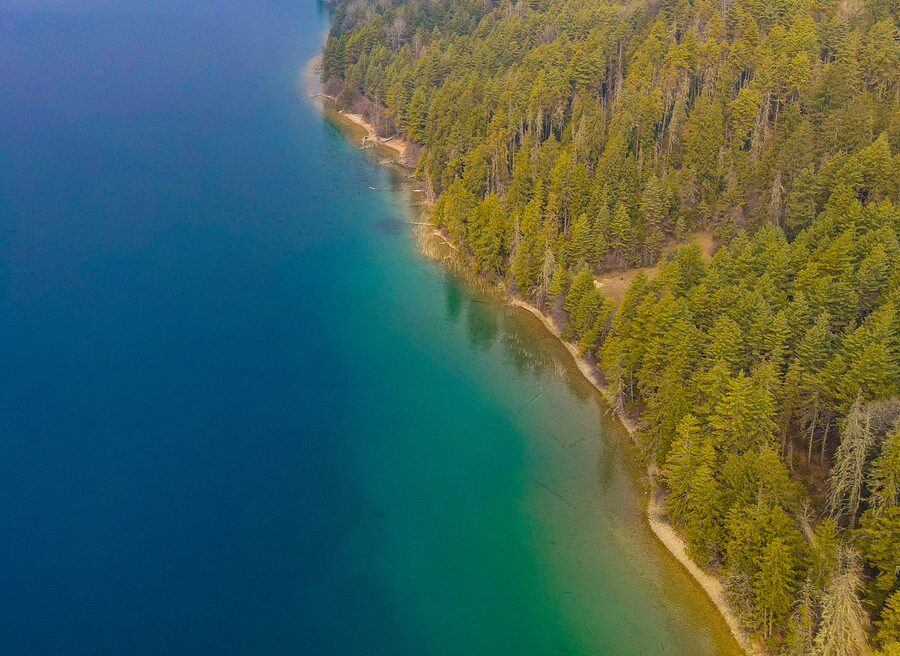
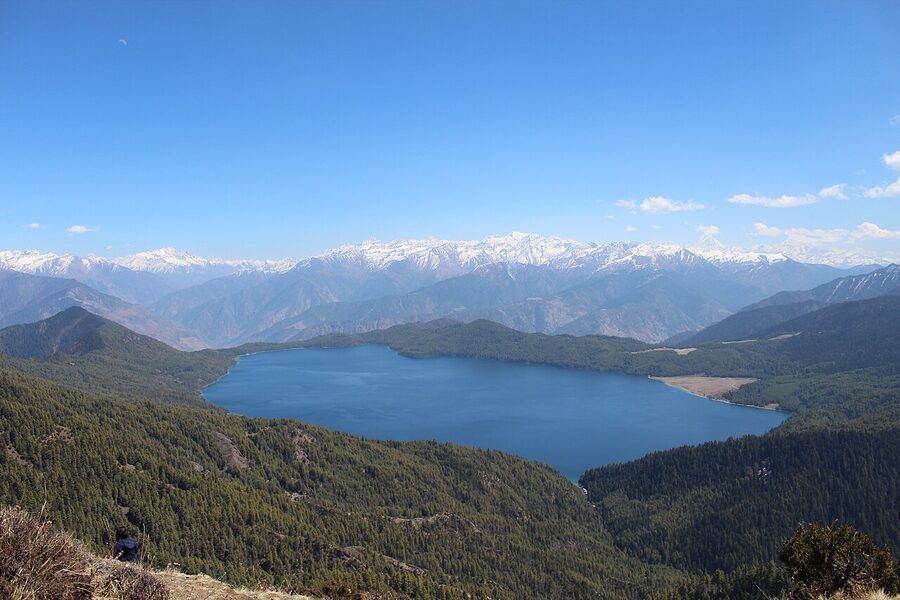
The money day. You pass through Pina, the village that holds the park check-post (have your permit ready, they really do check — more on that below), cross a final ridge, and the lake opens up below you. First view is from about 300 m above the shore, and it’s the one your guide will make you stop for. Don’t skip it. The light in the late afternoon turns the lake a colour I genuinely don’t have the vocabulary for — “bottle green” isn’t right, “sapphire” isn’t right either.
Day 4 — Full day at Rara Lake
This is the day you came for. You have three realistic options and you should do two of them:
- Walk the 10.8 km lake circuit — 3 to 4 hours at a slow pace. Flat, well-trodden, pine forest on the north shore, open grassland on the south. This is the default and everyone does it.
- Climb to Murma Top — a 2 to 3-hour scramble from the south shore up to about 3,650 m. This is the viewpoint on every Rara Lake postcard that wasn’t shot from a drone. Steep, zero shade, absolutely worth the legs.
- Hire a horse for a loop around the shore — NPR 500–1,000 per hour, arrange at the campground. A local reviewer on TripAdvisor called it “a completely different vantage point of the landscape” and she’s right. Horse-trained Mugu ponies are unbothered by tourists.
Day 5 — Rara Lake to Pina (2,440 m) — 5 hours
You retrace the last section of the approach, then peel off down a steeper descent into the Khatyad Khola valley toward Pina. The elevation loss is nice on the lungs and hard on the knees — trekking poles earn their keep. Pina itself is a string of teahouses along the river; food options are basic, dal bhat is excellent.
Day 6 — Pina to Gamgadhi or Talcha ridge (~2,800 m) — 4 hours
Short day. You leave Pina, climb back out of the valley, and traverse along a contour to the settlement near Talcha airstrip. If you’re overnighting, this is where. The teahouses here are dialled in to fly-out travellers — they’ll feed you early and walk you to the airstrip in the morning.
Day 7 — Fly out from Talcha
Early flight to Nepalganj. If the weather holds, you’re having lunch in Nepalganj and a beer in Kathmandu by evening. If the weather doesn’t hold, you’re stuck for another day and this is where the buffer days come in.
If you flew in to Jumla and are flying out of Jumla (the loop option), add Day 7 Pina–Jumla (5 hours) and Day 8 fly out. Same principle, just more walking.
When to actually go
There are two real windows, and one “don’t” window, and one “only if you’re certain” window.
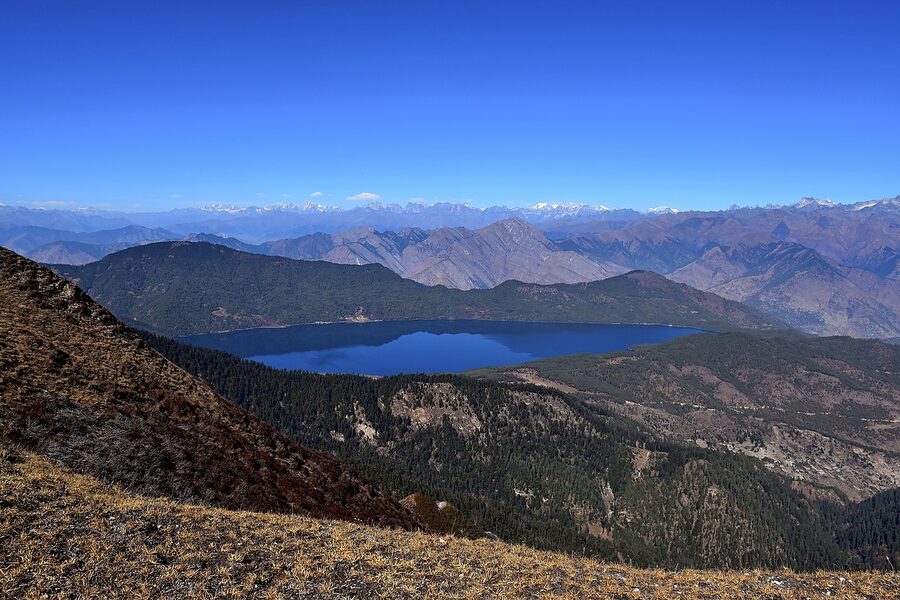
September to early November is the sweet spot. Monsoon is done, the trails are dry, visibility is at its best, and the temperatures at the lake are cold at night but pleasant during the day (roughly -2°C to 18°C). Mid-October is prime, which also means it’s the busiest — and “busy” at Rara means maybe 40 other trekkers in total rather than the thousands on Everest Base Camp.
April to May is the spring alternative. Rhododendron forests light up in pink and red, birds are singing, and you get longer days. Downside: haze and occasional rain. Fewer flights run in April than October.
December to February can be magical if you catch a clear stretch — the lake can partially freeze, snow coats the pines, and you get this place entirely to yourself. But flights cancel at a brutal rate, temperatures at the lake routinely drop below -15°C at night, and porters charge more. Only go in winter if your dates are flexible by a week in either direction.
June to August — the monsoon. Landslides, leeches, cloud cover, and a non-trivial chance your flights don’t fly at all. Skip it.
For more on seasonal planning across Nepal, see our broader trekking guides.
Permits, fees and what you actually pay
Three things need your signature before the trail starts. None of them are expensive by Western standards and all of them are strictly enforced at Pina check post.
- Rara National Park entry fee — NPR 3,000 for foreigners, NPR 1,500 for SAARC nationals, NPR 100 for Nepali citizens. Paid once, covers the duration of your visit.
- TIMS card (Trekkers’ Information Management System) — NPR 2,000 for foreigners, NPR 600 for SAARC. Arranged in Kathmandu at the Nepal Tourism Board office in Bhrikutimandap, or online. Sign up takes 20 minutes.
- Local area levy — NPR 100–200 at some check-posts. Have small bills.
Total for a foreign trekker: about NPR 5,200 (~$39). This is paid outside the guided package — operators who “include permits” have usually folded it into their base price anyway. For full permit procedures across Nepal’s parks, see our national parks guides.
Wildlife: what you’ll actually see
Let me manage expectations. Rara NP is listed home to 51 mammal species, including red panda, musk deer, Himalayan black bear, snow leopard, and Himalayan tahr. Reading that list on a brochure feels promising. Actually spotting any of those animals ranges from “lucky” to “win-the-lottery unlikely”.
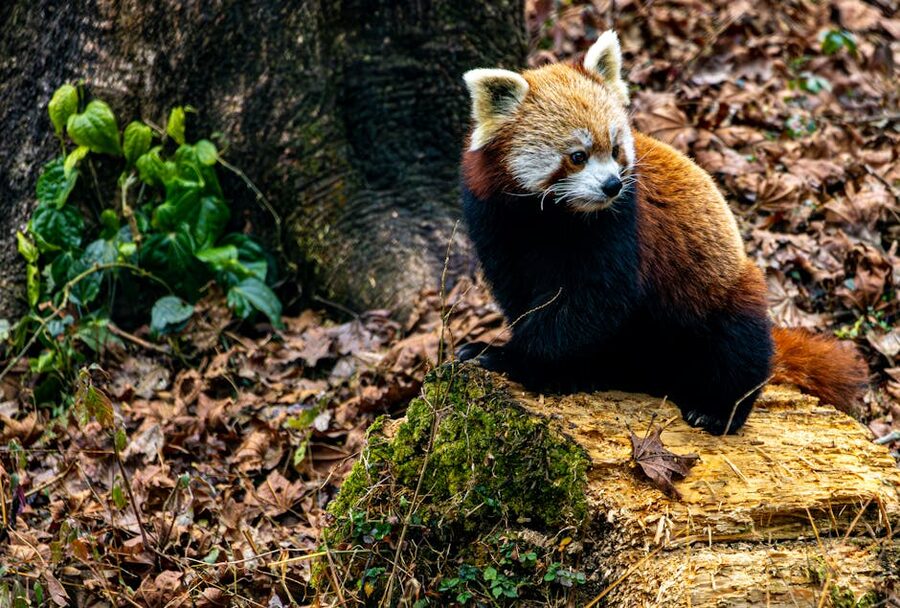
Realistically, here’s what you’ll actually encounter:
- Musk deer tracks and droppings — everywhere in the pine forest. Sightings are rare and brief. You might hear a crash through the undergrowth and catch a flash of cinnamon.
- Himalayan black bear warning signs — rangers post them on the approach. Actual bears are rarely seen during daylight, but they are around. Make noise when walking alone.
- Birds — the real highlight. Rara’s bird list pushes 270+ species. The Himalayan monal (Nepal’s national bird) is relatively visible above the tree line in early morning. Blood pheasants, kalij pheasants, cheer pheasants (critically endangered — don’t expect to see them), Himalayan snowcocks. The lake itself is a Ramsar-listed waterfowl site — black-necked grebes and coots in season.
- Langurs and macaques — common along the approach forests, shy around the lake.
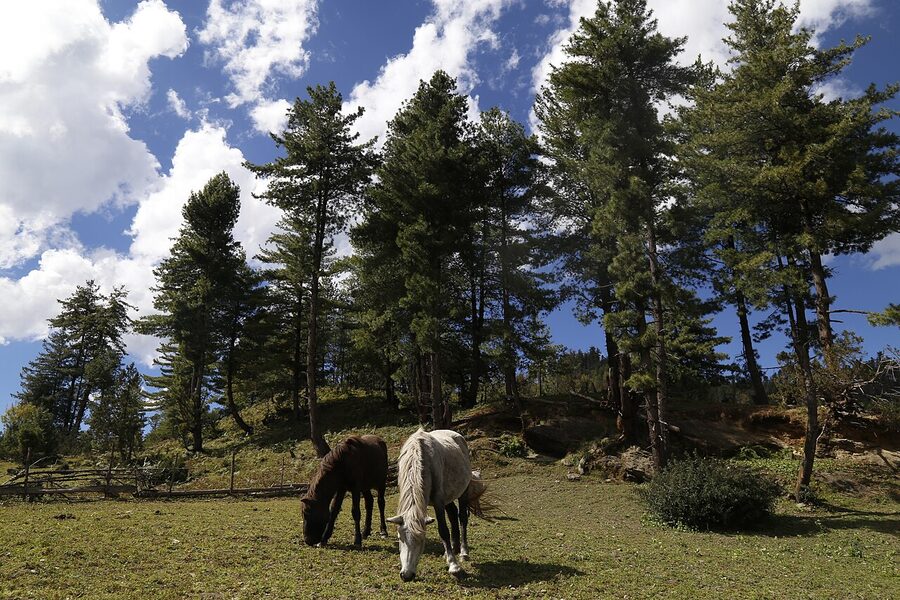
- Yaks and mountain horses — semi-wild, mostly belong to herders but they look feral. Give them space.
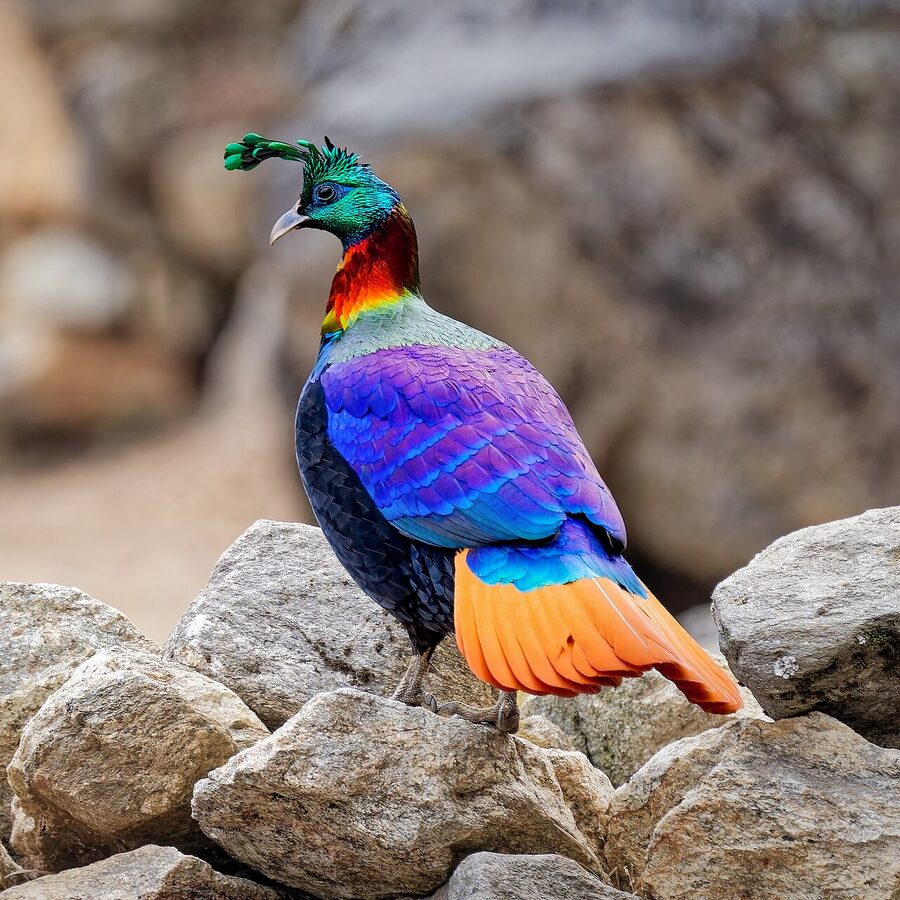
A good guide with binoculars is worth more for the birding than for the route-finding. Ask for one who actually knows birds rather than a generic trekking guide — most Kathmandu operators will rotate you a bird guide for an extra $10–15 per day if you request it.
The lake, up close
Rara Lake itself is the whole reason for the park, and you don’t properly meet it until Day 3. A few things about it:
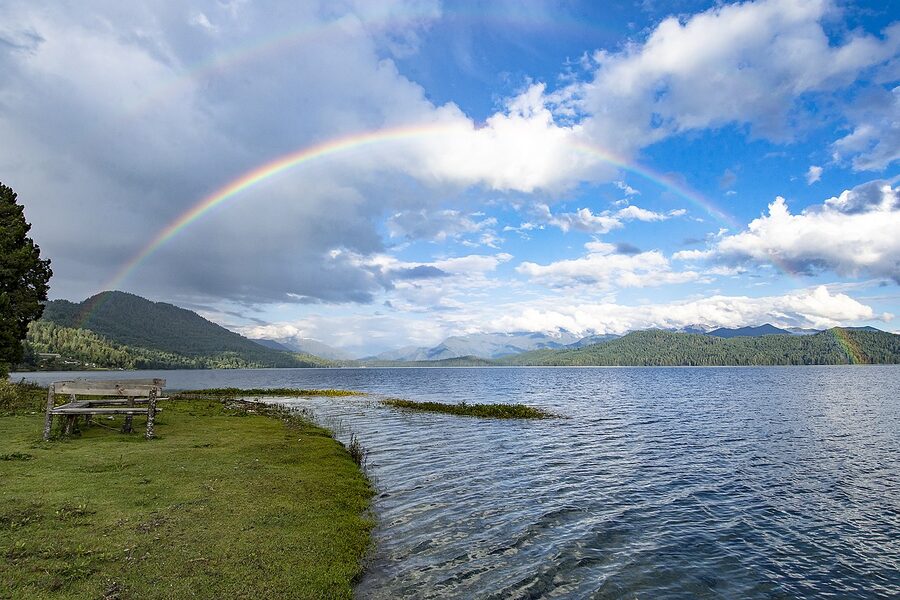
It’s oval — roughly 5.1 km long on the east-west axis, 3.5 km on the north-south, with a surface area of 10.8 km² at the standard 2,990 m waterline. Maximum depth is 167 m, which is ludicrous for a lake this size. The water is drinkable with a filter and brutally cold year-round.
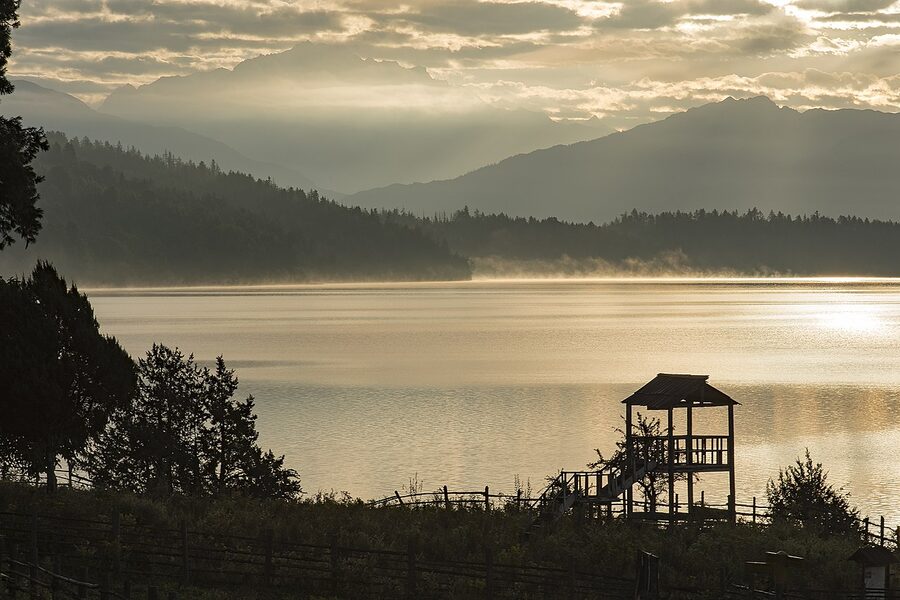
You can walk the full circuit in 3–4 hours at a leisurely pace with photo stops. There’s no official trail marker — the path is braided in places, especially on the south shore where grazing animals have churned it. The north side is more forested and gives you better reflection shots. The west end is where the Nijar Khola stream drains the lake out; there’s a small dam-like structure and the government-built boat jetty.
Yes, there are boats. Small wooden rowboats, about NPR 700 per hour for a 4-person boat. Not fast, not fancy. Rowing out 500 m and just sitting in the middle of the lake for half an hour is one of the better things I’ve done in Nepal.
Villages around the park
The park’s buffer zone is home to a handful of villages — Pina, Gorosingha, Chuchemara, Jhari, Talchi, and a few others you’ll pass through or stay at. These are ethnically mixed Chhetri and Thakuri settlements with some Bhotia influence; you’ll hear Nepali and occasional words of Mugali. Subsistence agriculture dominates — buckwheat, millet, barley, potatoes above 2,500 m.
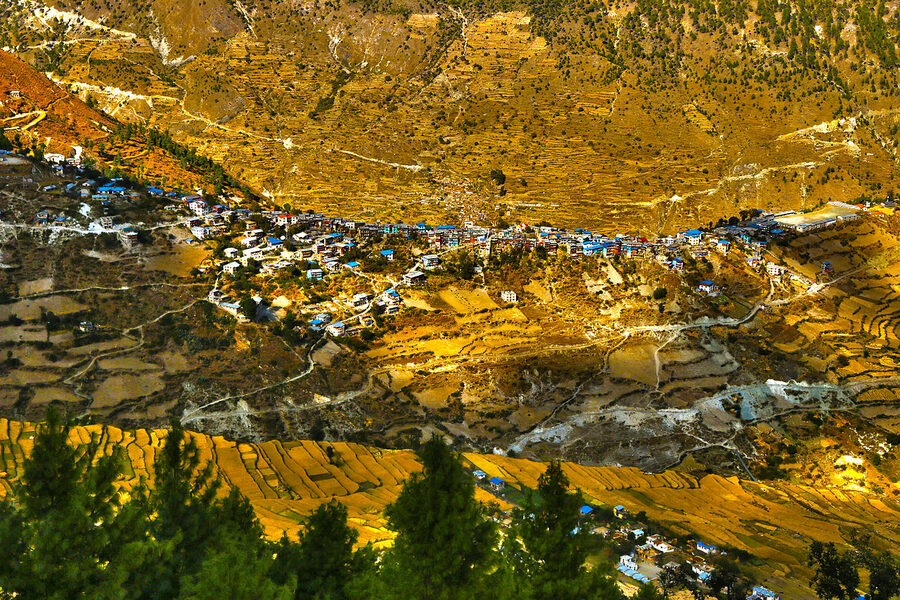
One thing worth knowing: there were two villages inside the park boundary — Rara and Chhapru — and the residents were relocated down to the lowlands when the park was established. Some of their descendants have moved back to the buffer-zone settlements and a few are now running teahouses. If you stay at one of the lakeside lodges and the host family are older, ask — the stories of the relocation are worth hearing and don’t make it into the tourism literature.
Where to stay at the lake (manage expectations)
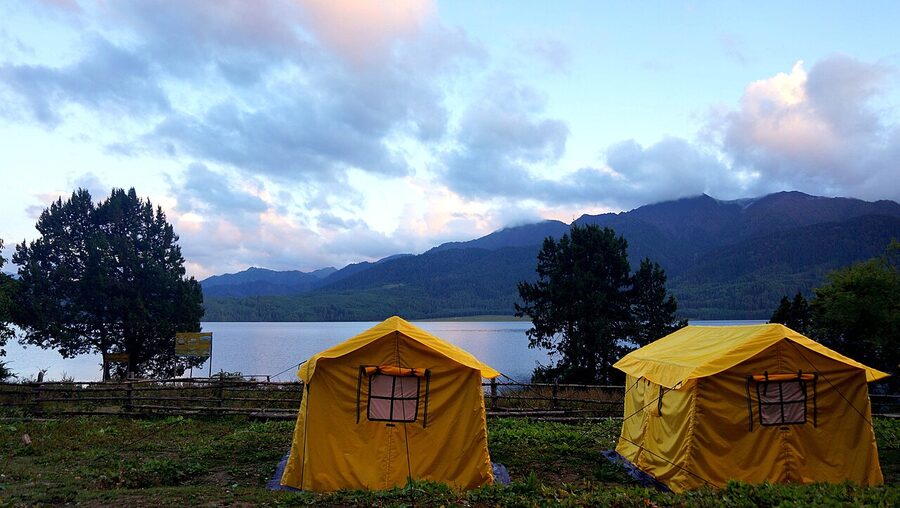
Let’s be honest: accommodation at Rara is basic. TripAdvisor reviewers use phrases like “poor hotel conditions” and they’re not wrong. This is not Everest Base Camp teahouse standard — it’s a notch below, and there’s no running hot water above Jumla. What’s on offer:
- Lakeside lodges — 4 or 5 of them, most clustered at the south-west corner near the Nijar Khola outflow. Twin rooms NPR 800–1,500 per night, bed-only. Shared squat toilets. Thin walls. Pleasantly smoky common rooms with a wood stove you’ll love by 7pm.
- Teahouses at Pina and Nauri Ghat — similar deal, maybe slightly better maintained because of through-traffic.
- Camping — allowed at the designated campground 200 m from the lake. You’ll need your own gear or a packaged operator who brings it. Porter fees go up.
- Homestays — a couple of families in Jhari village run unofficial homestays. NPR 1,200 including dal bhat, arranged through word of mouth.
Food is almost exclusively dal bhat (the national dish — rice, lentils, vegetables, pickle) with occasional momo or noodle soup. It’s good, it’s hot, it’s reliable, it’s what everyone eats. Bring your own snacks if you like variety; the village shops stock instant noodles, biscuits, and Snickers that have travelled further than you have.
Real costs, broken down (2026)
Here’s what a 10-day Rara trip actually costs a solo traveller, doing it self-organised with a local guide hired in Kathmandu or Jumla:
| Item | NPR | USD (approx) |
|---|---|---|
| Flight: Kathmandu ↔ Nepalganj (return) | 22,000 | $166 |
| Flight: Nepalganj → Jumla (one-way) | 15,000 | $113 |
| Flight: Talcha → Nepalganj (one-way) | 17,000 | $128 |
| Park entry + TIMS | 5,200 | $39 |
| Guide (NPR 3,500/day × 7 days) | 24,500 | $185 |
| Porter (NPR 2,000/day × 7 days, optional) | 14,000 | $106 |
| Teahouse accommodation (7 nights × NPR 1,200) | 8,400 | $63 |
| Food on trail (7 days × NPR 2,000) | 14,000 | $106 |
| Nepalganj hotel (2 nights × NPR 2,000) | 4,000 | $30 |
| Tips and extras | 5,000 | $38 |
| Total | ~NPR 129,100 | ~$974 |
If you book a fully-guided package out of Kathmandu (everything included — flights, permits, guide, porter, accommodation, all meals), expect $950–1,400 for 10–12 days depending on operator and season. Western-operated trips run $1,800–2,500 for the same thing with nicer tents and fancier food.
Cutting costs: skip the porter (save $106), share a guide with a group of 2–3 (save roughly half), fly in/out of Jumla only rather than the Talcha loop (save one flight, add one trail day).
Common mistakes and honest notes
A few things people get wrong on the Rara trip, based on watching them happen at Kathmandu airport and Nepalganj hotels:
- Tight flight buffers. The single most common screw-up. If your international flight out of Kathmandu is on Tuesday, do not plan to be flying back from Talcha on Monday. Something will cancel. Build 2 days of margin.
- Underestimating the cold. October is warm by day, freezing by night. That “mid-weight fleece” you brought is not enough. Add a proper down jacket and a base-layer set.
- Forgetting TIMS. The Pina check-post rangers will turn you back. Get it in Kathmandu before you leave. Do not try to wing it.
- Expecting wildlife sightings. See above. Come for the landscape and the quiet, not the snow leopards.
- Trying the road route without serious time. Bus and jeep from Surkhet to Jumla is technically 2 days. Practically it can be 4 when things go wrong. Only worth it if you’re broke or you’ve got unlimited time.
- Skipping the winter lake visit if you’re flexible. If you’ve got a spare week and you like cold, a January Rara trip is one of the most singular experiences in Nepal. Just don’t promise anyone you’ll be back by a certain date.
Frequently asked questions
Can I do Rara without a guide?
Technically yes. Practically, a guide is strongly advised — the trail is not well marked in places, and the Nepalese government introduced a requirement in 2023 that foreign trekkers outside the big routes hire licensed guides in several conservation areas. Rara’s status has been ambiguous; check with the Nepal Tourism Board when you collect your TIMS card. Going without a guide also means navigating the teahouse network in Nepali or Mugali, which gets awkward.
How hard is the trek really?
Moderate. You’re not going above 3,500 m on the standard trail (Murma Top is optional and takes you to ~3,650 m). Daily distances are 10–18 km with about 600–900 m of cumulative ascent on the harder days. Anyone who does regular day hikes should manage it. Altitude is less of a factor than on Annapurna Circuit or Everest routes — sleeping at 2,990 m is fine for most people.
Is winter actually worth the risk?
If you’re patient and flexible, yes. If you’ve got a tight schedule, no. The lake freezing partially is beautiful. Flights cancelling five days in a row is not.
Can I combine Rara with another trek?
Not easily. The logistics of the Karnali are isolated — you can’t easily pop across to Dolpo or Humla without a week of extra walking or a separate helicopter charter. If you’ve got three weeks, a Rara-Dolpo combination via helicopter is spectacular but adds $2,500+ in transport alone.
Do I need travel insurance?
Yes. Any trek in Nepal’s remote west should be covered by insurance that includes helicopter evacuation. A helicopter pickup from Rara costs $4,000–6,000 if you pay out of pocket. World Nomads and True Traveller both cover trekking to 4,500 m.
What’s the local language around the park?
Nepali everywhere, Mugali in the Mugu district itself (a related Tibeto-Burman dialect). Tourism-facing villagers mostly speak basic English.
Is it worth it?
If you’ve got the time and the tolerance for a plane that might not show up, Rara is the park I’d pick over Chitwan or Sagarmatha for a first Nepal trip that isn’t about bagging altitude records. You will not post any Everest summit photos, but you’ll see a lake that looks like something out of a Studio Ghibli film, you’ll walk trails where the only sounds are your boots and occasionally a musk deer crashing off into the pines, and you’ll go home with the conviction that you saw something almost nobody else has.
That’s the trade. Hassle up front, quiet at the end.
If this article is useful, we’ve got more Nepal coverage on the way — a complete national parks guide, an airlines and flights breakdown, and practical trip planning notes across the country. Further reading: the official Nepal Tourism Board page at ntb.gov.np, and Ramsar’s site profile at rsis.ramsar.org.