The Annapurna Base Camp trek is Nepal’s best short-to-medium trek. Not the biggest, not the highest, not the longest — but the one that packs the most scenic punch into the least commitment. Seven to twelve days from Pokhara, topping out at 4,130 m inside a glacial amphitheatre ringed by six-thousand and seven-thousand metre peaks, and you’re back in lakeside Pokhara eating pizza before the altitude catches up with you. For most first-time Himalayan trekkers, ABC is the smart pick over its more famous cousin at Everest.
This guide covers the standard 9-day itinerary, 2026 costs, the trade-offs with the EBC version, and the route variants that shorten or extend the experience.
In This Article
The basics
- Duration: 7-12 days depending on starting point and side trips
- Start/end: Nayapul, Siwai, or Matheya — all 1-2 hours drive from Pokhara
- Highest point: Annapurna Base Camp (4,130 m)
- Total distance: ~70-110 km depending on route
- Accommodation: teahouse lodges throughout — no camping
- Grade: moderate. Proper trekking days (5-7 hours) but sub-4,200 m altitude
- Best seasons: late September to November, March to May
- Cost: USD $700-$2,200 per person depending on operator and length
The standard 9-day itinerary
| Day | Route | Altitude | Walk |
|---|---|---|---|
| 1 | Pokhara → Nayapul (drive) → Tikhedhunga | 1,540 m | 4 hrs |
| 2 | Tikhedhunga → Ghorepani | 2,860 m | 6-7 hrs |
| 3 | Poon Hill sunrise; Ghorepani → Tadapani | 3,210 m summit → 2,630 m | 6-7 hrs |
| 4 | Tadapani → Chhomrong | 2,170 m | 5-6 hrs |
| 5 | Chhomrong → Dovan / Bamboo | 2,520 m | 6-7 hrs |
| 6 | Dovan → Deurali → MBC | 3,700 m | 6-7 hrs |
| 7 | MBC → ABC and back to Bamboo | 4,130 m → 2,310 m | 8-9 hrs |
| 8 | Bamboo → Jhinu Danda (hot springs) | 1,780 m | 5-6 hrs |
| 9 | Jhinu → Siwai → Pokhara (drive) | — | 2 hrs walk + 2 hrs drive |
This version includes the Poon Hill sunrise detour on day 3 — adds one day but gives you a dramatic viewpoint (3,210 m) without altitude risk. A tighter 7-day version skips Poon Hill and goes direct Chhomrong-ward from Nayapul.
Route variants
- Classic 9-day (with Poon Hill): above. Best for first-time trekkers who want the full experience.
- Direct 7-day: skip Ghorepani/Poon Hill, start from Siwai and go Chhomrong-Bamboo-Deurali-MBC-ABC-return. Faster but misses the sunrise classic.
- Extended 12-14 day: add a Ghorepani-Poon Hill-Tadapani loop AND a side trip up to Mardi Himal viewpoint. Maximum scenery, maximum days.
- ABC + Mardi Himal combo (12-14 days): drop down from ABC, traverse to Mardi Himal (5,587 m summit for serious climbers, but the 4,500 m viewpoint is accessible to trekkers), then back to Pokhara. Growing in popularity.
- Helicopter return (5-6 days): walk up, fly out from ABC. Saves 3-4 days, costs an extra $800-1,200 per person. Good for time-limited trekkers.
What it actually costs in 2026
- Budget Nepali agency: USD $700-$1,100 per person all-in for the 9-day trip (transfer from Pokhara, guide, porter, permits, lodging, meals)
- Mid-range Nepali agency: USD $1,100-$1,700
- International operator: USD $2,000-$3,500 (Much Better Adventures, Exodus, G Adventures)
What’s included: Pokhara transfers, registered guide, porter (1 per 2 trekkers), Annapurna Conservation Area Permit (ACAP, NPR 3,000), TIMS card (NPR 2,000), teahouse lodging and three meals per day.
What’s not included: international flights, Pokhara accommodation (budget 2-3 nights), personal gear (rentable in Pokhara or Kathmandu), trail drinks/snacks, tips ($150-200 per person).
Permits
Two permits, both issued in Pokhara:
- ACAP (Annapurna Conservation Area Permit): NPR 3,000 ($25) for foreigners. Issued at the Nepal Tourism Board office in Damside, Pokhara.
- TIMS Card: NPR 2,000.
Note: ACA is a conservation area, not a national park, so the technical name is “conservation area permit” but the mechanics are similar. Since April 2023, solo trekking is banned — a registered guide is mandatory on any route in the Annapurna region.
ABC vs EBC — the honest comparison
If you’re choosing between Annapurna Base Camp and Everest Base Camp, here’s the trade-off map:
| Factor | ABC | EBC |
|---|---|---|
| Duration | 7-12 days | 12-14 days |
| Highest altitude | 4,130 m | 5,545 m |
| AMS risk | Low-moderate | Moderate-high |
| Cost (mid) | $1,200-$1,700 | $1,800-$2,500 |
| Flight logistics | Drive from Pokhara | Lukla flight (weather risk) |
| Scenery per day | More varied | More dramatic peaks |
| Crowds | Busy but manageable | Very busy in peak season |
| Cultural element | Gurung villages | Sherpa monasteries |
| Iconic factor | Lower | Huge (“Everest”) |
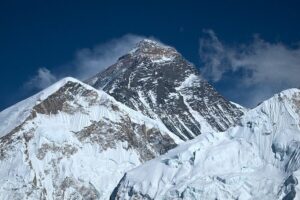
If you can only do one trek in Nepal and want the most rewarding experience per effort, ABC beats EBC on most axes for most people. EBC wins on iconic factor alone. Both are worth doing.
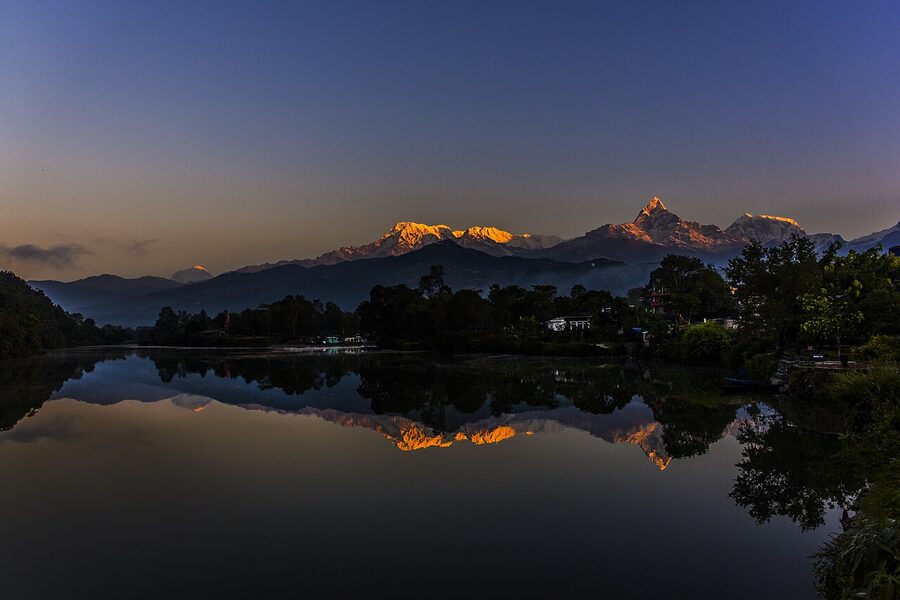
Machapuchhare and the amphitheatre
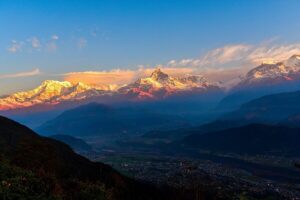
ABC sits inside the Annapurna Sanctuary — a natural amphitheatre about 4 km across, ringed by Annapurna I (8,091 m), Annapurna South (7,219 m), Hiunchuli (6,441 m), Machapuchhare (6,993 m — literally “Fish Tail”), Gangapurna (7,455 m), and Annapurna III (7,555 m). You’re looking at six mountains above 7,000 m and one at 8,000 m from a single viewpoint.
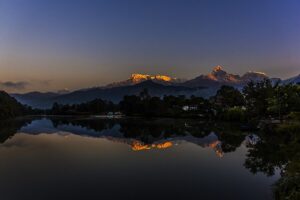
Machapuchhare, the sharp distinctive summit to the south, has never been legally climbed — it’s considered sacred and off-limits to climbing expeditions. The summit looks closer than it is; you feel like you could walk to it but it’s genuinely remote.
ABC itself is a modest cluster of teahouses and a small helipad at the foot of the Annapurna South moraines. Sunrise from base camp on a clear morning — Annapurna I catching first light at 4,130 m while you’re still in your -10°C shadow — is one of the defining Himalayan moments.
When to go
October-November: peak season, clear mountain views, crowds at Chhomrong and Bamboo. First two weeks of October busy.
March-May: second window. Rhododendrons blooming through April at mid-elevations, including the forests between Ghorepani and Tadapani. Pre-monsoon haze by mid-May.
December-February: cold (base camp -15°C overnight), clear mountain air, genuinely quiet. Only lower sections really recommended in the deepest winter.
June-September: monsoon. Lower elevations are leech-ridden, landslides common, base camp snowed in. Skip.
Gear and logistics
Gear list is similar to EBC but with lower-altitude tolerance — a -10°C sleeping bag works (vs -20°C for EBC). Everything rentable in Pokhara at slightly higher rates than Kathmandu but still cheap.
Porters are cheaper on the Annapurna side — NPR 2,500-3,500 per day for a porter carrying up to 20 kg. Worth hiring one: the walk is much more enjoyable without 15 kg on your back.
For the flights to and from Pokhara (and the broader aviation logistics of getting to the starting point), see our airlines guide. For context on the Annapurna Conservation Area, the permit system, and the mandatory-guide rule, see the full trekking guide.
Combining with other things
ABC makes a good centrepiece for a 14-17 day Nepal trip:
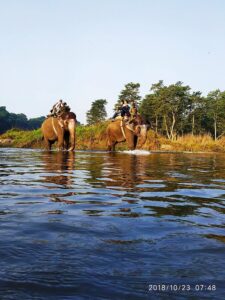
- Kathmandu (2-3 days) + Pokhara (2 nights) + ABC trek (9 days) + Chitwan (3 nights): the classic full Nepal trip
- ABC (9 days) + Mardi Himal extension (4 days): maximum Annapurna-region trekking
- ABC (9 days) + Tent Peak climb (3 extra days): includes the beginner-friendly 5,663 m trekking peak (see our peaks guide)
For the city you’ll start from, see our Pokhara travel guide — 2-3 nights there before the trek gives you time for permits, gear rental, and a Sarangkot sunrise paraglide that makes an excellent warm-up.
The honest reality
ABC is the best trek in Nepal for people who want the mountain experience without committing two weeks, worrying about AMS every day, or flying to Lukla. It’s genuinely that good. Scenery shifts from sub-tropical rhododendron forest at low elevation to pine forest at mid-elevation to glacier moraine at the top, and the Annapurna Sanctuary is a more intimate mountain space than Everest Base Camp’s sprawling moraine field.
The right trek for: first-time Himalayan trekkers, time-limited travellers (2 weeks total), anyone nervous about altitude, and people who’ve done EBC and want something different on a return trip.