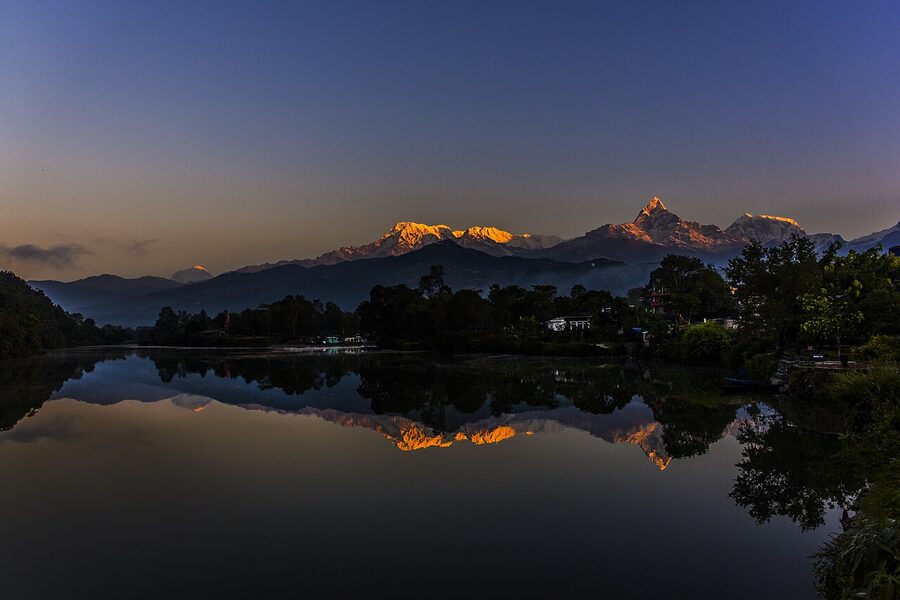
Pokhara is Nepal’s second city and its first choice for anyone who wants mountain views without the walking. The Annapurna range sits 30 km north of the lakeside, reflected on clear mornings in the sleepy Phewa Lake, and most of the country’s serious trekking trailheads radiate out from here. It’s also the country’s adventure capital — paragliding, white-water rafting, bungee jumping, ultralight flights — and the place where most first-time visitors unwind for three days after a long Himalayan trek.
This guide covers what to actually do in Pokhara, where to stay, how long to plan for, and the honest picks about which of the tourist-strip activities are worth your time.
In This Article
- The city in 30 seconds
- Getting to Pokhara
- Where to stay
- Lakeside (Baidam) — the default
- Damside / Mahendrapul — quieter
- Begnas Lake — for people who want to escape tourism entirely
- What to do — the honest picks
- Phewa Lake + boating
- Sarangkot for sunrise — the must-do
- World Peace Pagoda — walk, don’t drive
- Davis Falls + Gupteshwor Cave
- International Mountain Museum
- Old Pokhara — Bindhyabasini Temple + bazaar
- Begnas Lake day trip
- Adventure activities
- Paragliding — probably the single best thing to do in Pokhara
- Zip-line and bungee at HighGround
- White water rafting
- Ultralight mountain flights
- Mountain biking
- Food and nightlife
- How long to stay
- Combining with a trek
- Best time to visit
- Practical notes
- The short version
The city in 30 seconds
Pokhara sits at 827 m in a valley on the edge of the Annapurna foothills, roughly 200 km west of Kathmandu. The city itself spreads across a valley floor about 12 km long, but almost all foreign tourism concentrates in a single neighbourhood — Lakeside (locally Baidam) — along the eastern shore of Phewa Lake. Everything tourists care about is either in Lakeside or a 20-minute drive from it.
The population is around 450,000 and it feels much smaller. Traffic is lighter than Kathmandu’s, the air is noticeably cleaner, and the lake-plus-mountains backdrop gives the place a resort feel that Kathmandu doesn’t have. A lot of returning visitors think of Pokhara as their “Nepal weekend” — a place to catch breath between treks or finish the trip on a relaxed note.
Getting to Pokhara
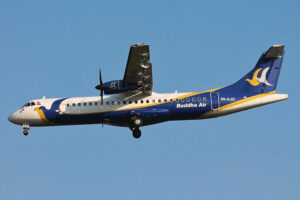
Flight from Kathmandu (25 minutes): Buddha Air, Yeti Airlines, and Shree Airlines all fly the route with 4-8 rotations daily. NPR 5,000-8,000 for Nepalis or USD 100-130 for foreigners. Book through the airline website direct or an agency. Right side (F) of the plane gives the mountain views on the way in.
Tourist bus (7-8 hours): Greenline and Jagadamba run daily Kathmandu-Pokhara services from Thamel. NPR 1,800-2,500 per seat, reclining seats with wifi, basic snacks on board. Departs around 7 AM, arrives Pokhara mid-afternoon. Safer than local buses and better-maintained. The route is the old Prithvi Highway which is scenic in fair weather and a landslide nightmare in monsoon — build a buffer day if you’re arriving during June-August.
Private car with driver (6-7 hours): $80-150 from Kathmandu. Faster than the bus, stops where you want, and can divert to Bandipur as an overnight stop. Most Thamel taxi brokers can arrange this.
For the full mechanics of Nepali domestic aviation including honest safety context, see our domestic airlines guide.
Where to stay
Lakeside (Baidam) — the default
The 1.5 km strip along Phewa Lake’s eastern shore, divided into North Lakeside (quieter, closer to the Annapurna views) and Central Lakeside (busier, bars, restaurants, shops). This is where 95% of foreign visitors stay. A reasonable mid-range hotel — Temple Tree Resort, Hotel Barahi, Waterfront Resort — runs USD $30-80 per night with breakfast.
Budget options: plenty of guesthouses in the backstreets off Lakeside charge NPR 1,000-2,500 per night ($8-20). Hostels run dorm beds at NPR 500-800. Everything here is walking distance to the lake, restaurants, trekking agencies, and onward transport.
Upper end: Temple Tree Resort, Fishtail Lodge (on its own island, access by cable-pulled raft, USD $180+ per night), Waterfront Resort, Shangri-La Village Resort. Views of Machapuchhare from the room are the usual pitch.
Damside / Mahendrapul — quieter
A 10-minute drive south of Lakeside at the outflow of Phewa Lake. Fewer shops, fewer bars, fewer tourists. Stay here if you want a quieter base and don’t mind short taxi rides to the action.
Begnas Lake — for people who want to escape tourism entirely
20 km east of Pokhara on a smaller, quieter lake with almost no foreign tourist presence. A handful of lakeside resorts (Begnas Lake Resort is the best-known) cater mostly to domestic Nepali and Indian visitors. Go here if you’ve done Pokhara already and want something with no paragliders overhead.
What to do — the honest picks
Phewa Lake + boating
The single activity most visitors do. Rent a painted wooden boat at the central lakeside ghat — NPR 800-1,200 ($6-10) for a one-hour self-paddle, or NPR 400 per person for a group ride with a local boatman. Head for Tal Barahi Temple on the island in the middle of the lake; a small yellow pagoda-style shrine surrounded by birds and bells. Good at sunset, terrible at mid-day (hot, crowded).
For the full version, walk the lake’s west side via the Peace Pagoda circuit (see below) — turns the afternoon boat trip into a proper half-day outing.
Sarangkot for sunrise — the must-do
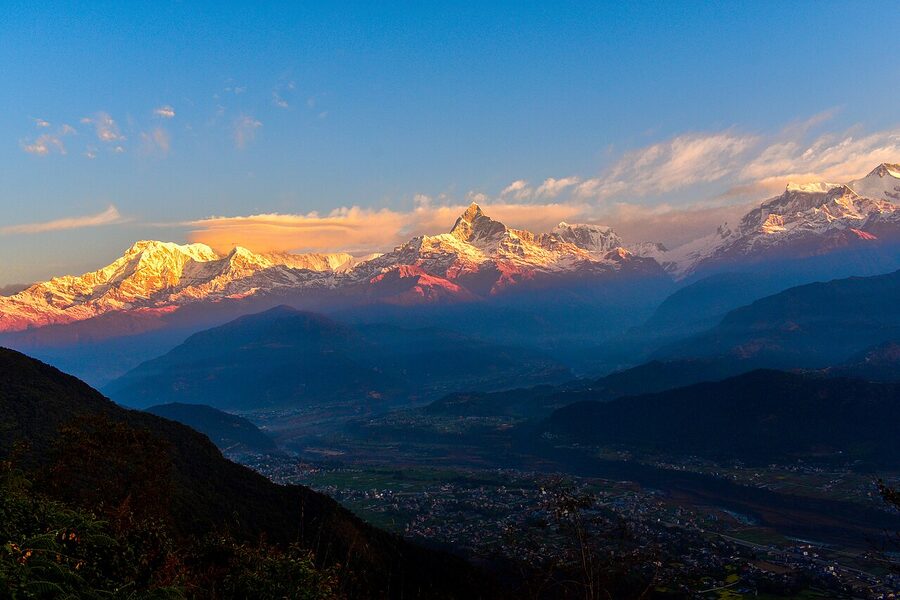
Sarangkot is the ridge-top village at 1,600 m overlooking Pokhara from the north-west, and the classic sunrise viewpoint for the Annapurna range. On a clear October morning you see Dhaulagiri (8,167 m), Annapurna South (7,219 m), Machapuchhare (6,993 m), Annapurna II (7,937 m), Annapurna IV, and Manaslu (8,156 m) from a single spot — roughly 200 km of skyline at once.
Practical details: taxi or Pathao from Lakeside starts from 4:30 AM (sunrise typically 5:30-6:15 depending on season). NPR 2,000-3,000 return. Entry fee to the viewpoint NPR 150. Bring a warm layer — it’s 6-10°C up there in early morning year-round. For an extra NPR 500 you can trade the taxi return for paragliding back down (see below). That’s probably the best single $60 you’ll spend in Nepal.
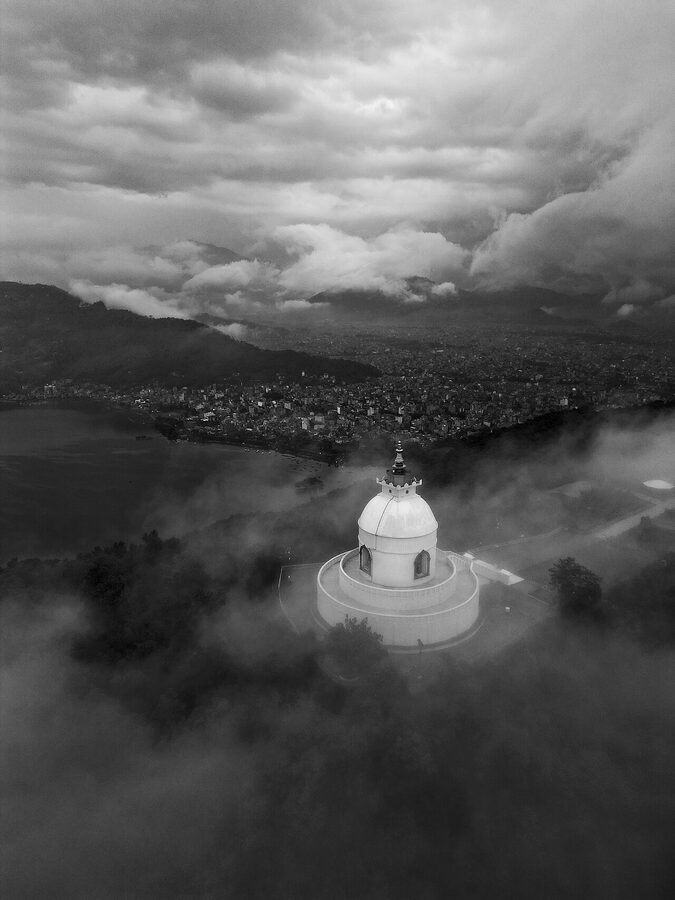
World Peace Pagoda — walk, don’t drive
A white Buddhist stupa on the hill south of Phewa Lake, built by Japanese Buddhists in 1999 as one of 80 “peace pagodas” worldwide. The pagoda itself is unremarkable — it’s the 90-minute walk from Lakeside via the Chorepatan trail through Birdsong forest that makes it worth doing. Most visitors take a boat across the lake to Anadu or Pame, then walk up; the hike back down can be done via Damside or continue to Devi’s Falls if you’ve got energy.
Avoid the straight-taxi-to-the-top option unless mobility is an issue. The walk is the point.
Davis Falls + Gupteshwor Cave
A pair of adjacent attractions in the south of the city. Davis Falls is a pretty but minor cascade where the Pardi Khola drops into a sinkhole — named after Mrs. Davis, a Swiss tourist who drowned there in 1961. Gupteshwor Cave, across the road, is a natural cave system with a small Shiva shrine at the bottom. Both have gift-shop entrance halls and a slightly dated-tourist-attraction feel.
Honest take: worth 30 minutes if you’re passing through. Not worth a dedicated half-day.
International Mountain Museum
Probably Pokhara’s most interesting single attraction. A large museum near the city centre dedicated to mountaineering — first ascents of the 8,000ers, Sherpa culture, local climbing history, indigenous Nepalese mountain peoples. NPR 800 entry, English signage, allow 2-3 hours. Good background context if you’re about to do an EBC or ABC trek.
Old Pokhara — Bindhyabasini Temple + bazaar
The original settlement in the north of the city, predating the tourist zone. Bindhyabasini Temple (dedicated to Durga) is the main landmark — a Newari pagoda on a hilltop that’s the religious heart of old Pokhara. The surrounding bazaar has the produce markets, old merchant houses, and a completely different feel from Lakeside. 30-minute walk or NPR 300 taxi from Lakeside.
Worth an hour if you want to see Pokhara’s non-tourist side.
Begnas Lake day trip
20 km east of the city — a quieter, smaller lake with almost no foreign tourist presence. Take a local bus or taxi out, hire a rowing boat for NPR 500 per hour, and spend a relaxed half-day. Lunch at Begnas Lake Resort ($15-20) or a local tea stall. The Rupa Lake (slightly smaller, further east) can be combined if you have the time and a bicycle.
Adventure activities
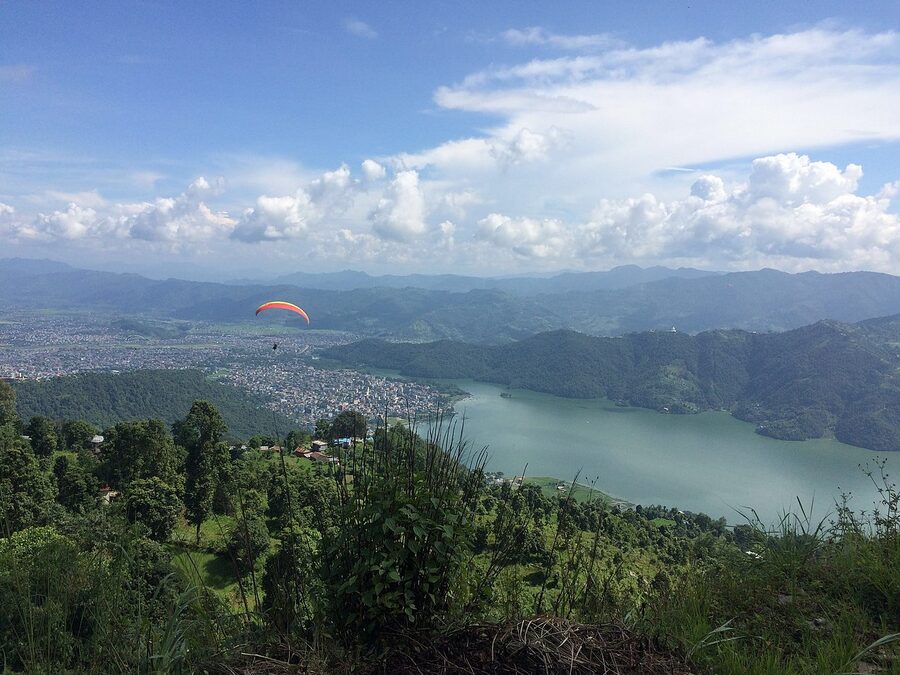
Paragliding — probably the single best thing to do in Pokhara
Pokhara is one of the world’s top three paragliding destinations thanks to reliable thermals, a long valley with few obstructions, and the Annapurna backdrop. Standard tourist tandem flights leave from Sarangkot and land at Phewa Lake — 30 minutes in the air.
Pricing: USD $80-120 for a basic 30-minute tandem including photos and video. Operators cluster along Lakeside — Blue Sky Paragliding, Frontiers Paragliding, Sky Nepal are all well-regarded with good safety records. Flights run September-June (monsoon suspends operations) with best conditions October-December and February-April.
The acro flights (more aerobatics, longer duration) cost $150-200 and are worth it if you’re not prone to motion sickness.
Zip-line and bungee at HighGround
A 10-minute drive from Lakeside. Zip-line is 1.8 km long with a 600 m vertical drop — one of the longest in the world. Bungee is 70 m with the Seti Gorge below. Combo packages USD $90-130 for both. Not as dramatic as The Last Resort bungee near the Tibet border (160 m over the Bhote Koshi) but it’s locally accessible.
White water rafting
Pokhara is a base for rafting on the Seti River (grade 2-3, mellow, day trip $25-40), the Kali Gandaki (grade 3-4, better scenery, 2-3 day expedition $80-150), and further afield the Trisuli and Bhote Koshi. Rafting season is September-May; monsoon is off-limits. Ganesh Rafting and Paddle Nepal are reputable operators in Lakeside.
Ultralight mountain flights
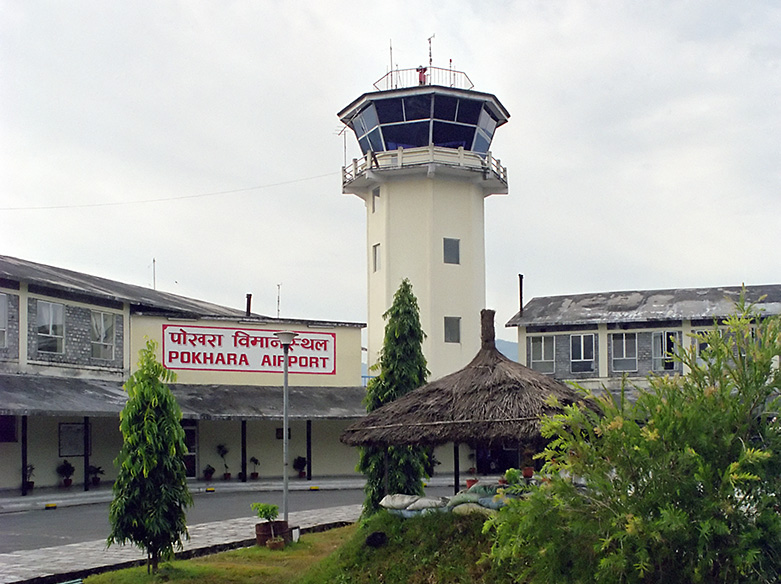
30-minute engine-powered flights from Pokhara Airport up into the Annapurna range — you sit behind the pilot in an open-cockpit microlight and fly low past the peaks. USD $150-250 depending on route and operator. Weather-dependent, mornings only, and actually a better mountain-view experience than the paragliding despite being more expensive.
Mountain biking
The trails around Pokhara — especially out toward Begnas and Kahun Danda — are excellent for intermediate riders. Shop rentals are NPR 800-1,500 per day for a decent front-suspension bike. Pokhara Mountain Bikes and Chain n Gears are the main operators. Guided multi-day tours into Annapurna foothill villages are available ($60-100/day).
Food and nightlife
Lakeside has dozens of tourist-oriented restaurants serving dal bhat, momos, pizza, pasta, and American breakfast. Quality varies enormously. Sensible picks:
- Dal bhat, momos, Nepali food: Caffe Concerto (despite the name, does excellent Thakali dal bhat), Local Mo:Mo, or any of the small side-street eateries off central Lakeside.
- Newari food: Godhuli Restaurant for the full multi-course experience.
- Italian: Boomerang Restaurant has a lake view and does credible pizza.
- Breakfast: Olive Cafe, German Bakery, Maya Devi Village all do good coffee and proper bread.
- Bars: Busy Bee Cafe is the long-running live-music spot. Moondance is the quieter alternative.
Avoid: the restaurants with the most aggressive touts out front, most of the “Nepali cultural dinner” shows (tourist-priced, diluted versions of real village dances), and anything promising “authentic Nepali pizza.”
How long to stay
One night: transit-stop before or after a trek. Lakeside dinner, quick look at the lake, sleep, move on. This is what most package trekkers do and they miss the best of the city.
Three nights: the sweet spot. Day 1 — arrive, Lakeside walk, dinner. Day 2 — Sarangkot sunrise + paragliding down + afternoon boat + Peace Pagoda walk. Day 3 — Mountain Museum + Old Pokhara + chosen adventure activity (rafting, zip-line, ultralight).
A full week: three-night core plus Begnas Lake day trip, extra adventure activities, a 2-day short trek from Pokhara (Panchase loop, or Australian Camp-Dhampus loop).
Extending beyond a week in Pokhara alone starts feeling like you’re stuck. It’s a great base for activity but it’s not a place that rewards long stays on its own.
Combining with a trek
Pokhara is the launch pad for almost every Annapurna-region trek:
- Poon Hill (4-5 days): short accessible trek to 3,210 m via Ghorepani. Starts with a 90-minute drive to Nayapul or Kandey.
- Annapurna Base Camp (7-12 days): classic mountain trek into the Annapurna Sanctuary. Starts with a 2-hour drive to Nayapul or Siwai.
- Mardi Himal (4-6 days): newer, less-crowded, tops out at 4,500 m.
- Annapurna Circuit (15-21 days): the classic long trek. Drive 4-5 hours north to Besisahar or Chame to start.
- Mustang (Upper or Lower): restricted-area trek starting from a flight to Jomsom. 10-14 days.
For the full breakdown including permits, seasons, and the 2023 mandatory-guide rule, see our trekking in Nepal guide.
Best time to visit
October to early December: the best window. Clear mountain views, mild temperatures, the whole Lakeside in good form. First two weeks of October are peak crowds and peak pricing.
March to May: second window. Rhododendrons blooming in the foothills, warm days, occasional afternoon thunderstorms by mid-May. Pre-monsoon haze reduces mountain visibility by mid-May.
December to February: cool (down to 5°C at night), often the clearest mountain views of the year, fewer crowds, prices soft. Good for chill lakeside days with mountain photography.
June to September (monsoon): skip for mountain views. Lake is still beautiful, food is excellent, paragliding and rafting shut down, prices are 40-50% off. Only worthwhile if you’re budget-focused and don’t mind rain.
Practical notes
ATMs: plenty in Lakeside, Mahendrapul, and Chipledhunga. Standard Nepali fees apply (NPR 500 per transaction, NPR 35,000 max withdrawal).
SIM cards: Ncell and Nepal Telecom have shops on central Lakeside. Tourist SIM with 30-day data NPR 1,500. Bring passport.
Left luggage: most hotels will store your trek-heavy luggage while you do your Annapurna walk, for a small fee (NPR 100-200/day) or free if you’re a returning guest.
Permits for trekking: ACAP (Annapurna Conservation Area) and TIMS cards can both be issued at the Nepal Tourism Board office in Damside or Lakeside. NPR 3,000 for ACAP, NPR 2,000 for TIMS. Plan a half-day.
Medical: Manipal Teaching Hospital near Lekhnath is the best medical facility in the area. For minor issues, Western Regional Hospital in the city centre handles walk-ins. Altitude-sickness meds (Diamox) are available at pharmacies on Lakeside.
The short version
Pokhara gets the balance right — mountain scenery without altitude, tourist infrastructure without Kathmandu’s chaos, a genuine adventure menu, and a lake that looks like it was painted in. Three nights is the sweet spot unless you’re adding a trek. Book Sarangkot + paraglide combo on day 2. Eat Thakali dal bhat at least twice. Skip Davis Falls unless you’re passing.
For more of the country that Pokhara connects to, start with the Nepal travel guide, the Kathmandu guide for your before-or-after stop, and the trekking guide for the Annapurna-region walks that use Pokhara as a base.