Village tourism is Nepal’s homegrown answer to mass trekking. Instead of a teahouse chain on a busy trail, a village tourism programme puts you in someone’s actual house, eats you in their kitchen, and gets you out cutting millet or weaving dhaka cloth in a way that package trekking never does. It’s slower, quieter, considerably more awkward at first, and for many visitors it’s the most memorable part of a Nepal trip.
This guide covers how the system works, which villages are set up for it, what you’ll actually do, what it costs, and how to choose between the dozen or so established village-tourism programmes across the country.
In This Article
- What village tourism actually is
- What you actually do
- The main village tourism destinations
- Ghalegaun (Lamjung district)
- Sirubari (Syangja district)
- Panchase (western of Pokhara)
- Bandipur (Tanahun district)
- Kagbeni / Jomsom villages (Mustang)
- Tharu villages (Chitwan and Bardia buffer zones)
- Tamang Heritage Trail (Langtang region)
- Ghale / Tandrang / Manaslu foothills
- Costs and logistics
- How to book
- What to expect (the honest bits)
- Best time to visit
- Combining with a standard itinerary
- Why it matters
What village tourism actually is
In Nepal-specific terms, “village tourism” is a government-backed category where a village collectively runs a homestay programme. Households take turns hosting guests, a committee rotates the bookings, income gets shared, and the village uses a portion of revenue for community projects — school funds, trail maintenance, water systems. It’s not an individual homestay app like Airbnb; it’s community-scale.
The modern form traces back to the Sirubari initiative in Syangja district, launched in 1997 with support from the Nepal Tourism Board. Sirubari proved the model worked — a village could preserve its Gurung culture, bring in supplemental cash, and not get hollowed out by the way traditional trekking turns local people into service workers. The template got copied. By 2026 there are over 70 registered village tourism programmes across the country, with widely varying quality and authenticity.
What you actually do
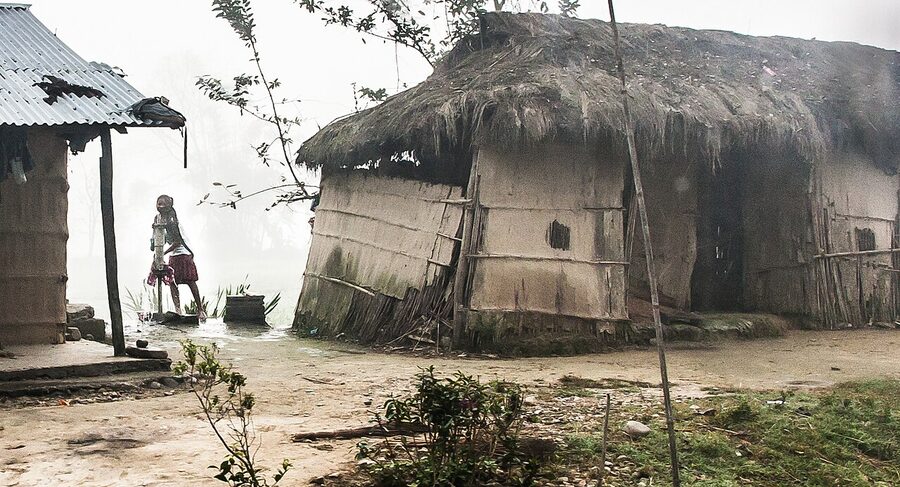
A village tourism stay is structured around ordinary village life, not staged experiences. A typical two-night programme runs like this:
Arrival afternoon: Walk into the village with a guide or local contact, get assigned a host family, tea and snacks, a wander around the village with someone pointing out temples, the water mill, the goat pens. Welcome dinner in your host’s kitchen — dal bhat plus whatever’s seasonal (millet flatbread, vegetable curry, fresh pickle).
Day 2: Morning walk up to a viewpoint for the mountains. Mid-morning spent at whatever the village is doing that day — planting, threshing millet, watching someone weave, helping with the water buffalo. Lunch. Afternoon often a cultural show (village Gurung or Tharu dance, traditional music, explanation of the local festival calendar). Evening with host family, usually involving rice wine if the village has it.
Day 3: Breakfast, pack up, farewells, walk or drive to the next destination.
None of this is performative. You’re eating food the family cooks for themselves. You’re sitting in the kitchen with the grandmother who speaks no English and the kids who speak some. If you’re squeamish about being stared at by curious children or eating with your hands, village tourism will not be comfortable for you. If you want the real thing, it will.
The main village tourism destinations
Ghalegaun (Lamjung district)
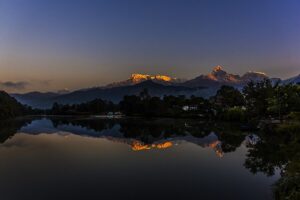
One of the best-known and longest-running homestay villages. A Gurung community at 2,100 m in the foothills between Pokhara and Annapurna, with panoramic mountain views (Machapuchhare, Manaslu, Annapurna II, Annapurna IV). Two-night stays, cultural shows with traditional Gurung dance, village-led hikes, and the option to connect onward to Besisahar for the Annapurna Circuit or back to Pokhara. ~60 households participate.
Sirubari (Syangja district)
The original. A Gurung village at 1,700 m south of Pokhara, 4-hour drive from the lakeside. Sirubari pioneered the Nepal village tourism model and still runs it well — strict rotation between homestay households, cultural performances staged by the villagers, village-produced meals. Less dramatic mountain backdrop than Ghalegaun but more historically rooted.
Panchase (western of Pokhara)
A ridge-top community that runs a circular trekking route (3-5 days) linking five villages on the Panchase hill south of Annapurna. Brahmin and Gurung mixed community, lower altitude (2,500 m max), good for a short village-tourism trek that adds the mountain-view element without committing to the full Annapurna circuit.
Bandipur (Tanahun district)
A bit different — Bandipur is a preserved Newar trading town on a ridge halfway between Kathmandu and Pokhara, rather than a village proper. Vehicle-free main street, intact 18th-century Newar architecture, boutique homestays and small hotels. Cultural stay rather than rural stay, and an easy stopover if you’re travelling between the two main cities. Most visitors spend 2 nights.
Kagbeni / Jomsom villages (Mustang)
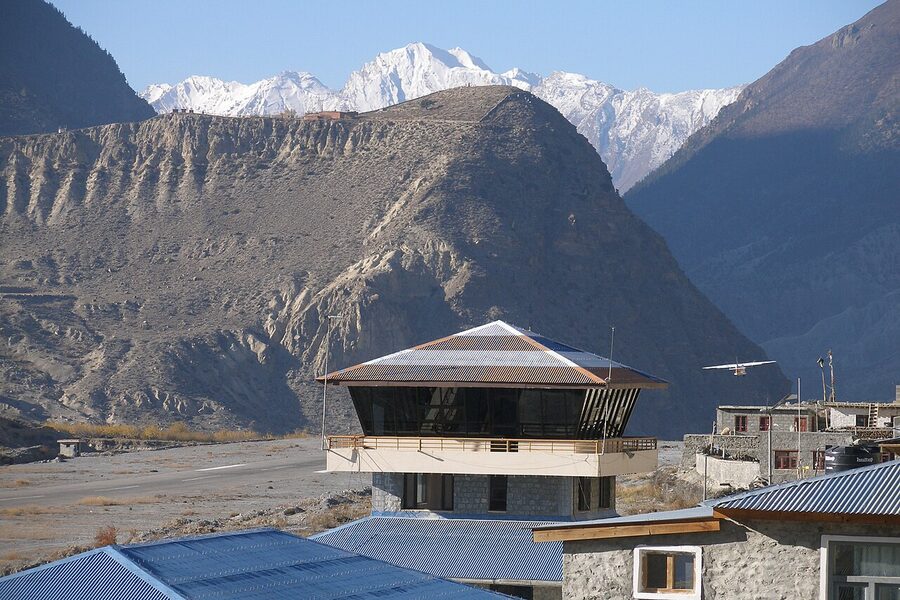
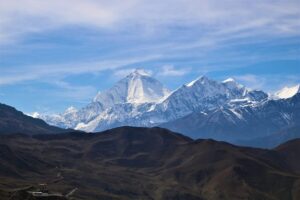
The Thakali villages of the Kali Gandaki valley — Kagbeni, Tukuche, Marpha, Jomsom itself — are effectively always in village-homestay territory because of how the region works. Stone-built flat-roof Tibetan-Buddhist architecture, apple orchards, dal bhat with Thakali-seasoning, rich cultural mix. Accessed by flight to Jomsom (see our airlines guide) or via the Annapurna Circuit trek.
Tharu villages (Chitwan and Bardia buffer zones)
The Tharu are the indigenous people of the Terai lowlands, historically malaria-resistant and the only inhabitants of the inner-Terai jungle region before 20th-century settlement. Tharu homestays in the Chitwan buffer zone around Sauraha, and a handful in Bardia near Thakurdwara, combine a cultural stay with a jungle safari experience. Architecture, food, and dance are all quite distinct from the hill cultures further north.
Tamang Heritage Trail (Langtang region)
A week-long trekking route through Tamang villages north of Kathmandu — Gatlang, Tatopani, Thuman, Briddim. Tamang are a Tibetan-descent group with Buddhist practice, distinctive wooden architecture, and hot springs at Tatopani. Shorter and lower-altitude than Langtang Valley proper, with more cultural focus.
Ghale / Tandrang / Manaslu foothills
Several homestay programmes operate in the lower foothills of Manaslu — Gurung villages on the approach to the restricted area. Nar Phu valley has a small homestay programme run by its resident ethnic Tibetan community, though the restricted-area permit ($100+ per week) makes the overall trip significantly more expensive.
Costs and logistics
Village tourism is genuinely cheap compared to standard trekking because there’s no teahouse mark-up. Typical 2026 pricing:
- Homestay room plus three meals: NPR 1,500-3,000 ($12-25) per person per night. Includes tea, dal bhat lunch and dinner, simple breakfast.
- Cultural show: NPR 500-1,500 per group (not per person). Optional.
- Guide fee: NPR 2,500-4,000 per day. Necessary if the villages are off-road (which most are).
- Transportation: village-to-village or Pokhara-to-village local transport is NPR 300-1,500 depending on distance and vehicle.
A 3-night, 4-day Ghalegaun or Sirubari trip from Pokhara, with guide, transport, homestays and meals, runs roughly NPR 12,000-18,000 per person ($100-150). That’s dramatically cheaper than a trekking package in the same area.
How to book
Four practical options:
- Community Homestay Network (CHN) — communityhomestay.com. The largest organised village-homestay booking platform in Nepal, run as a social enterprise with verified community-managed stays. Prices include guide and transport add-ons.
- Nepal Tourism Board — the NTB at ntb.gov.np lists registered village tourism committees and provides contact info. Direct bookings are possible but require Nepali-language communication in some cases.
- Trekking agency packages — many Kathmandu and Pokhara trekking agencies now offer village-stay packages that combine a trek with one or two nights of homestay. Easiest for first-time visitors.
- Walk-up direct — some villages (Bandipur, Dhampus, Panchase) can be walked into and you’ll be offered a room for the night. Works best if you speak some Nepali or travel with a guide who does.
What to expect (the honest bits)
Things that might surprise a first-time village-tourism visitor:
- Squat toilets: the norm in most villages. Many homestays have a pit-latrine or simple flush squat; Western-style toilets are rare outside the bigger homestay operations.
- Cold showers, or bucket baths: hot water is a luxury in rural Nepal. Some homestays have solar-heated water; others expect you to bucket-bathe with heated water from a kettle.
- Communal sleeping in some places: a private room is the norm but at busier times you may share with other guests or occasionally a family member.
- Limited English: the host families often don’t speak much English. A guide-translator is effectively mandatory for anything beyond basic tea-and-smiles interaction.
- Unpredictable power: some villages are on the grid; some are solar-only; some have no electricity after 9 PM.
- Animals close at hand: buffalo, goats, chickens, dogs all live on or near the homestay compound. If you have an allergy or phobia, factor it in.
None of this is a problem if you go in with the right expectations. It’s a problem if you’re expecting a rural Airbnb.
Best time to visit
Village tourism is possible year-round at lower elevations but best in autumn (October-November) and spring (March-April). Autumn catches the harvest season — you’ll see millet threshing, rice drying, buckwheat flowering depending on elevation. Spring has rhododendrons in bloom and festival season (Holi, Buddha Jayanti, various village-specific temple festivals).
Monsoon (June-August) is surprisingly good for the Terai villages — Tharu homestays in Chitwan buffer zones are pleasant with the rain, and the landscape is lush in a way you won’t see any other time of year. Higher-elevation villages suffer more from monsoon mud.
Winter (December-February) is cold and the higher villages (Ghalegaun, Kagbeni) can be quite uncomfortable at night. Terai villages remain comfortable.
Combining with a standard itinerary
The best village-tourism trips don’t stand alone — they’re stitched into a broader itinerary. A few worked combinations:
- Pokhara + Ghalegaun + Annapurna Base Camp: 14-day trip combining lakes, village stay, and a proper mountain trek.
- Chitwan + Tharu homestay + Lumbini: 7-day Terai-focused trip with jungle, culture, and pilgrimage.
- Langtang Valley + Tamang Heritage Trail: 14 days, two-part trekking experience.
- Annapurna Circuit + Kagbeni/Marpha stay: the circuit passes through the Thakali villages naturally; spending an extra day in Marpha or Kagbeni turns a trek into a culture trip.
For practical planning context on the rest — the flights that get you to the valleys these villages are in, the national parks they abut, the permits you’ll need — start with the airlines guide, the national parks overview, and the main trekking guide.
Why it matters
Village tourism is the only form of Nepal tourism that routinely sends money into the villages themselves rather than to Kathmandu and Pokhara-based agencies. The rotation system means every family in a registered programme village receives guests eventually, every household benefits, and the community collectively decides what to do with communal revenue. It’s not a perfect model but it’s the closest thing Nepal has to a tourism economy that actually reaches the countryside.
If you’ve already done a standard trek and are coming back for a second or third visit, village tourism is probably the most interesting thing you can do with another two weeks. If you’re coming for the first time and want something slower than the trekking circuit, a village-stay combined with a short trek can be more rewarding than a longer solo-walked teahouse experience.