Chitwan National Park is the best wildlife experience in South Asia outside of India’s tiger parks — and arguably better than several of them for rhino density, ease of access, and infrastructure. Nepal’s first national park, a UNESCO World Heritage Site since 1984, and the single best three-day add-on to any Himalayan-focused Nepal trip. Most trekkers wait until they’re exhausted from their Annapurna or Everest walk and then collapse into Sauraha for a few days of jeep safaris and Tharu village life. It’s a smart plan.
This guide covers what to actually do in Chitwan, where to stay, costs, and the realistic wildlife sighting probabilities you should expect.
In This Article
- The basics
- Getting to Chitwan
- Wildlife — what you’ll actually see
- Where to stay — Sauraha vs. inside the park
- What to actually do
- Jeep safari
- Canoe safari on the Rapti
- Jungle walk
- Elephant-back safari — ETHICAL NOTE
- Elephant breeding centre
- Tharu cultural show
- Tharu village walk
- The Tharu people
- Cost breakdown for a 3-night Chitwan trip
- Combining with the rest of Nepal
The basics
- Location: Central Terai, between Bharatpur and Sauraha, 165 km south-west of Kathmandu
- Area: 952 km²
- Entry fee: NPR 2,000 ($15) for foreigners, NPR 1,000 SAARC, NPR 150 Nepali
- UNESCO status: listed since 1984
- Best seasons: November to March (winter is peak wildlife viewing)
- How long to stay: 3 nights minimum for a proper experience
- Main tourist base: Sauraha village, on the park’s eastern edge
Getting to Chitwan
Flight: 25-minute Buddha Air / Yeti flight from Kathmandu to Bharatpur Airport, then a 30-minute drive to Sauraha. USD $120-150 for foreigners one-way. Most convenient option.
Tourist bus: Kathmandu-Sauraha direct in 5-6 hours with Greenline/Jagadamba, NPR 1,500-2,000. Pokhara-Sauraha in 5 hours.
Private car: 5-6 hours from Kathmandu, $80-120 for the vehicle. Can combine with a stop in Daman for mountain views.
Wildlife — what you’ll actually see
Honest probability tables for a standard 3-day safari in Sauraha:
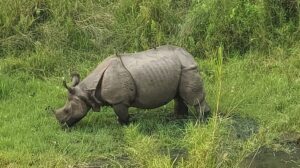
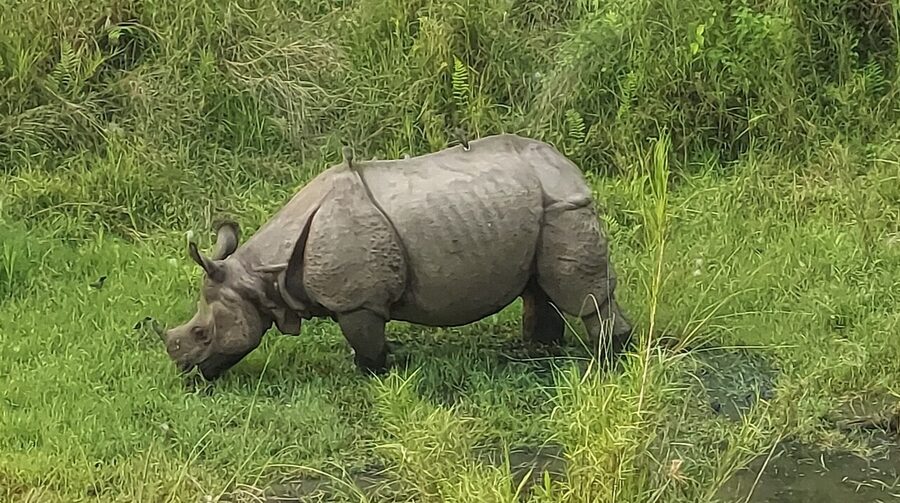
- One-horned rhino: 90%+ sighting probability. Often multiple rhinos per day. Get close enough to see the detail of the horn.
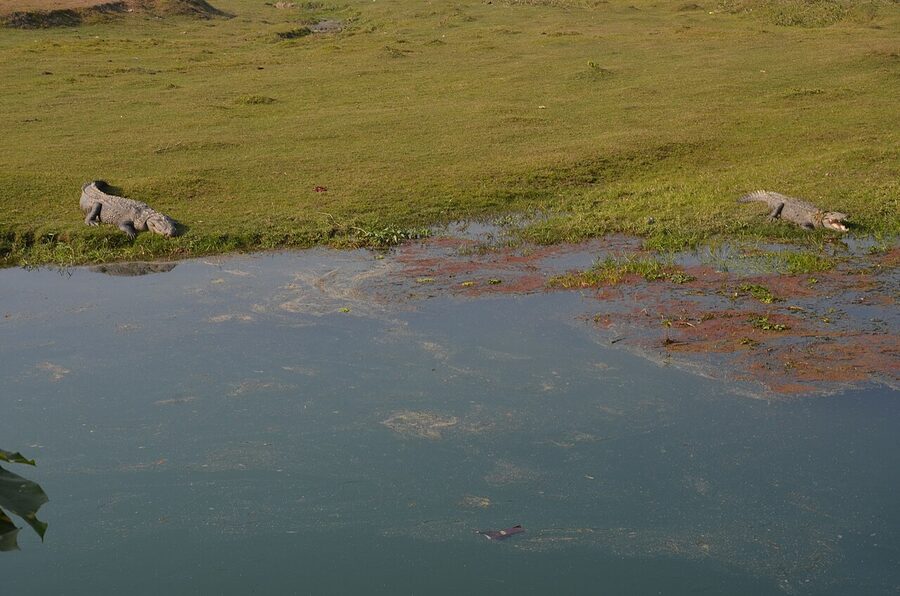
- Crocodiles (gharial + mugger): ~95% on a canoe trip down the Rapti or Narayani.
- Deer (spotted, sambar, barking): 100% — you’ll see dozens.
- Wild boar: 50-70%.
- Rhesus and langur monkeys: 100% — common.
- Asian elephant: 15-25% for wild ones (the park has ~50 wild elephants). Frequent near certain waterholes and grass areas in the dry season.
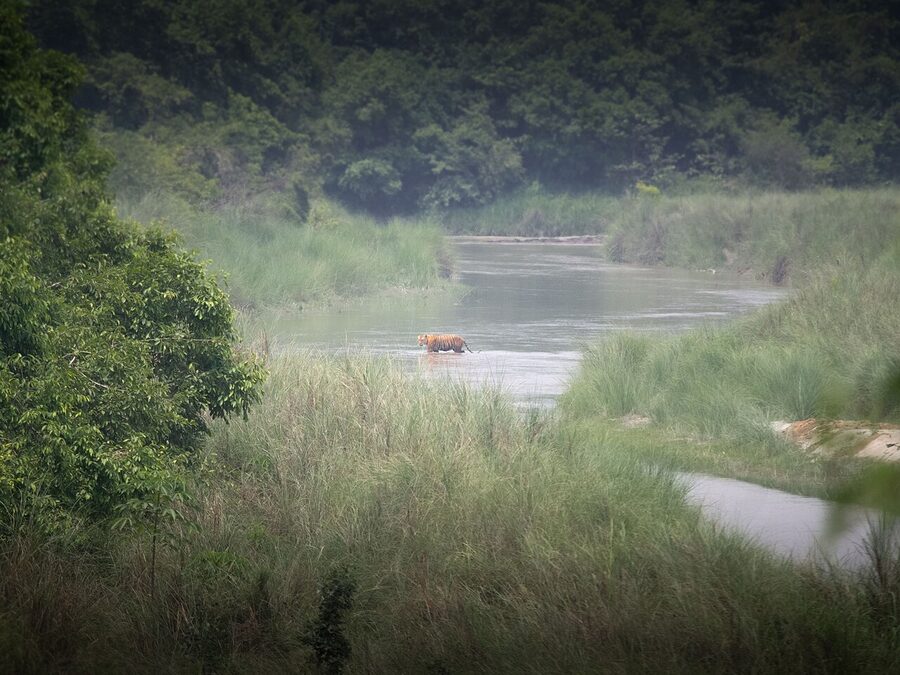
- Bengal tiger: 10-15% on a 3-day jeep. Tigers exist (~120 in the park) but visibility through sal forest is poor. Don’t plan your trip around seeing one.
- Sloth bear: 5-10%. Rare sightings, usually in early morning or late afternoon.
- Leopard: 2-5%. Genuinely rare visually despite being resident.
- Gangetic dolphin: 20-40% on the Narayani boat safari (only available in certain seasons, water-level dependent).
- Birds: 500+ species resident. Any birder will have a rich 3 days.
The park has also recorded Bengal floricans (critically endangered grassland birds), wild water buffalo (small relict population), and gaur (the largest wild cattle species) — all possible but low-probability.
Where to stay — Sauraha vs. inside the park
Sauraha village: the main tourist hub, 15-minute drive from the park gate. 30+ lodges and guesthouses at every price point. This is where 95% of foreign visitors stay.
- Budget: $10-25/night (Jungle Vista, Rhino Residency Lodge)
- Mid-range: $40-80 (Chitwan Forest Resort, Hotel Parkside, Maruni Sanctuary Lodge)
- Upscale: $150-300 (Barahi Jungle Lodge, Taj Meghauli Serai, Tiger Tops — the last being inside the buffer zone near the old royal hunting reserve)
Inside-park lodges like Tiger Tops are unusual in Nepal — they operate on old concession agreements and offer more immersive safaris. Expect $350-$600/night all-inclusive. Worth it for dedicated wildlife photographers but overkill for most visitors.
Meghauli area: western edge of the park, quieter, closer to the Narayani river. Better for dolphin safaris. Smaller village, fewer options, harder logistics.
What to actually do
Jeep safari
The standard wildlife activity. 4-6 hour morning or afternoon drive inside the park in an open-sided 4WD with a driver and a naturalist guide. Two per day is the pace most lodges set for a 3-night stay.
Cost: NPR 4,000-6,000 ($30-45) per person for a shared jeep with 6-8 passengers, or NPR 10,000-15,000 for a private vehicle. Includes park entry fee. Best routes vary by season — your guide will know.
Canoe safari on the Rapti
90-minute dawn float down the Rapti river in a dug-out wooden canoe. Passes crocodiles, waterbirds, occasional rhinos coming to drink. Ends at the Bishazari Tal wetlands. NPR 1,500-2,500.
Note: the canoes are tippy. Don’t go if you’re nervous around water and can’t swim.
Jungle walk
4-hour guided walking safari inside the park with two armed guides (armed in case of tiger/rhino encounters — genuinely). Goes at foot-speed, you see different things from a jeep. More atmospheric but more physically demanding. NPR 2,500-4,000.
Elephant-back safari — ETHICAL NOTE
Traditional elephant-back safaris used to be Chitwan’s signature activity. Since 2022, strong welfare concerns and tourism industry pushback have dramatically reduced them — many lodges have stopped offering them. The remaining elephants are generally better cared for than they were but riding them is still not recommended by welfare organisations. Skip this one.
Elephant breeding centre
The government-run elephant breeding centre near Sauraha lets you observe trained domesticated elephants at close range without riding them. Baby elephants, bathing in the river, feeding. NPR 300. Reasonable half-hour stop.
Tharu cultural show
Evening performances of Tharu stick dance and traditional songs. The good versions are community-run and authentic; the tourist-lodge versions are diluted. Ask at your lodge which one they recommend, and default to the Tharu Community Centre in Sauraha if unsure.
Tharu village walk
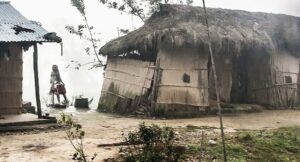
Half-day guided walk through the Tharu villages in Chitwan’s buffer zone. More interesting than the cultural show for actual engagement — you see the traditional architecture, visit homes, hear about village life. NPR 2,000-3,000.
The Tharu people
The Tharu are the indigenous people of the Terai, historically malaria-resistant thanks to genetic adaptation that protected them when the rest of Nepal’s hills-people couldn’t settle in the jungle. This is why Chitwan’s forests stayed wild until DDT spraying in the 1950s made the region liveable for non-Tharus. The park’s designation in 1973 came just as the Tharu were being displaced from their traditional villages — a complicated history that Sauraha’s tourism industry doesn’t always acknowledge cleanly.
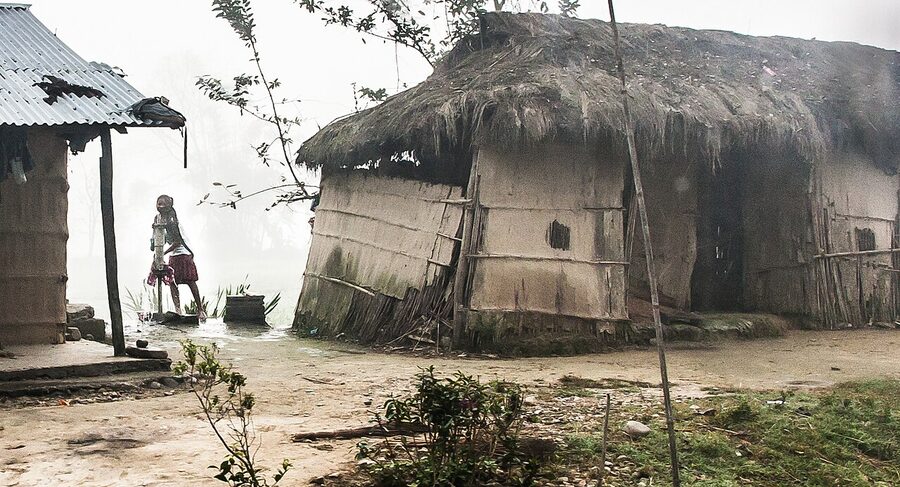
Modern Tharu culture: distinctive mud-and-wattle architecture, painted walls, specific dress (particularly the women’s), unique cuisine (fish-heavy, spicier than hill Nepali food), and the stick dance. The Tharu Community Centre in Sauraha does a good job of giving visitors a genuine window into the culture.
Cost breakdown for a 3-night Chitwan trip
- Transfer Kathmandu-Sauraha (flight): $120-150
- 3 nights mid-range lodge including breakfast: $150-225
- Park entry fee (1-day permit, use up to 3x): NPR 6,000 = $45
- 2 jeep safaris: $70-90
- 1 canoe safari: $20
- 1 jungle walk: $30
- Tharu cultural show + village walk: $25
- Meals outside lodge breakfast: $45
- Tips to guides and drivers: $20-30
Total: $525-720 per person for a proper 3-night Chitwan experience.
Combining with the rest of Nepal
Chitwan fits naturally at either end of a Himalayan trekking trip:
- Kathmandu → Annapurna trek → Chitwan → home: standard wind-down, warm Terai weather after cold mountain trekking.
- Kathmandu → Chitwan → trek → Kathmandu → home: does the safari while you’re still fresh, leaves the trek for later.
- Kathmandu + Chitwan only (5-7 days): for non-trekkers, a complete Nepal experience without any altitude. Underrated option.
For the broader national park system including Bardia (the quieter Chitwan alternative, often better tiger sightings), see our Nepal national parks guide. For domestic flights including the Kathmandu-Bharatpur hop, see the airlines guide. For the overall trip planning that fits Chitwan into a 2-week Nepal trip, see the Nepal travel guide.