Nepal’s national park system is one of the quiet success stories of Asian conservation. Thirteen parks cover everything from sub-tropical sal jungles at 60 m elevation to the highest ice in the world, and together with the country’s conservation areas and reserves, they protect something like a quarter of Nepal’s entire land area. That’s a remarkable share for a small country with not much spare cash.
What this means for a traveller is that Nepal has both the jungle safari and the Himalayan trek side of a wildlife itinerary, and both of them are legitimately good. A rhino-plus-snow-leopard country list is not common. This guide walks through all thirteen national parks: what you’ll see, when to go, how to get in, what it costs, and which ones are worth your time versus which ones are basically paper parks that aren’t realistically set up for visitors.
In This Article
- How Nepal’s protected area system actually works
- The Terai lowland parks
- Chitwan National Park — the first one, and still the best for safari
- Bardia National Park — the quieter tiger country
- Shuklaphanta National Park — grassland and swamp deer
- Parsa National Park — the corridor
- Banke National Park — the newest Terai park
- The mid-hill parks
- Shivapuri-Nagarjun National Park — the Kathmandu Valley rim
- Makalu-Barun National Park — remote and serious
- The Himalayan parks
- Sagarmatha National Park — Everest and the Khumbu
- Langtang National Park — the easy high-altitude trek
- Rara National Park — the smallest and most beautiful
- Shey-Phoksundo National Park — the biggest and the wildest
- Khaptad National Park — the spiritual one
- Api-Nampa Conservation Area — hold on, that’s not a national park
- Entry fees and permits — what it actually costs
- Wildlife — what you’re actually likely to see
- When to go
- How to pick a park
How Nepal’s protected area system actually works
There are three categories of protected area in Nepal, and the distinction matters if you’re trying to plan a trip:
- National parks — 13 of them, fully state-managed by the Department of National Parks and Wildlife Conservation (DNPWC). Entry fees apply, some have guided-only rules, and there are buffer zones around them where communities can still use the land.
- Conservation areas — 6 of them, including Annapurna Conservation Area (the largest at 7,629 km²) and Manaslu. These are managed with more community involvement and less rigid protection, which is why you can walk the Annapurna Circuit through villages that are inside what’s technically a conservation area.
- Wildlife reserves and one hunting reserve — Dhorpatan is the only legal hunting reserve, where blue sheep and Himalayan tahr are taken on expensive permits. Most travellers don’t go near it.
By area and headline species, the thirteen parks split cleanly into three regions: the Terai lowlands (tigers and rhinos), the mid-hill parks (forest birds and leopard), and the Himalayan parks (snow leopards, red pandas, and the biggest mountains on Earth). We’ll walk them in that order.
The Terai lowland parks
Five parks sit along Nepal’s southern border with India — a belt of sub-tropical forest, grassland, and rivers that hold almost all the country’s big-mammal wildlife outside the Himalayas.
Chitwan National Park — the first one, and still the best for safari
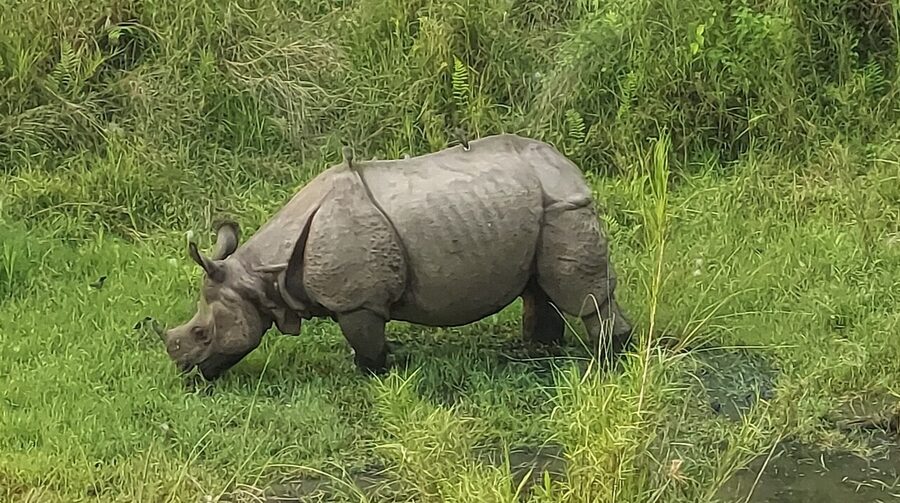
Founded in 1973 as Nepal’s first national park, Chitwan became a UNESCO World Heritage Site in 1984. It covers 952 km² between the Rapti and Narayani rivers in the central Terai. The single best reason to go: the greater one-horned rhino population, which has been dragged back from near-extinction through forty years of good anti-poaching work and now stands at around 750 animals. A morning jeep safari in Sauraha has a genuine chance of encountering rhinos grazing in the open grasslands, which is something no other park in the country does reliably.
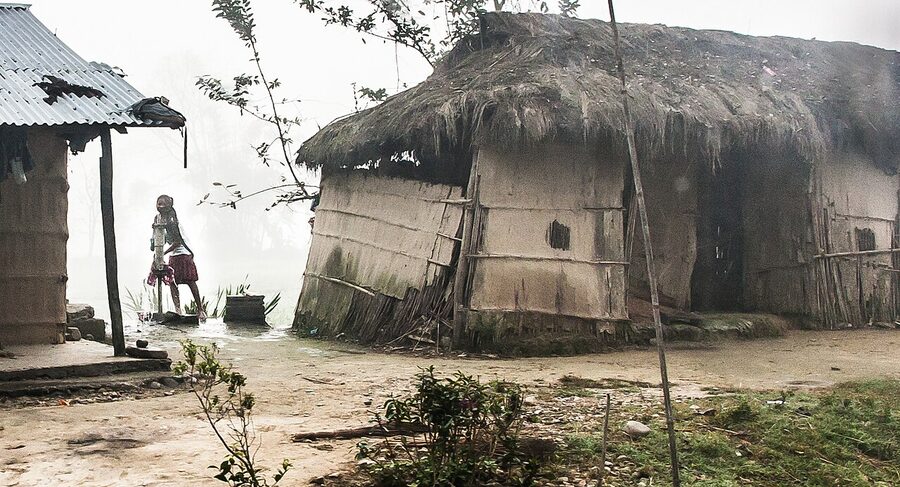
Beyond rhinos: around 120 Bengal tigers (sightings possible, not likely on a single trip), gharial crocodiles in the Narayani, Gangetic dolphins in the deeper river stretches, wild elephants, sloth bears, and more than 500 bird species. The Tharu villages on the park’s edge are the cultural draw — the Tharu are a malaria-resistant Terai people with a distinctive architecture and a stick-dance that most visitors will see performed at some evening cultural show. Eat at a Tharu-owned place in Sauraha rather than one of the expat-run restaurants if you want the real version.
Access: 25-minute flight Kathmandu to Bharatpur, then a 30-minute drive to Sauraha, or a 5-hour bus/car ride on the highway. Entry fee: NPR 2,000 ($15) for foreigners, NPR 1,500 for SAARC nationals, NPR 150 for Nepalis. A 3-night stay is the sweet spot — less is too rushed for a proper jeep + walking + canoe sequence, more gets repetitive.
Bardia National Park — the quieter tiger country
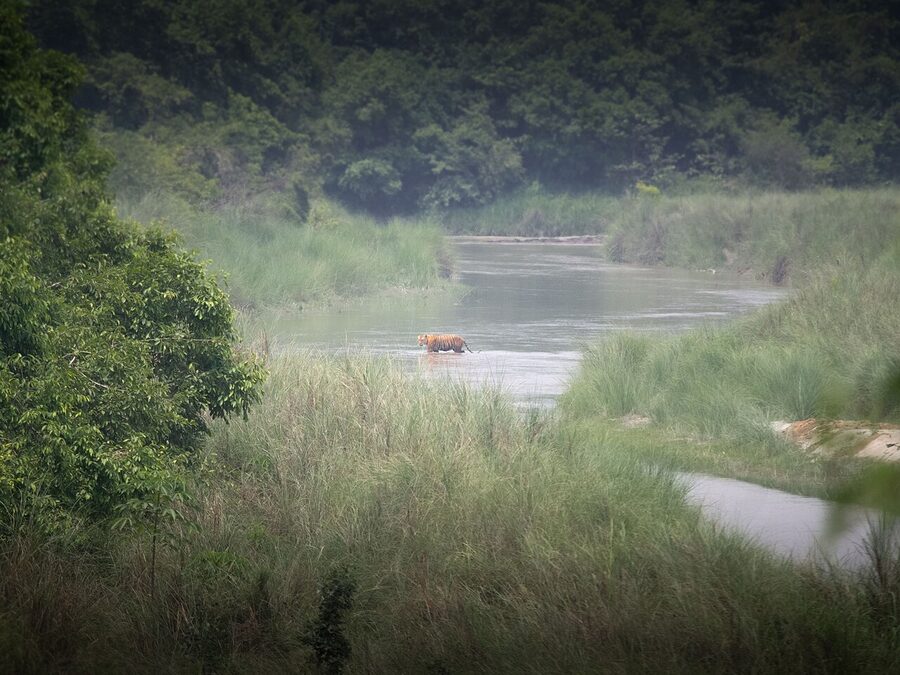
Bardia is what Chitwan was thirty years ago: less infrastructure, fewer tourists, and a wilder feel. 968 km² in the western Terai along the Karnali River, founded in 1988. The tiger density in Bardia is actually higher than Chitwan — the last survey put it at around 125 tigers on a smaller human-impact footprint — and the park is noticeably quieter. You might spend three days on safari and see four or five other jeeps all week.
What it’s famous for: tigers, Gangetic dolphins in the Karnali, wild elephants (a resident population of about 50), and some of the best birdwatching in the Terai. It doesn’t have the rhino numbers of Chitwan — maybe 38 animals, concentrated in a small area. If you’re doing one Terai park and want the wildlife experience less mediated, go here instead of Chitwan.
Access: 45-minute flight Kathmandu to Nepalgunj, then a 3-hour drive east to Ambassa or Thakurdwara (the main park gates). Entry fee: NPR 1,500 ($12) for foreigners.
Shuklaphanta National Park — grassland and swamp deer
Far-western Terai, near the Indian border. 305 km² of open grassland (the “phanta” in the name) interspersed with wetlands and riverine forest. The park holds the world’s largest population of swamp deer — somewhere between 2,000 and 2,500 animals that move in herds across the grasslands during the dry season, which is the main reason to visit. Also tigers, wild elephants, and the Bengal florican, a critically endangered grassland bird.
Shuklaphanta is less set up for foreign tourists than Chitwan or Bardia. Infrastructure is thin, guided-safari operators are few, and the park is genuinely remote. Come here if you’ve already done Chitwan or Bardia and want something less packaged.
Parsa National Park — the corridor
627 km² east of Chitwan, upgraded from wildlife reserve to national park in 2017. Parsa is effectively a tiger corridor extending Chitwan’s habitat into the Churia hills. Dense sal forests, sloth bears, wild elephants, and an increasing tiger population as the Chitwan population spills east. Almost no tourist infrastructure — Parsa exists for the wildlife rather than for visitors. Skip unless you have a specific reason (researcher, birder chasing a specific species) to go.
Banke National Park — the newest Terai park
Founded in 2010, Banke is 550 km² adjoining Bardia on the east. The point was to expand tiger habitat, and it’s working — breeding pairs have been documented, numbers are climbing. Banke is even less developed for tourism than Shuklaphanta. It’s on the list for completion’s sake, but for now it’s an operational-conservation park, not a travel destination.
The mid-hill parks
Two parks sit in the middle belt of the country, between the plains and the serious mountains. Both are smaller, less famous, and both are legitimate day-trip or short-stay destinations for people already in Kathmandu.
Shivapuri-Nagarjun National Park — the Kathmandu Valley rim
159 km² along the northern edge of the Kathmandu Valley. The closest national park to Kathmandu — you can be at the gate in 45 minutes from Thamel, which is wild when you consider the park holds leopards, yellow-throated martens, and the endemic spiny babbler (a small brown bird that’s only found in Nepal and is the national bird of exactly nowhere, but birders love it). The forests are oak, pine, and rhododendron; springs on the park’s slopes are the source of most of Kathmandu Valley’s drinking water, which is why the forests stayed standing while the valley below was urbanising.
Half-day and full-day hikes from Budhanilkantha or Sundarijal are popular. The Shivapuri summit (2,732 m) is a reasonable 4-hour ascent with a view back over the valley. Entry: NPR 1,000 ($8) for foreigners. This is the easiest national park in Nepal to visit if you have limited time.
Makalu-Barun National Park — remote and serious
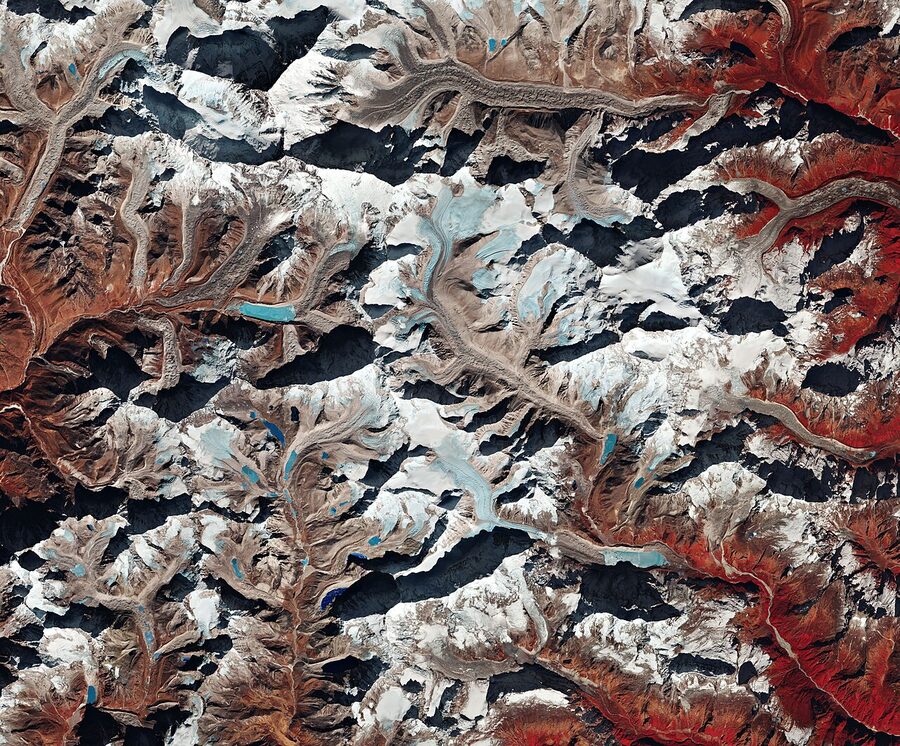
1,500 km² in the eastern Himalayas, named after Mount Makalu (8,485 m), the fifth-highest peak in the world. Makalu-Barun is really a trekking park — no roads, no buffer-zone tourism infrastructure, just the Makalu Base Camp trek and some much longer routes that loop north into Tibet. Red pandas are the standout species; the bamboo forests on the park’s lower slopes are among the best red panda habitat in Asia.
The park is remote. Access is via Tumlingtar airport (Buddha Air from Kathmandu), then a road transfer to Num, then a minimum 7-day trek to the base camp area. Unlike Everest, Makalu-Barun has no lodge infrastructure, so you’ll be tent-camping the whole way. Come for the remoteness; don’t expect the amenities of the more-travelled parks.
The Himalayan parks
Six parks cover the high country, protecting the glaciers, alpine valleys, and the world’s tallest mountains. These are where trekkers spend most of their time in Nepal.
Sagarmatha National Park — Everest and the Khumbu
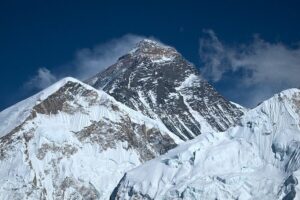
1,148 km² around Mt Everest (Sagarmatha to Nepali speakers; Chomolungma to the Sherpas and Tibetans). UNESCO World Heritage Site since 1979, and the most-visited high-altitude park in the country by a huge margin — Everest Base Camp trek alone brings 40,000+ visitors a year through Lukla. The park headquarters is at Namche Bazaar, where the trail network spiders out to Tengboche, Gokyo, Chhukhung, and the various passes.
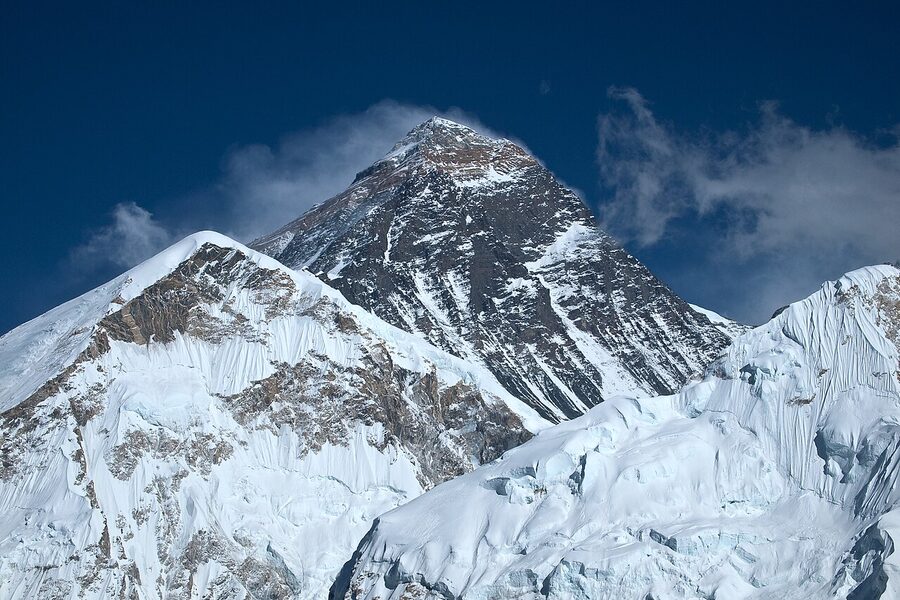
Wildlife: Himalayan tahr, musk deer, snow leopards (rarely seen), and the Himalayan monal — the male pheasant that is somehow a cartoonishly iridescent gold-purple-green and whose call is the morning sound of the whole Khumbu.
Entry fee: NPR 3,000 ($25) for foreigners — paid at the Monjo entry post on the trail from Lukla. You’ll also pay a TIMS card fee separately (NPR 2,000). The Sagarmatha entry fee alone has contributed over $2M to local conservation funding since its inception — one of the rare cases where tourism revenue measurably flows back into the place that generates it.
Langtang National Park — the easy high-altitude trek
1,710 km² north of Kathmandu, reached by bus or jeep to Syabrubesi in a long half-day. Langtang is the closest serious Himalayan trekking park to the capital and has the best mix of accessibility, altitude, and authentic Tamang and Sherpa culture. The Langtang Valley trek (6–8 days round-trip) gets you to 4,000+ metres without any technical difficulty and through villages that are actively being rebuilt after the 2015 earthquake devastated the area.
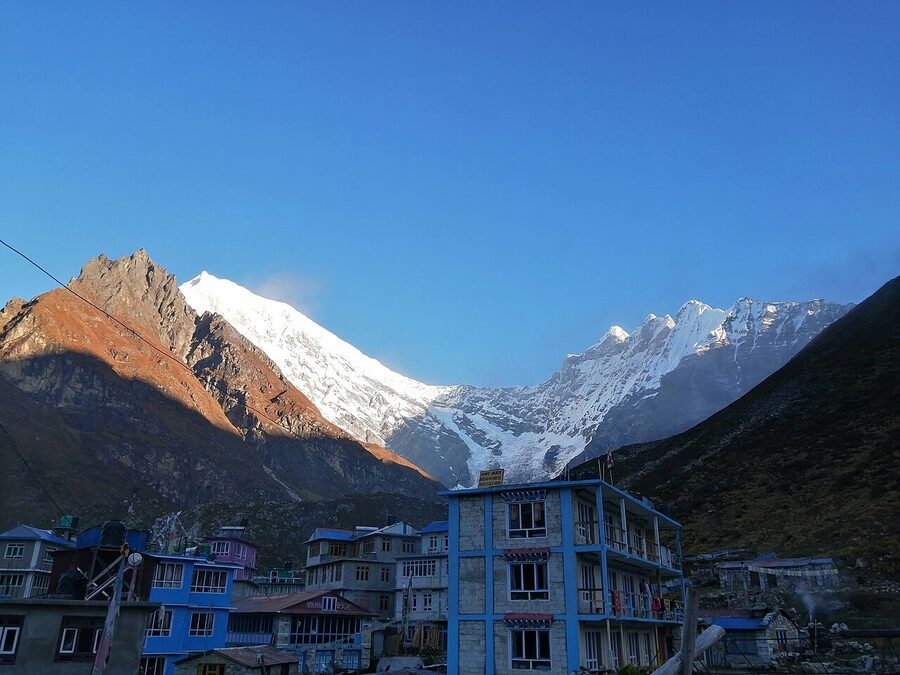
Species you actually have a shot at seeing: red pandas (guided tours from Kyanjin Gompa focus on finding them), musk deer, Himalayan black bears, and Himalayan monals in the rhododendron zones. Entry: NPR 3,000 ($25) for foreigners.
Rara National Park — the smallest and most beautiful
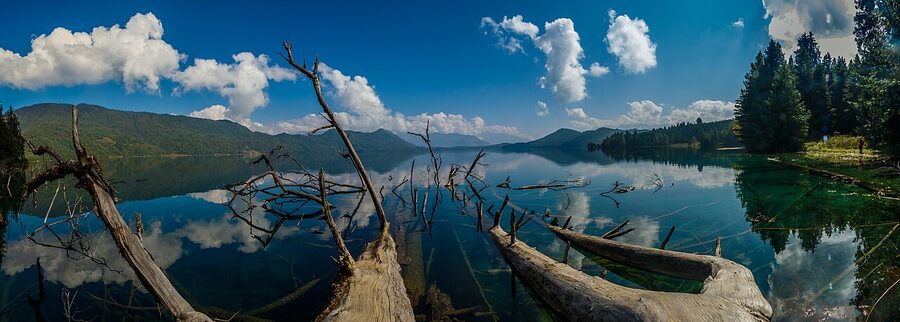
106 km² — the smallest of Nepal’s national parks — but built around the largest freshwater lake in the country. Rara sits at 2,990 m in the Karnali region and is accessible by a two-flight sequence from Kathmandu (Nepalgunj, then Jumla or Talcha) followed by a 3–5 day trek. The park is dominated by blue pine, black juniper, and Himalayan spruce forest; wildlife includes the Himalayan monal, musk deer, red panda, and a small snow leopard population.
We have a full guide to the park and the 7-day trek route that runs through it — see our Rara National Park article for the detailed itinerary, costs, and what to actually expect on the ground. Entry fee: NPR 3,000 ($25) for foreigners.
Shey-Phoksundo National Park — the biggest and the wildest
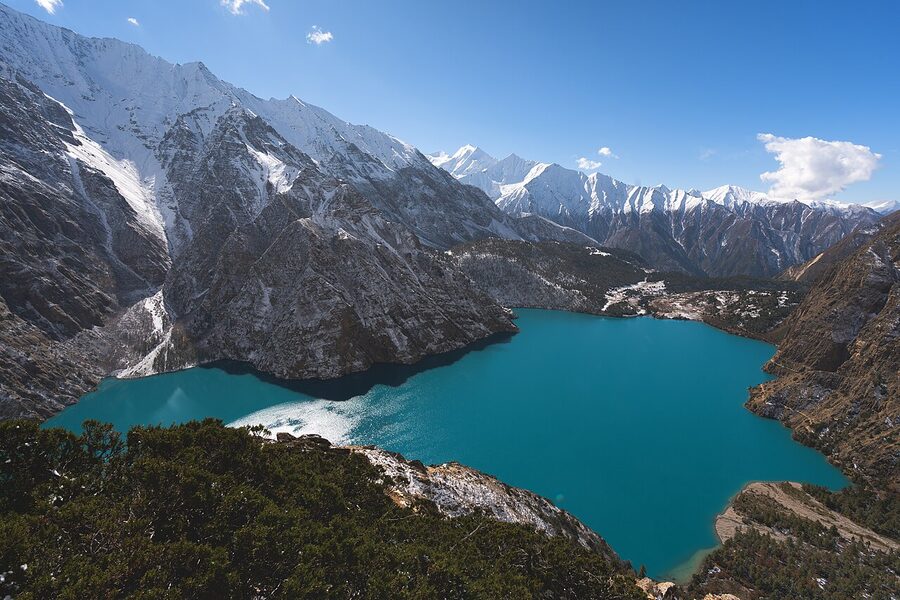
3,555 km² in Dolpa — the largest national park in Nepal by a factor of two. Trans-Himalayan terrain: Tibetan plateau geography, Bon and Tibetan Buddhist monasteries, and the astonishing Phoksundo Lake, which is 145 m deep and a shade of blue that photographs don’t quite capture. This is the park that Peter Matthiessen wrote The Snow Leopard about — the setting hasn’t changed much since 1973.
Access is hard. Fly Nepalgunj, then Juphal, then trek for a minimum of 8 days to reach Phoksundo Lake and the villages of Ringmo and Dho Tarap. Upper Dolpo permits (for the northern section of the park) require a restricted-area permit at USD $500 per person per 10-day block plus a minimum two-person group — this is genuinely hard-to-reach country. Lower Dolpo, which includes Phoksundo, is accessible on a standard national park permit.
Khaptad National Park — the spiritual one
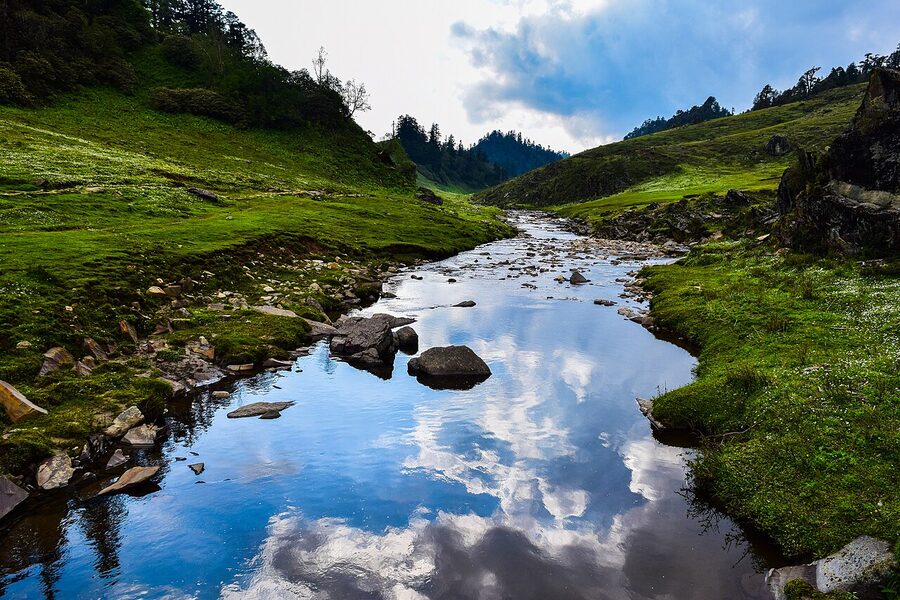
225 km² in the far-western mid-hills, centred on the Khaptad Plateau — 22 gentle grassland meadows interspersed with oak and rhododendron forest. Khaptad Baba was the ascetic who meditated here for 50 years and gave the park its spiritual character; there’s a small ashram at the park’s heart and a shrine at Triveni. Seasonal flowers through April-May-June are the main scenic draw, plus birds (over 270 species recorded). No glaciers, no 8,000-metre peaks, just quiet rolling alpine meadows.
Access is overland: Dhangadhi to Silgadhi by bus (8 hours), then a 2-day walk-in. Or fly to Dipayal. Come to Khaptad if you’ve already done the popular parks and want somewhere without other foreign visitors.
Api-Nampa Conservation Area — hold on, that’s not a national park
You’ll see Api-Nampa listed as a national park in many guides (including ours, above). It’s actually classified as a conservation area in the Nepal protected area system, but it’s often discussed in national park lists because of its size (1,903 km²) and mountain profile. In the far-west Darchula district, centred on Api (7,132 m) and Nampa peaks. Byasi villages, snow leopards, blue sheep, barely any trekkers. Serious remote country — rewarding if you’re after solitude and a distinct cultural zone (the Byasi people are culturally closer to Tibet than to central Nepal), but definitely not a first-trip destination.
Entry fees and permits — what it actually costs
Park fees are standardised across Nepal but the categories depend on your nationality:
| Park | Foreigner | SAARC national | Nepali |
|---|---|---|---|
| Chitwan | NPR 2,000 | NPR 1,000 | NPR 150 |
| Bardia | NPR 1,500 | NPR 500 | NPR 100 |
| Sagarmatha | NPR 3,000 | NPR 1,500 | NPR 100 |
| Langtang | NPR 3,000 | NPR 1,500 | NPR 100 |
| Rara | NPR 3,000 | NPR 1,500 | NPR 100 |
| Shey-Phoksundo | NPR 3,000 | NPR 1,500 | NPR 100 |
| Khaptad | NPR 3,000 | NPR 1,500 | NPR 100 |
| Makalu-Barun | NPR 3,000 | NPR 1,500 | NPR 100 |
| Shivapuri-Nagarjun | NPR 1,000 | NPR 600 | NPR 100 |
Fees are paid in Nepali rupees only and only on arrival at the park entry post (you can’t pre-pay online). Bring cash — Thakurdwara, Sauraha, and Monjo take cards, but more remote gates like Juphal or Talcha do not. Add ~15% if you use SAARC-national bracket as an Indian or Pakistani passport holder.
On top of the park fee, trekking in most Himalayan parks requires a TIMS card (Trekkers’ Information Management System) — NPR 2,000 for the individual route, NPR 1,000 for organised-trek routes. For restricted areas (Upper Mustang, Upper Dolpo, Humla, Manaslu Circuit restricted sections) there are additional restricted-area permits at USD $50-$500 per person depending on the route and duration.
Wildlife — what you’re actually likely to see
Most visitors come hoping for a megafauna Pokémon list. The reality is a bit more nuanced.
One-horned rhino: reliable in Chitwan, likely in Bardia, possible in Shuklaphanta. 90% sighting probability on a 3-day jeep safari in Sauraha. These animals are huge and unbothered by jeeps, so you get properly close.
Bengal tiger: possible in Chitwan and Bardia, but don’t plan a trip around it. Most Chitwan guides will quote a 10-15% sighting probability on a 3-day jeep. Bardia’s tiger density is actually higher but visibility in the sal forest is worse, so sighting rates end up similar. The honest answer is: tiger sightings are luck.
Snow leopard: basically impossible on a standard trip. Specialist snow leopard trekking tours in Upper Dolpo or Hemis (India) in winter can hit sighting rates of 40-60% over 10 days, but you’re looking at $6,000+ trips with a lot of waiting in cold bivvies. If someone tells you you’ll see one on a regular Langtang or Everest trek, they’re lying.
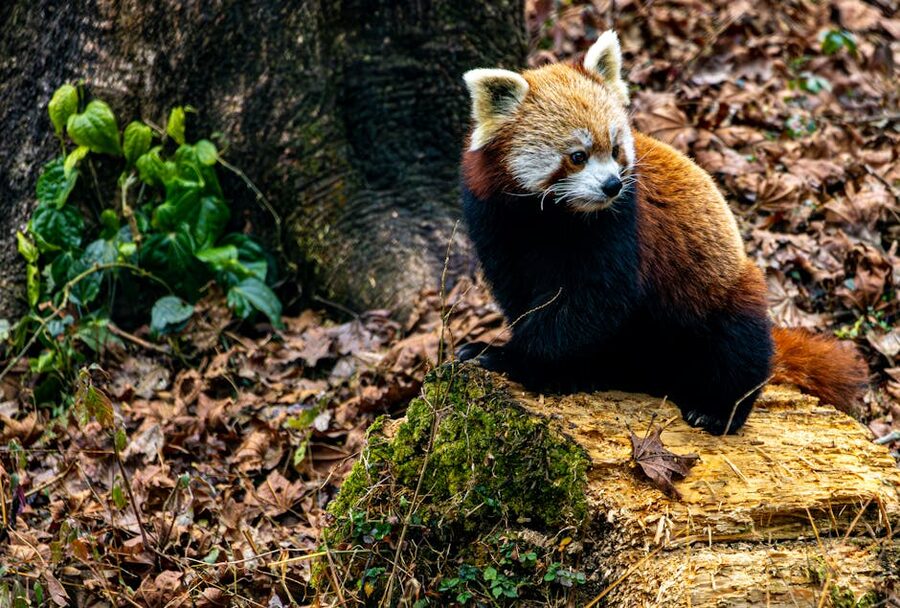
Red panda: possible in Langtang (specifically around Kyanjin) and Makalu-Barun with a guide who knows bamboo zones and focuses on early-morning searches. 20-30% chance on a dedicated 3-day search.
Himalayan monal: easy in Sagarmatha and Langtang above 3,000 m, especially in early morning. If you trek at elevation for more than three days you’ll almost certainly see one.
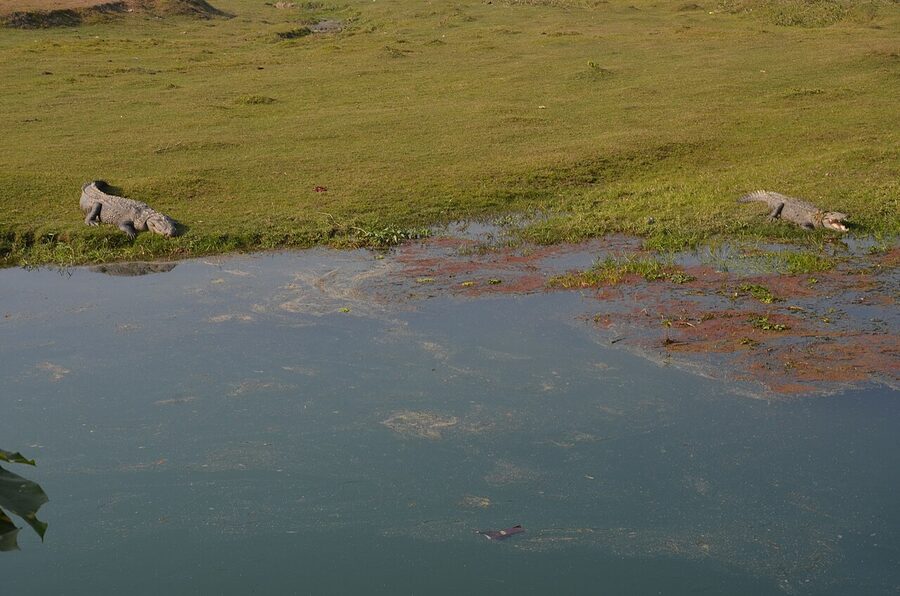
Gharial crocodile: Chitwan’s Narayani river, on a canoe or boat trip. Reliable sightings. Gharials are the long-thin-snouted species that eat fish; they’re not dangerous to humans.
Gangetic dolphin: Karnali river in Bardia, Narayani in Chitwan. Sightings are weather-dependent but decent on longer boat stretches.
Asian elephant: possible in Chitwan and Bardia, reliable at certain waterholes and grass feeding grounds in the dry season. Wild elephants are more dangerous to people than any other animal in these parks — keep distance on walking safaris.
When to go
Peak safari season in the Terai is November through March. Grasses are shorter, temperatures are cooler, and wildlife visibility is dramatically better than during the monsoon growing season. March-April can be good but the grass starts getting tall again.
For the Himalayan parks, March-May and October-November are the windows that matter. Spring catches the rhododendron bloom through April at the mid elevations. Autumn has the best air clarity for mountain photography.
Monsoon (June-August) is uniformly bad for both. Terai roads flood, the parks get closed to vehicles for extended periods. Mountain parks have cloud cover that makes trekking and views useless.
December-February is the paradox: often the best flying weather for Himalayan access, but the alpine parks are cold and higher passes are snowed over. You can walk Langtang Valley but not go up to Kyanjin Ri comfortably, and trekking peaks are fully off-limits.
How to pick a park
For a first Nepal trip with one park slot: Chitwan. 3-night Tharu village stay, jeep safaris, canoe on the Narayani. Done right, it’s one of the best wildlife experiences in Asia and the logistics are easy.
For a first trip with a strong trekking preference: Langtang over Sagarmatha, honestly. The trekking is 70% as spectacular and 30% of the crowds, and the 2015-earthquake recovery is something worth supporting. Sagarmatha is not bad by any means; it’s just Disney-ified now.
For a second Nepal trip: Bardia. Properly wild, properly quiet, tigers are a real possibility. Add a Phoksundo Lake visit if you have two weeks.
For a specialist trip (wildlife photographer, researcher, someone who’s already done the standards): Shey-Phoksundo, Makalu-Barun, Upper Dolpo. Skip Chitwan; go straight to where the noise stops.
For a trip that needs a nearby park because you’re on business and have half a day: Shivapuri-Nagarjun. 45 minutes from Thamel, legitimate leopard habitat, moderate hike, back by dinner.
For more on the practical logistics of getting to the more remote parks — airlines, routes, baggage limits, which days to add for weather — see our guide to domestic airlines. The flight networks determine which parks are realistically on your itinerary more than the park boundaries do.