Kathmandu is the door everyone walks through when they come to Nepal. Tourist flights land here, domestic planes leave from here, trekking permits get issued here, and every package you’ll see advertised anywhere else in the country starts with a night or three in the capital. Most visitors treat it as a transit city and leave for the mountains after 48 hours. That’s a mistake — Kathmandu on its own is worth four or five days before you go anywhere else.
This guide covers what to see, where to stay, how to move around, and what most first-time visitors get wrong. Written from the ground, honest about the chaos, with opinions about which sights are actually worth your time versus which you can skip.
In This Article
- The city in 30 seconds
- Getting in from the airport
- Where to stay
- Thamel — the tourist hub
- Patan (Lalitpur) — for a quieter base
- Bhaktapur — for day-tripping as a base
- The sights worth your time
- Durbar Squares — three of them, pick at least two
- Boudhanath Stupa — the Tibetan heart
- Swayambhunath — the Monkey Temple
- Pashupatinath Temple — for the cremation ghats
- Garden of Dreams — the only truly quiet spot in central Kathmandu
- Durbar Marg — for the rich-Kathmandu walk
- Food — what to eat
- Money, SIMs, and logistics
- A realistic 3-day Kathmandu plan
- What to skip
- When to go
- Combining with a trek
The city in 30 seconds
Kathmandu sits in a bowl-shaped valley at 1,400 m surrounded by foothills. The valley holds three historically separate kingdoms that fused into one metropolitan area in the 20th century: Kathmandu proper (population ~1.4 million), Lalitpur/Patan to the south, and Bhaktapur to the east. Each has its own Durbar Square (royal plaza), its own character, and its own specific reason for existing. You’ll move between them constantly, usually without realising you’ve crossed a historical border.
The city is ancient, noisy, covered in fine dust about nine months of the year, and stunningly beautiful in specific places. Don’t come expecting European-level infrastructure. Come expecting to walk through a neighbourhood that has been continuously inhabited since before Rome fell, and to drink tea with people whose grandparents never saw a car.
Getting in from the airport
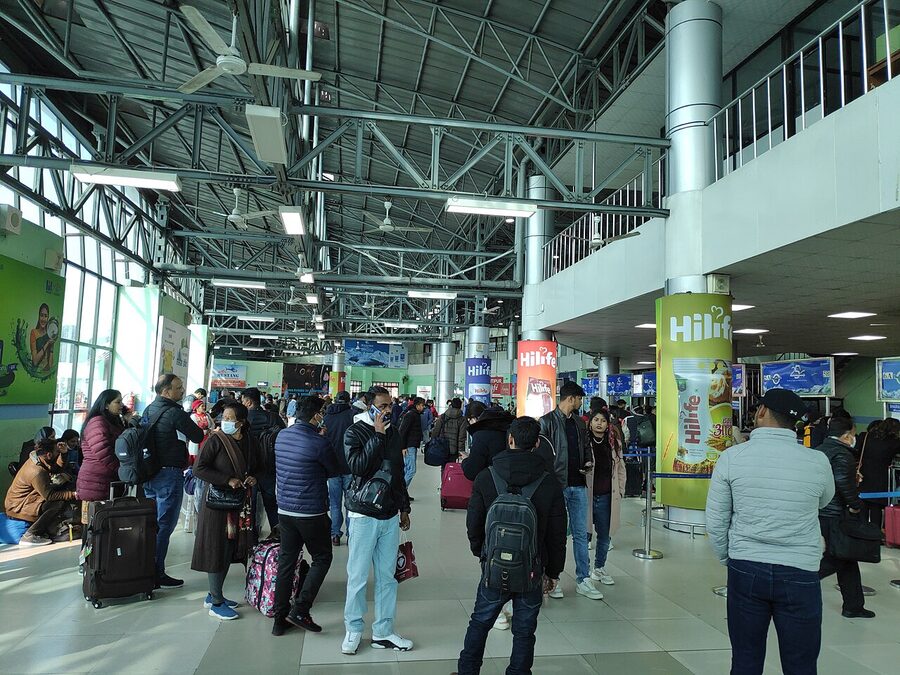
Tribhuvan International Airport (TIA) is the only international airport serving Kathmandu and it’s fifteen minutes from Thamel by taxi when the traffic cooperates, and forty when it doesn’t. There are three realistic ways into town:
- Pre-paid taxi booth in the arrivals hall. NPR 700-1000 (~$6-8) to Thamel. Fixed rate, you show the receipt to the driver. The safest first-time option.
- Pathao / InDrive app. Nepal has Uber-equivalent ride-share apps that work on international SIMs or wifi. NPR 400-600 to Thamel. Requires you to navigate the airport exit gate system to meet the driver, which can be fiddly.
- Hotel pickup. Most mid-range and up hotels offer free or $5 pickups. Worth it for a first arrival if you’re jet-lagged.
Do not get in an unofficial taxi shouting for your attention at the exit ramp — they’ll quote $20+ to Thamel and you’ll have no recourse. The prepaid booth is clearly signposted.
Visa on arrival is available for most nationalities — bring USD cash (exact bills preferred), a passport photo, and expect 20-40 minutes of queuing. Or fill the online application at nepaliport.immigration.gov.np in advance to skip a line. Fees: $30 for 15 days, $50 for 30, $125 for 90.
Where to stay
Thamel — the tourist hub
Thamel is where 80% of foreign visitors sleep. It’s a five-block grid of tangled alleys in central Kathmandu that has been the backpacker district since the 1960s. You can get a cup of coffee, book a trek, rent a down jacket, find dinner, change money, and buy a forged North Face jacket — all in the same 300 m. Shops are open until 10 PM, restaurants later.
Hotels range from dorm beds at NPR 500 to five-star at USD $200+. The sweet spot for value is the $25-$60 range, which gets you a clean en-suite room at a small hotel with rooftop breakfast and reliable wifi. Try Hotel Encounter Nepal, Kathmandu Boutique Hotel, or any of the dozens in Jyatha or the Paknajol end of Thamel — they’re all broadly similar quality.
Thamel’s reputation for being tacky is not wrong. Live with it — the logistics are genuinely easier here and you’re walking distance to Durbar Square.
Patan (Lalitpur) — for a quieter base
South of the Bagmati river across from Kathmandu proper, Patan is the quieter alternative. The UNESCO-listed Patan Durbar Square is arguably the best-preserved of the three Durbar Squares, and there are guesthouses and boutique hotels in the back lanes that feel like a different city entirely. Stay here if you’ve been to Nepal before or want a calmer base. Yoga retreats and writing residencies cluster in Patan for good reason.
Bhaktapur — for day-tripping as a base
The third of the three kingdoms, 14 km east of Kathmandu. Bhaktapur is a medieval walled city with a nominal entry fee ($18 for foreigners valid for multi-day entry) and almost no vehicle traffic inside. If you want to stay somewhere that feels like the 16th century with no pretence, Bhaktapur works. The downside: onward logistics are harder — taxis to the airport from Bhaktapur are 90 minutes in traffic.
The sights worth your time
Durbar Squares — three of them, pick at least two
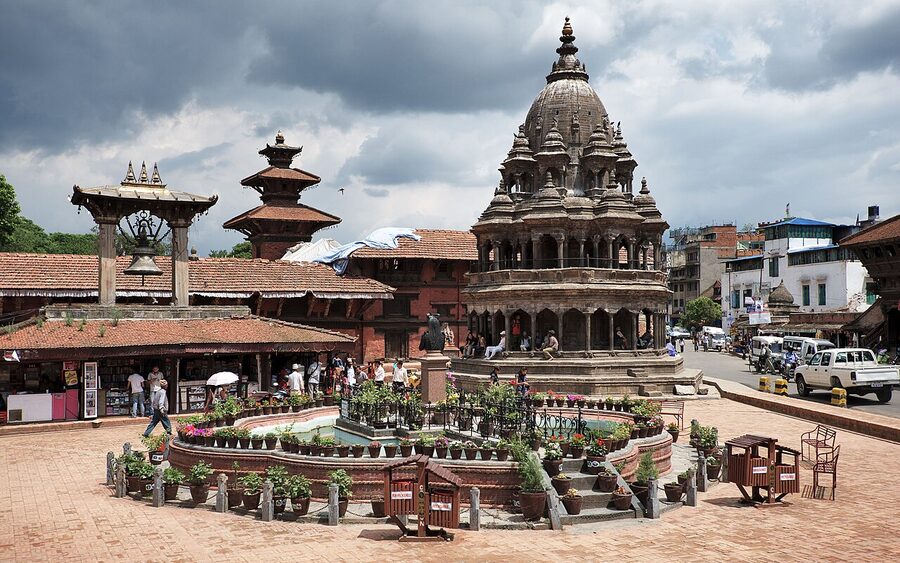
Each of the three historical kingdoms had its royal palace with a surrounding ceremonial square — the Durbar. All three are UNESCO listed. The 2015 earthquake did significant damage to all three; restoration is ongoing. Current entry fees:
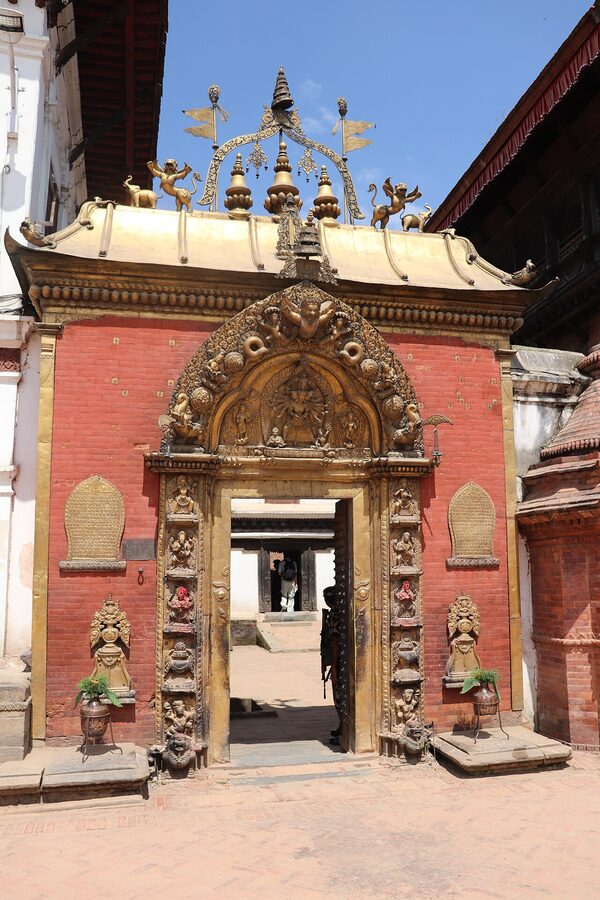
- Kathmandu Durbar Square — NPR 1,000 ($8) for foreigners. 10 minutes walk from Thamel. The most chaotic, with ongoing temple rebuilding, prayer flags strung between shrines, and the Kumari (living goddess) palace where the young girl chosen as an incarnation of Taleju lives and occasionally appears at a window.
- Patan Durbar Square — NPR 1,000. 25-minute taxi or Pathao ride. The most intact of the three post-earthquake, a concentration of 12th-17th century Newari stone and brick architecture that most travellers end up photographing more than either of the others.
- Bhaktapur Durbar Square — NPR 1,800 ($15) for foreigners (the fee covers entry to the whole walled city, not just the square). 45-minute drive. The square is smaller than the other two but the surrounding medieval city is the main draw.
If you only have time for one, do Patan. If you have time for two, do Patan plus Bhaktapur and skip Kathmandu proper’s square unless you’re walking past it anyway from Thamel.
Boudhanath Stupa — the Tibetan heart
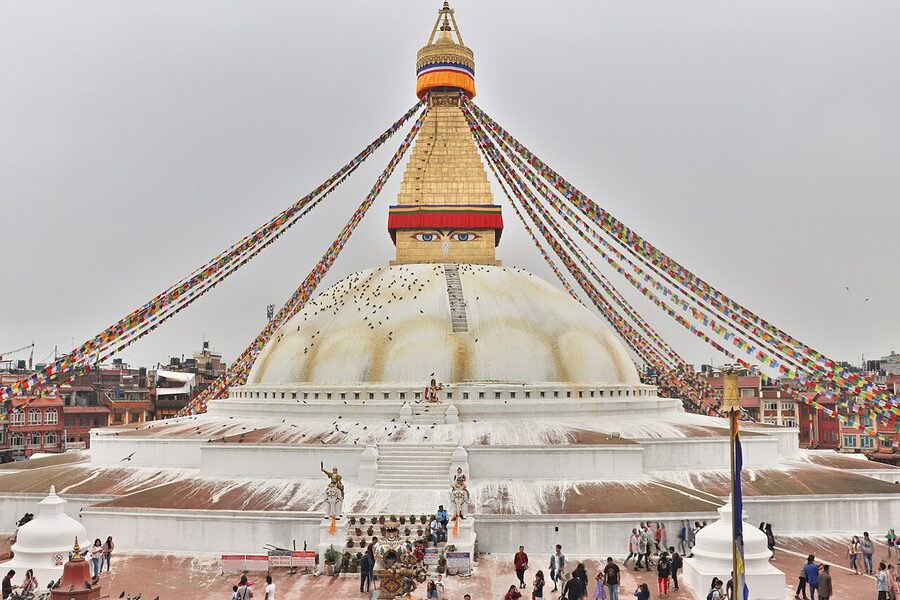
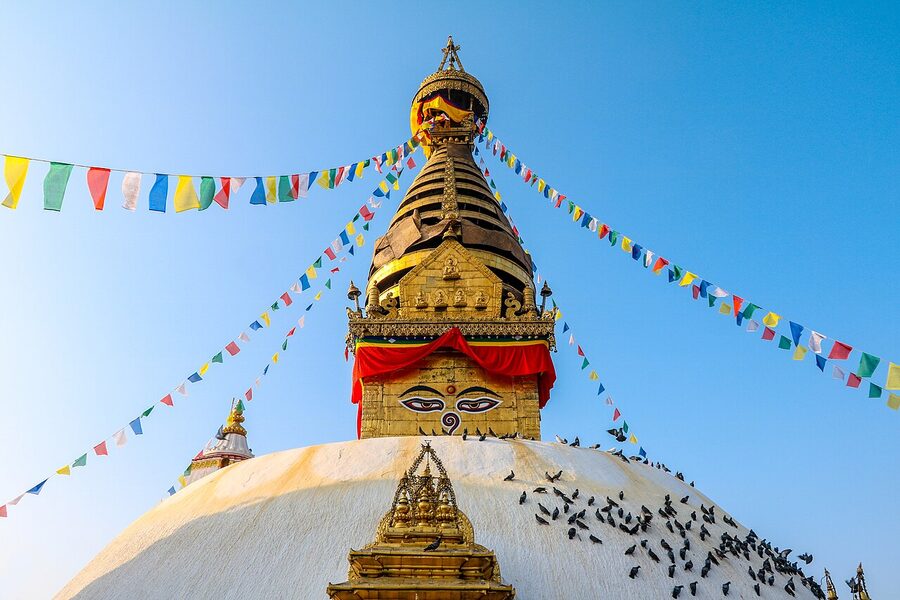
The largest stupa in Nepal and the spiritual centre of the Tibetan Buddhist diaspora in Kathmandu. A 36 m white dome topped with painted eyes at the four cardinal directions, encircled by a ring of monasteries and rooftop cafés. People walk the kora — the circular pilgrimage path around the stupa — clockwise from dawn to dusk. It’s less a sight to visit and more an atmosphere to sit in for an hour.
NPR 400 entry for foreigners. 20-minute taxi from Thamel. Go in the late afternoon for the light; stay through sunset when the butter lamps get lit. Sit in a rooftop café on the second floor — Garden Kitchen or New Orleans — for the view over the spinning prayer wheels and the pilgrims below.
Swayambhunath — the Monkey Temple
A 4th-century stupa on a hilltop west of central Kathmandu, reached by a steep 365-step staircase flanked by prayer flags and yes, actual monkeys. They’re rhesus macaques and they’ll steal food off a plate if given the chance, which is where the tourist nickname came from. The monastic complex around the stupa is working — monks, pilgrims, butter lamps — and the view back over Kathmandu valley from the top is the best in the city.
NPR 200 entry. 25-minute walk from Thamel or a 10-minute taxi. Don’t climb with a bag of food visible; the monkeys are not kidding.
Pashupatinath Temple — for the cremation ghats
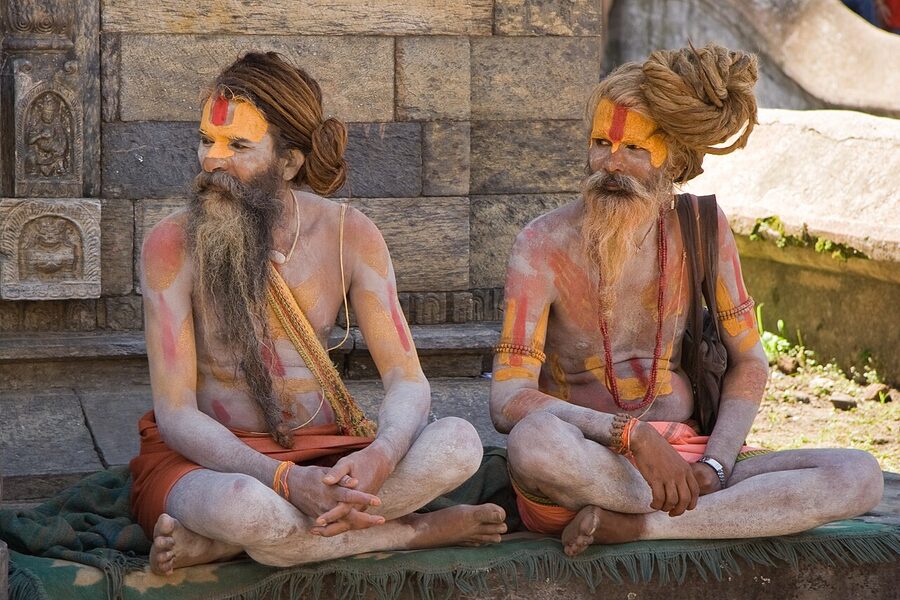
Pashupatinath is Nepal’s holiest Hindu temple, a riverfront complex on the Bagmati River dedicated to Shiva. Non-Hindus can’t enter the inner temple, but the main attraction for most foreign visitors is actually outside it: the cremation ghats on the riverbank where Hindu bodies are cremated in the open.
This is not a tourist attraction in the usual sense and some visitors find it deeply uncomfortable. If you go, be respectful — no photography of active cremations, no standing on the viewing platforms during a ceremony, dress modestly. Many people find it a profoundly moving experience; others find it upsetting. Decide whether you want that in your trip.
NPR 1,000 entry. 30 minutes by taxi from Thamel. Morning visits (6-10 AM) tend to have more religious activity and fewer tourists.
Garden of Dreams — the only truly quiet spot in central Kathmandu
A small restored Edwardian garden on the edge of Thamel, walled off from the city noise. NPR 400 entry, which pays for the ongoing maintenance. Benches, a café in the old pavilion, turtles in the pond, and remarkably clean air. Worth an hour if you need a break from the street noise of Thamel.
Durbar Marg — for the rich-Kathmandu walk
The broad avenue that runs north from the old palace to the current president’s house, with high-end shops, the flagship New Road department store, and the fanciest restaurants in town. Not a sight but worth walking through if you want to see the other side of the city — the side with imported Italian tiles and tailored suits. Dine at Base Camp for a mid-priced meal or Krishnarpan at Dwarika’s for the full traditional Newari multi-course.
Food — what to eat
Kathmandu is a food city. It’s not just dal bhat, though you can’t leave without eating dal bhat at least once.
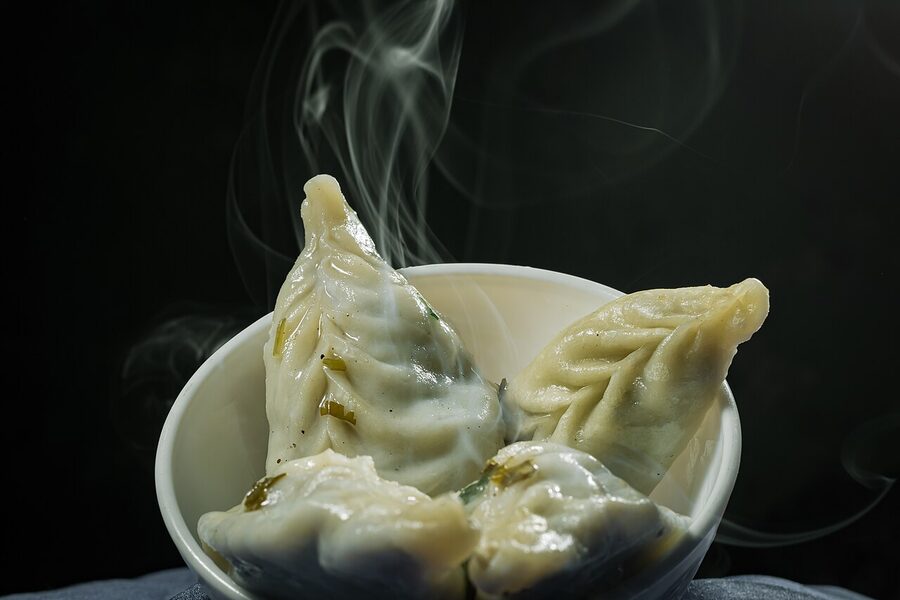
- Momos: Tibetan-origin steamed or fried dumplings, typically filled with buffalo (“buff”), chicken, pork, or vegetable. Eaten with a spicy tomato dipping sauce (achar). Found everywhere from street stalls to upmarket restaurants. Street stalls around Thamel charge NPR 100-150 per plate of 10 dumplings. Try them at Yangling Tibetan or Third Eye in Thamel, or find a street stall and commit.
- Dal bhat: The Nepali staple — rice, lentils, vegetable curry, pickle, occasionally meat curry. Refillable at most local restaurants. NPR 200-400 at a working-class place, NPR 800-1500 at a tourist one. Thakali Kitchen has the best middle-range version.
- Newari food: The cuisine of the Kathmandu Valley’s indigenous Newar people — spiced buffalo dishes, sel roti (fried ring bread), yomari (steamed dumpling with molasses). Go to Bhojan Griha or Honacha in Patan for the full experience.
- Thukpa: Tibetan noodle soup with vegetables or meat, essential on cold mornings. NPR 200-400.
- Chia: Nepali milk tea, spiced, sweet, served in small glasses at every tea stall on every street corner. Cost: NPR 20-40. Drink three a day.
Avoid: buffet breakfast spreads at tourist hotels (over-priced and under-fresh), anything on a menu that promises “Continental” (translation: something approximating European food, usually poorly), and the Italian restaurants in Thamel unless specifically recommended.
Money, SIMs, and logistics
Nepal uses the rupee (NPR). As of 2026, rough exchange: USD 1 = NPR 132, EUR 1 = NPR 145. ATMs dispense up to NPR 35,000 per withdrawal and charge around NPR 500 in fees. Bring USD cash for visa on arrival and emergency fallback; change USD at Thamel money changers for the best rate (you’ll get 3-5% better than the airport rate).
Credit cards work at hotels, upmarket restaurants, and flight booking offices. They don’t work for small shops, street food, trek permits, or anything outside Thamel. Budget about NPR 15,000 cash for a non-hotel day.
SIM cards: Ncell and Nepal Telecom both sell tourist SIMs at the airport and in Thamel. Bring your passport (required for registration). Cost: NPR 1,500 for 30 days with 50 GB data. Do this on arrival — many bookings, apps, and the rideshare services need a Nepali number.
Getting around:
- Pathao, InDrive — rideshare apps, cheaper than taxis. Work in Kathmandu but not outside the valley.
- Taxi — metered (rarely used) or negotiated. Always agree a price before getting in. NPR 300-500 for a cross-town ride.
- Walking — the best way to see the old city. Wear closed shoes (streets are filthy), and don’t walk solo after 10 PM in neighbourhoods you don’t know.
- Local buses — NPR 20-30, fit six people in a three-person space, no English signage. Not worth it unless you’re on a long-term trip.
A realistic 3-day Kathmandu plan
Day 1: Morning at Patan Durbar Square, lunch at Cafe de Patan or similar, afternoon at Boudhanath, sunset from a rooftop café there, dinner back in Thamel.
Day 2: Morning at Pashupatinath (if you choose to go), mid-morning at Garden of Dreams for a break, afternoon at Swayambhunath, dinner at a Newari restaurant in Patan.
Day 3: Full day in Bhaktapur — the walled city needs 6+ hours to do properly. Stay for dinner at Cafe Nyatapola looking up at the Nyatapola Temple.
Add a day if you want to hike the Shivapuri rim for mountain views, or if you’ve come during the Indra Jatra festival (September) when the whole old city turns into a multi-day procession with chariots and masked dance performances.
What to skip
Some standard tourist items aren’t worth the time:
- Tibetan refugee camp tours — mostly performative, visitors are unwelcome in most of the camps, and the shops at the designated tourist one are the same carpet-and-jewellery offerings as everywhere in Thamel.
- “Ultimate Kathmandu” day tours that cover 6 sights — you’ll hate it. Each of Boudhanath, Pashupatinath, and Swayambhunath deserves its own half-day. Do them separately.
- Kopan Monastery if you’re not doing a retreat — the standard 15-minute drive-by visit is pointless; the monastery’s actual value is as a meditation retreat centre and you need to book weeks ahead.
- The “live cultural dance” dinner shows in Thamel — tourist-theatre pricing for diluted versions of real dances. Skip in favour of dinner at a Newari place where the locals actually eat.
When to go
October-November is peak season for a reason: skies clear after the monsoon, temperatures are pleasant (15-25°C), festivals stack through Dashain and Tihar. The trade-off is crowds at the main sites and hotel prices 30-40% above off-season.
March-April is the second window: rhododendrons blooming in the hills, mild weather, fewer crowds than autumn. Some pre-monsoon haze starts by mid-April.
December-February is cold but clear — Kathmandu sits at 1,400 m and overnight can hit 2°C. Trekking-season flights are off-peak, hotel prices drop.
June-September is monsoon and most travellers avoid it. Old-city walks are atmospheric in the rain if you have proper waterproofs and don’t mind mud, and hotel rates are 50% off. Pick this window if you’re trip-planning on a budget and don’t care about trekking.
Combining with a trek
Most visitors use Kathmandu as a stepping stone. Budget 2-3 days on arrival (for permits, gear rental, and acclimatisation to the altitude, yes even at 1,400 m), then fly out to wherever your trek starts (Lukla, Pokhara, Nepalgunj). On the way back, add a buffer day in Kathmandu before your international flight — flight cancellations out of mountain airports are common.
For the logistics of those onward flights, see our domestic airlines guide. For the national parks most of those flights feed into, start with the national parks overview. And if you’re thinking about adding a climbing objective to your trek, the NMA trekking peaks guide is where to start planning.