Nepal is a country that mostly points upward, which makes getting across it on the ground a slow-motion ordeal. There are no railways worth the name, the highways follow river valleys because the mountains refuse to be crossed any other way, and some of the most important towns in the country are only reachable by plane or by walking for four days. So domestic aviation isn’t a luxury here. It’s the nervous system.
This guide covers every domestic airline flying in Nepal in 2026, what aircraft they operate, which routes matter, what you’ll actually pay, what the fare class small print really means when your flight gets cancelled, and — the question nobody wants to answer straight — how safe any of it is. There’s a lot of noise about Nepali aviation online. Most of it is either uncritical cheerleading or scary headlines without context. The honest answer is more interesting than either.
In This Article
- The airlines of Nepal: who’s who in 2026
- Buddha Air — the reliable one
- Yeti Airlines — the green-ish challenger
- Shree Airlines — the jet operator
- Tara Air — the trekker’s airline
- Summit Air — the Western Nepal specialist
- Sita Air — the budget STOL option
- Nepal Airlines — the flag carrier and its 2024 disaster
- Helicopter and charter operators
- The aircraft — what you’re actually flying in
- The routes you’ll actually take
- Kathmandu → Pokhara (25 minutes)
- Kathmandu → Lukla / Ramechhap → Lukla (35 minutes)
- Pokhara → Jomsom (20 minutes)
- Kathmandu → Nepalgunj (45 minutes)
- Kathmandu → Bharatpur (25 minutes)
- Nepalgunj → Simikot (35 minutes)
- Scenic mountain flights (1 hour)
- How much it actually costs
- Fare classes — what you actually get for your money
- Baggage — the rules change with the aircraft
- Why your flight will get delayed — the weather rhythms
- Is it actually safe? The honest answer
- How to book
- The window-seat strategy and everything else nobody tells you
- Putting it all together
The airlines of Nepal: who’s who in 2026
Nepal has about a dozen domestic operators, but seven of them do almost all the work. Each has a slightly different fleet and a slightly different part of the country it actually cares about. Pick based on where you’re going, not based on a loyalty program.
Buddha Air — the reliable one
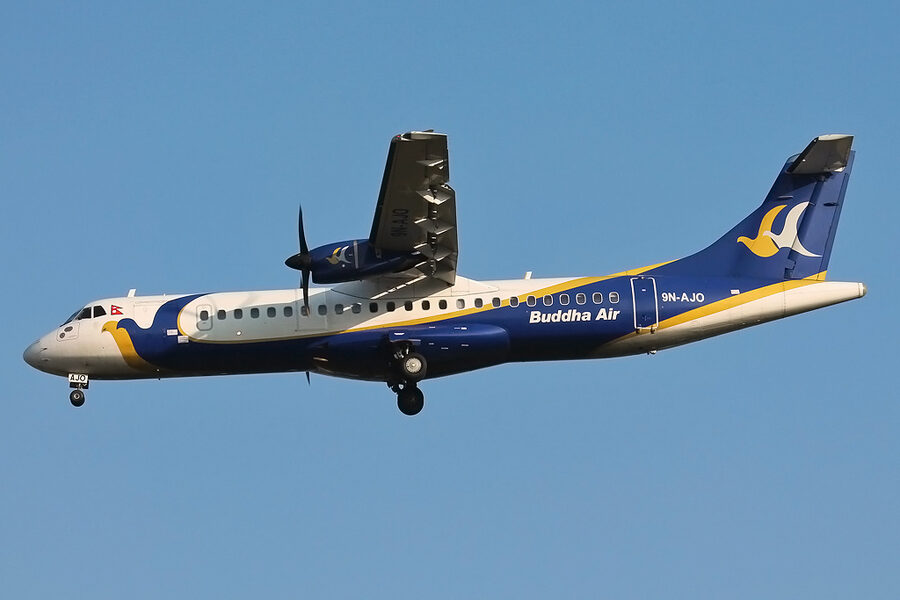
Founded in 1997, Buddha Air is the largest domestic carrier by a distance. They operate more than 100 flights a day on a fleet of ATR 72-500 and ATR 42-320 turboprops, and they hit most of the routes tourists care about: Kathmandu to Pokhara, Biratnagar, Bharatpur, Bhairahawa, Janakpur, Nepalgunj, Tumlingtar. They also run the daily Everest mountain flight — a one-hour scenic loop at high altitude with no landing — and a single international service to Varanasi.
If you have a choice, book Buddha first. They’re the closest thing to a business-class experience Nepal has, their on-time performance is the best in the country, and they’re the only operator with a passenger-service ethic that would feel familiar to someone who flies in Europe or North America.
Yeti Airlines — the green-ish challenger
Founded in 1998, Yeti has built itself around ATR 72s as well, serving Pokhara, Bhairahawa, Bharatpur, and Bhadrapur from Kathmandu. They were the first airline in South Asia to commit publicly to carbon-neutral operations — take that for what it is, given turboprop economics, but the on-the-ground customer experience is genuinely good and the flight crews are some of the best-trained in the country. Yeti’s reputation took a serious hit after the January 2023 Pokhara crash (more on that in the safety section), and they have been systematically rebuilding.
Shree Airlines — the jet operator
Shree is the outlier in the fleet table. Where everybody else runs turboprops, Shree uses Bombardier CRJ-200 and CRJ-700 regional jets. Faster, higher-altitude cruise, quieter cabin. The catch: jets can’t use the short high-altitude mountain airstrips, so Shree sticks to the Terai — Dhangadhi, Bhairahawa, Bhadrapur, Nepalgunj, Biratnagar. If you’re going to Jomsom or Lukla, Shree isn’t an option. If you’re going to the lowlands for a business trip, they might be the fastest way.
Tara Air — the trekker’s airline
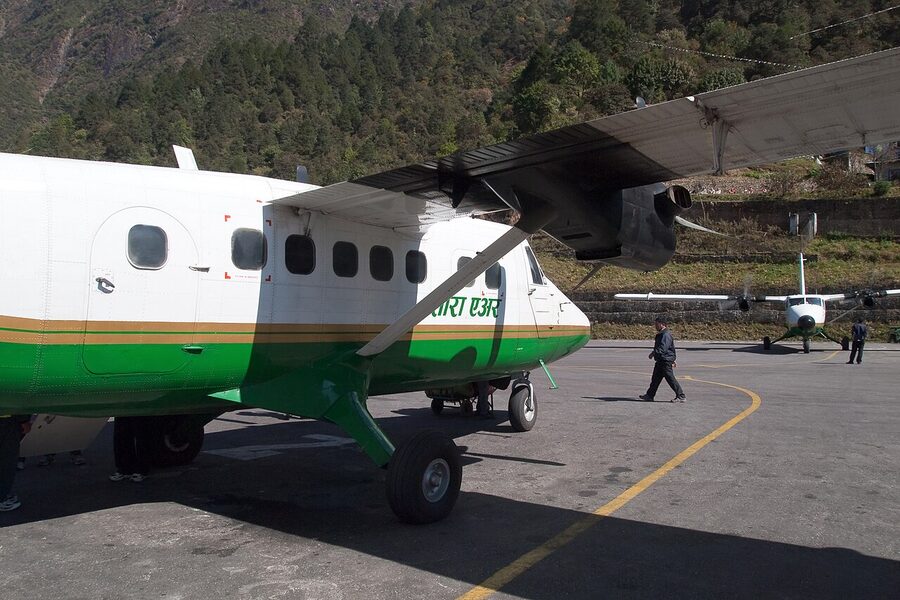
Tara is Yeti’s sibling company and is where the small aircraft live. They fly DHC-6 Twin Otters and Dornier 228s into the short-runway, high-altitude strips that matter for trekking: Kathmandu–Lukla, Pokhara–Jomsom, Nepalgunj–Simikot in Upper Humla. If you’re heading to Everest Base Camp, Annapurna Circuit via Mustang, or any of the remote trails, you’ll probably fly Tara at some point.
Tara is also the airline you should expect to get cancelled on. Not because they’re unreliable — they’re actually pretty good at showing up — but because the airports they serve are the ones that go socked-in with cloud the fastest.
Summit Air — the Western Nepal specialist
Formerly Goma Air, Summit runs LET L-410 UVP-E20 twin-engine STOL aircraft — Czech-built workhorses that can slam into short runways at 3,000 m with engines still warming up. They’re the main operator into the impoverished airstrips of far-western and mid-western Nepal, places without serviceable road access. Summit is quietly one of the most important airlines in the country even though no tourist has heard of them.
Sita Air — the budget STOL option
Sita is a small Dornier operator covering Kathmandu–Lukla, Kathmandu–Phaplu, and Surkhet–Simikot. Tickets are a notch cheaper than Tara, the service is no-frills, and on peak-season dates they’re often the only operator with seats left. Their safety record is middling and they’ve had serious incidents, so consider them a budget backup rather than a first pick.
Nepal Airlines — the flag carrier and its 2024 disaster
Nepal Airlines, the state-owned flag carrier, has had a bad decade and a genuinely catastrophic 2024. The domestic fleet by then consisted of just two de Havilland DHC-6 Twin Otter 300s, registrations 9N-ABT and 9N-ABU. In June 2024, 9N-ABT was grounded by an engine failure. In December 2024, 9N-ABU hit its engine-hour limit. With no working aircraft, the airline suspended all domestic operations on 23 December 2024.
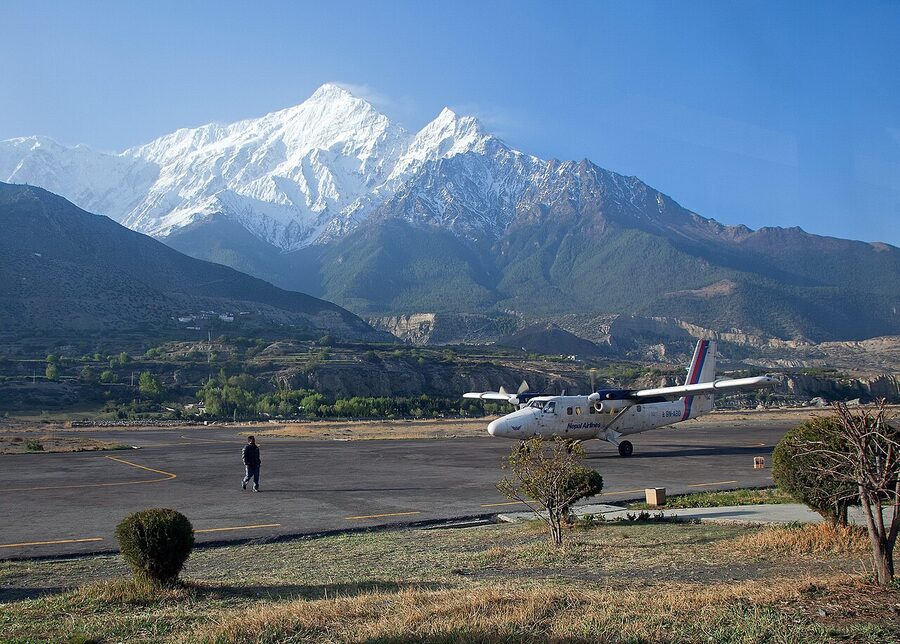
The problem wasn’t mechanical so much as bureaucratic. Replacement engines needed to come from Bet Shemesh Engines in Israel, the tender process was bungled, the paperwork stalled, and three months went past with Simikot, Dolpa, Bhojpur, and Taplejung simply cut off from their only scheduled air service. Villagers had to walk. Tourists had to reroute. Operations resumed on 25 March 2025 after parts finally arrived, but the damage was real: Nepal Airlines carried only 11,275 domestic passengers in 2024, a 15% drop on an already tiny number. The lesson most travellers take from the episode is to book private carriers where you have a choice. For most tourist routes you do.
Helicopter and charter operators
A handful of smaller companies — Simrik Airlines, Manang Air, Altitude Air, Heli Everest, Kailash Helicopter — run helicopter charters for scenic flights, rescues, and remote-area hops when fixed-wing options don’t fit. Heli flights from Kathmandu to Everest Base Camp, from Pokhara to Annapurna Base Camp, and short hops into Upper Mustang are all on offer. Expect to pay $1,500 to $5,000 per flight depending on aircraft type and whether it’s a shared scenic or a private charter.
The aircraft — what you’re actually flying in
Knowing what’s under your feet actually matters in Nepal because the planes determine which airports they can reach, how much luggage you can bring, and what the ride will feel like. A quick visual glossary:
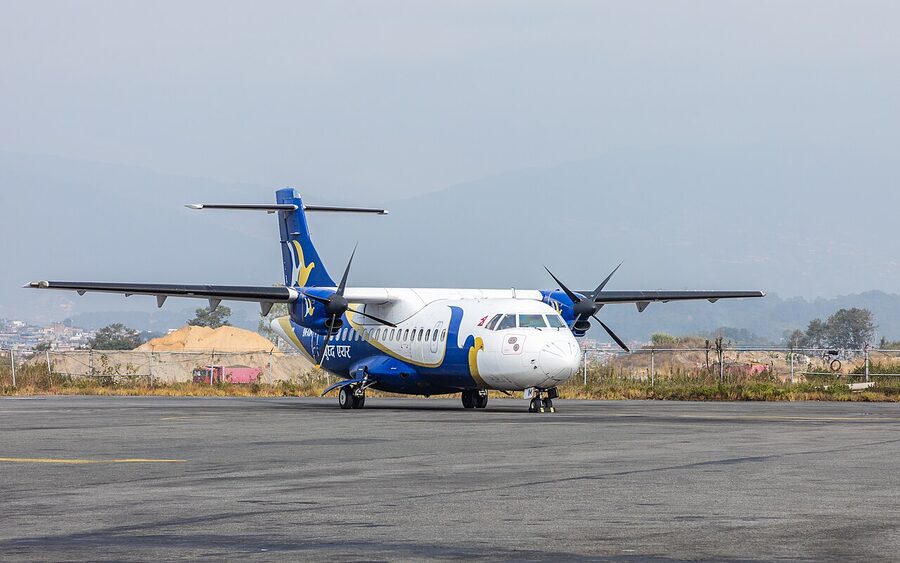
ATR 72-500 / ATR 72-600 — Franco-Italian twin-turboprop, 70 seats, used by Buddha Air and Yeti Airlines on city-to-city routes. High wing means every window seat is a window seat. Cruise altitude around 7,000 m means the Himalayas are at eye level. These are the workhorses.
ATR 42-320 / ATR 42-500 — The shorter version, 48 seats. Operated by Buddha Air on routes where a 72 would be half empty (Janakpur, Tumlingtar, parts of the Terai). Feels more intimate, same view.
De Havilland Canada DHC-6 Twin Otter — The STOL legend. 19 seats, high wing, two Pratt & Whitney turbines, built from the mid-1960s to the present day because nobody has designed anything better for landing on 500 m gravel strips at altitude. Tara Air, Nepal Airlines, and Sita Air all fly them. If you’re going into the mountains, this is what you’ll be sitting in, probably next to somebody’s chicken.
Dornier 228 — The German competitor to the Twin Otter, also 19 seats, box-shaped fuselage, square windows. Sita Air and parts of Tara Air’s fleet use them. The cabin is tall enough to stand up in, which the Twin Otter’s isn’t.
LET L-410 UVP-E20 — Summit Air’s specialty. Czech-built STOL, 19 seats, extremely short-field performance. Looks a bit Soviet because it is. Gets in and out of places nobody else can.
Bombardier CRJ-200 / CRJ-700 — Shree Airlines’ regional jets, 50 and 70 seats respectively. Quieter than turboprops, faster, higher cruise. The flatland-only option.
The routes you’ll actually take
Nepal has 33 operational domestic airports out of 53 on the books (the rest are under construction, mothballed, or permanently closed). Fewer than a dozen see regular passenger service. Here are the ones that matter for travellers.
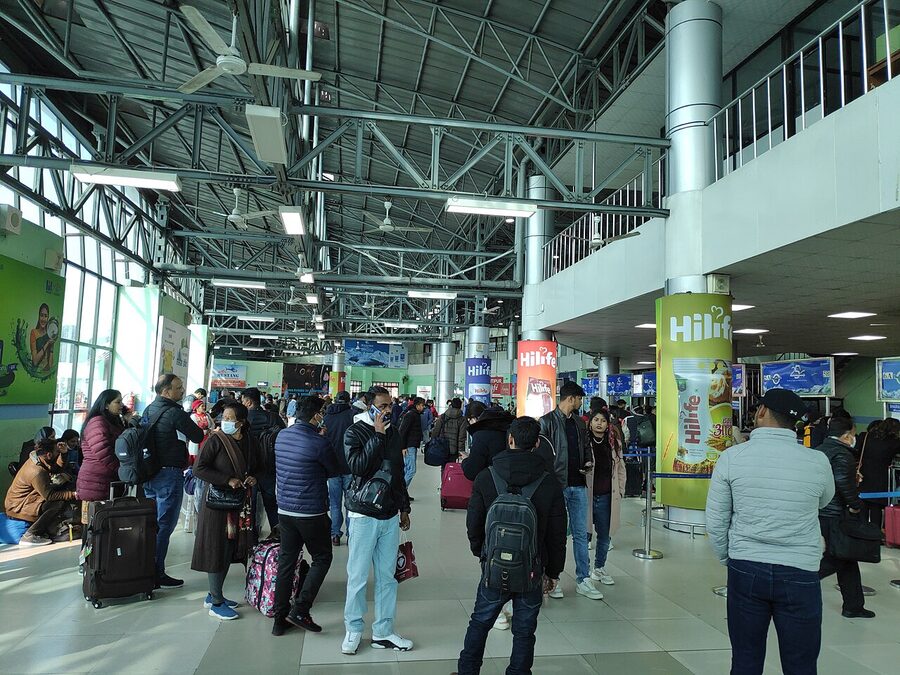
Kathmandu → Pokhara (25 minutes)
The most-flown route in Nepal by a factor of ten. 25 minutes in the air replaces a 7-hour road slog on one of the most landslide-prone highways in South Asia. Buddha Air runs 6–8 rotations daily, Yeti runs 4–6, Shree does 2–3. Expect NPR 5,000–8,000 for Nepali passengers or USD 100–130 for foreigners on standard fares. Book morning flights and sit on the left (A-side) if you want the Annapurna and Machapuchhare on the way in.
Kathmandu → Lukla / Ramechhap → Lukla (35 minutes)
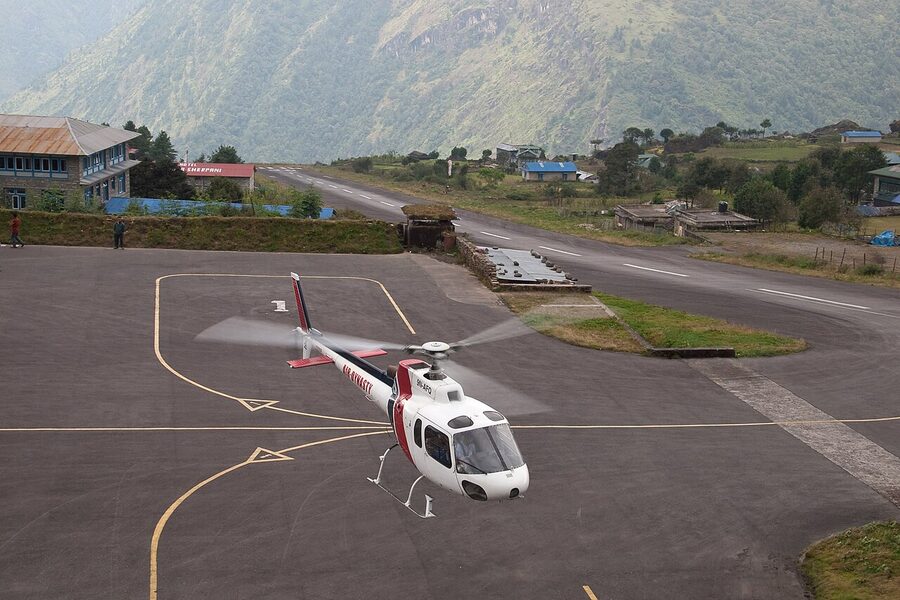
The flight that every Everest Base Camp trekker has taken. Tenzing-Hillary Airport at Lukla is the one with the short sloped runway that made it onto every “most dangerous airport” list ever written. During peak trekking season (March–May and September–November), air traffic control routes all Lukla flights out of Manthali Airport in Ramechhap instead of Kathmandu — you’ll get picked up in a minivan at 3 or 4 AM and driven four hours out of the city, then flown the remaining 20 minutes. Your trekking operator will usually handle the logistics but confirm it in writing before you book flights separately.
Fares: NPR 9,000–12,000 for Nepalis, USD 225–260 for foreigners, one-way. Tara Air and Sita Air are the main operators. Mornings only — afternoon winds at Lukla kill the schedule.
Pokhara → Jomsom (20 minutes)
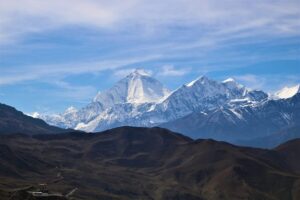
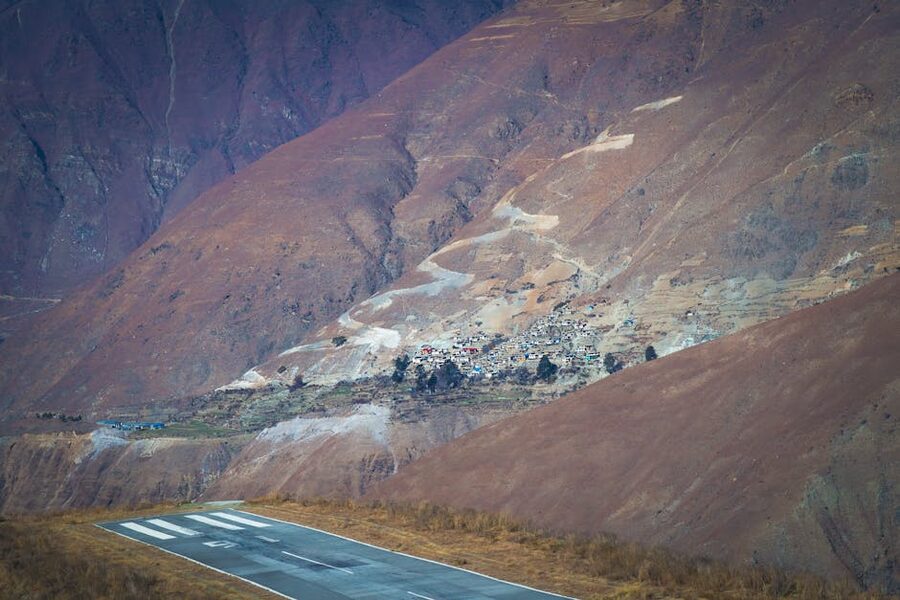
The gateway flight for Mustang, Muktinath, and the upper Annapurna Circuit. 20 minutes between the Annapurna and Dhaulagiri massifs — an aerial canyon run that is genuinely one of the best 20 minutes of flying you’ll ever do. Morning only. Afternoon winds at Jomsom are legendary and the airport closes from about 11 AM. Tara Air operates most departures, with Summit Air on less frequent rotations.
Kathmandu → Nepalgunj (45 minutes)
The gateway to the far-west: Bardiya National Park, onward connections to Simikot (Upper Humla), Jumla (Rara), Juphal (Dolpa), and Dhangadhi. Buddha Air, Yeti, and Shree all serve Kathmandu–Nepalgunj. It’s a Terai-lowlands airport, so the flight itself is unremarkable, but the onward hop to the mountains is where it gets interesting — see our Rara National Park guide for a worked example of the Kathmandu–Nepalgunj–Jumla chain.
Kathmandu → Bharatpur (25 minutes)
The way to Chitwan National Park without doing the 5-hour drive. Buddha Air and Yeti both serve it. 25-minute hop, nothing spectacular on the way in, but it saves you a full day at each end if you’re short on time.
Nepalgunj → Simikot (35 minutes)
Upper Humla — serious remote country, often the start of the Limi Valley trek or the overland route toward Mount Kailash in Tibet. Tara Air operates a handful of rotations per week. Weather-dependent doesn’t begin to cover it — expect cancellations and bring enough cash to cover an extra four days in Nepalgunj if things go sideways.
Scenic mountain flights (1 hour)
Buddha Air, Yeti, and a few smaller operators run “Everest Experience” mountain flights out of Kathmandu — a one-hour eastward loop at around 6,700 m that gets you close to Everest, Lhotse, Makalu, and Cho Oyu without the hassle of actually landing anywhere. $220–$280 for foreigners depending on operator and season. The pilot usually invites passengers up to the cockpit one by one for the money shot. If you’re not trekking to a base camp, this is the way to see the big peaks.
How much it actually costs
Domestic fares in Nepal use a split pricing system — NPR rate for Nepali and Indian nationals (including overseas Indians), USD rate for everyone else. You can’t pick. It’s based on the passport.
Typical foreign-passenger fares one-way in 2026:
- Kathmandu–Pokhara: USD 100–130
- Kathmandu–Lukla: USD 225–260
- Kathmandu–Bharatpur: USD 95–120
- Kathmandu–Nepalgunj: USD 135–170
- Pokhara–Jomsom: USD 140–175
- Nepalgunj–Jumla / Simikot / Juphal: USD 120–160
- Mountain flight (Everest loop): USD 220–280
Nepali-passenger fares are roughly 40–60% of the USD rate. Off-season (December–February, June–August) you’ll see some price relief of 10–20%. Peak trekking-season (March–May and September–November) bookings sell out three to six weeks ahead on Lukla and Jomsom.
Fare classes — what you actually get for your money
Here’s where Nepal’s domestic system gets more interesting than most travellers realise. Every airline has a multi-class fare structure with different cancellation penalties, baggage allowances, and rescheduling rules. Buddha Air runs six classes (Y, A, B, C, D, E). Shree runs six (H, I, B, E, S, T). Tara Air’s structure mirrors Yeti’s.
The general rule: foreigners get exactly one class at a fixed price (Buddha’s Y, Shree’s H). Nepali passengers can bid down through A/B/C/D/E fares with progressively tighter cancellation rules. For most travellers, the only fare class you’ll see is the flexible USD one, so none of this matters until something goes wrong.
When it does matter — you need to change a flight, or a flight gets delayed or cancelled — the cancellation grid looks like this on a Buddha Air Y fare (the foreign-passenger default):
- More than 11 hours before departure: 10% cancellation fee
- Less than 11 hours before departure: 33.33% cancellation fee
- Less than 2 hours before departure: cannot be cancelled (no refund)
- Flight delay of more than 1 hour initiated by airline: full refund on passenger request
Shree Airlines H fare is stricter: 10% up to 12 hours, 33% inside 12 hours, 100% inside 4 hours. Shree’s delay refund threshold is 2 hours (Buddha’s is 1). Fuel surcharges are usually refunded even on non-refundable tickets; airport tax (passenger service charge) always is.
If you’re travelling with kids, children 2–12 get 33% off the Buddha Y fare and 67% of the Shree H fare. Infants under 2 are 10% of the adult fare and don’t get a seat. Nepali senior citizens get 50% off Buddha Y but only through direct sales-office bookings with certification, two seats a day, first-come-first-served.
Baggage — the rules change with the aircraft
Nepal has two effectively separate baggage regimes, and which one applies to you depends entirely on what aircraft you’re boarding.
Short-haul turboprop routes (ATR 72, ATR 42, CRJ): 15–25 kg check-in depending on fare class, 5 kg hand luggage. Overweight fees around NPR 150–300 per kg.
STOL mountain routes (Twin Otter, Dornier, L-410): 10 kg check-in, 5 kg hand. No exceptions, no oversize. If you’re over, you’ll be asked to leave kit behind or pay a steep excess. This is a weight-and-balance issue, not a money issue — the aircraft physically cannot take more without affecting short-field performance.
Leave the oversized trekking duffel in Kathmandu if you’re flying STOL. Pack a 60-litre pack with just the mountain essentials, store the rest at your hotel (most Thamel guesthouses will do this free), and reclaim it when you come back through.
Why your flight will get delayed — the weather rhythms
Weather is the single biggest cause of Nepali domestic flight disruption, and it’s predictable enough that you can plan around most of it.
Mornings clear, afternoons cloudy. This is the reliable pattern from October through May. Ridge-top clouds build through the late morning, and by 11 AM most mountain airstrips are IFR-or-closed. Book any flight that touches Lukla, Jomsom, Simikot, Jumla, or Juphal for an early morning departure. First rotation of the day is the one most likely to go.
Monsoon June–August: this is the worst time to fly internally. Pokhara can be 90% cloud-covered for a week at a time, mountain strips close for days. If you’re booking a trek in this window, build two to four buffer days on either end of any internal flight.
Winter December–February: paradoxically often the best flying weather — long clear stretches when the jet stream sits south — but when it does snow, mountain strips close for a week. Lukla has been shut for 10 straight days in January more than once in the last decade.
The buffer-day rule: for a flight on a city-to-city turboprop route (KTM–Pokhara, KTM–Bharatpur, etc.), no buffer needed. For a flight into a STOL strip (Lukla, Jomsom, Simikot, Jumla, Juphal), add a minimum of one day. For a trek that ends with a STOL flight back and connects to an international departure, add two to three days in Kathmandu before the flight home. Missed international connections are catastrophic — rebooking an intercontinental flight from the ground in Nepal will cost more than the entire trek.
Is it actually safe? The honest answer
Nepal’s domestic aviation has a worse safety record than it should. There’s no useful way around that. The European Union has banned all Nepali-registered airlines from European airspace since 2013 — not because any of them fly to Europe, but because the EU’s Air Safety List is the nearest thing to a global regulator’s verdict on whether a country’s civil aviation authority is doing its job. Being on that list means the EU thinks it isn’t.
The underlying reasons are a mix of hard geography (short runways at altitude, unpredictable mountain weather, terrain that offers few options when an aircraft is in trouble) and fixable institutional problems (training gaps, maintenance shortcuts, regulatory capture). The Civil Aviation Authority of Nepal (CAAN) oversees the industry, but CAAN’s own funding and independence have been criticised in multiple international audits.
Two recent accidents give a sense of the envelope. On 15 January 2023, a Yeti Airlines ATR 72-500 crashed short of the runway at Pokhara with 72 deaths. The final report pointed to the crew inadvertently setting the propellers to feather during approach — a pilot procedural error that’s been targeted by training changes since. On 24 July 2024, a Saurya Airlines CRJ-200 crashed on takeoff from Kathmandu with 18 deaths; loading and trim were under investigation.
That said: millions of domestic flights have operated in Nepal without incident in the last decade, and the accident rate on the short city-to-city turboprop routes (Kathmandu–Pokhara, Kathmandu–Bharatpur) is genuinely not far off regional-aviation rates elsewhere. The higher risk concentrates in a few specific places: short mountain STOL strips, weather-pressured schedules, and the smallest operators with the oldest aircraft.
Practical advice if you want to reduce the risk:
- Pick the big operators first — Buddha Air, Yeti Airlines, and Shree Airlines have the newest fleets, best training programmes, and most robust maintenance. Tara Air (Yeti’s mountain operator) has a reasonable record.
- Book morning flights, especially into any mountain strip. Afternoon weather pressure is where schedules get pushed.
- Don’t combine push-it flights — if your Lukla flight at 6 AM got scrubbed and they’re offering you a 1 PM alternative, the 1 PM is operating at the margins. Take the cancellation and try the next morning.
- Prefer ATR 72/42 city-to-city routes over STOL when you have a choice — it’s a short drive sometimes versus a Lukla flight; the drive is slower but statistically safer.
- Respect the weather call — when a pilot cancels, they’re not being dramatic. The accidents that make the news are almost always on flights that should have been scrubbed.
How to book
Four ways to buy a domestic ticket in Nepal:
1. Airline website direct. Buddha Air, Yeti Airlines, and Shree Airlines all have functional booking engines that accept international credit cards. Tara Air bookings route through Yeti. Summit Air and Sita Air are less foreigner-friendly — sometimes easier through an agent. Prices are identical to what you’d see through an agent for USD fare; there’s no airline-website discount.
2. Travel agent / trekking operator. If you’ve booked any kind of guided trek, the operator will handle domestic flights as part of the package. This is the easiest route for foreign travellers and the operator carries some of the delay risk — if your Lukla flight is scrubbed, it’s their problem to rebook you, not yours at the ticket counter.
3. Airport ticket counters. Walk-up bookings at Kathmandu’s domestic terminal work for same-day flights if there’s space. Cash (NPR) or credit card both fine. Useful if a flight gets cancelled and you need to grab a seat on another airline’s next rotation.
4. Esewa. The largest Nepali payment wallet has a flight-booking feature that most Nepali nationals use. Foreigners can access it with a local SIM and ID, but it’s fiddly — not worth the trouble unless you’re staying long-term.
Regardless of how you book: print a hard copy of the ticket AND have the PDF on your phone. Remote airports sometimes demand physical confirmation. Always carry your passport on domestic flights — it’s the only acceptable ID for foreign passengers.
The window-seat strategy and everything else nobody tells you
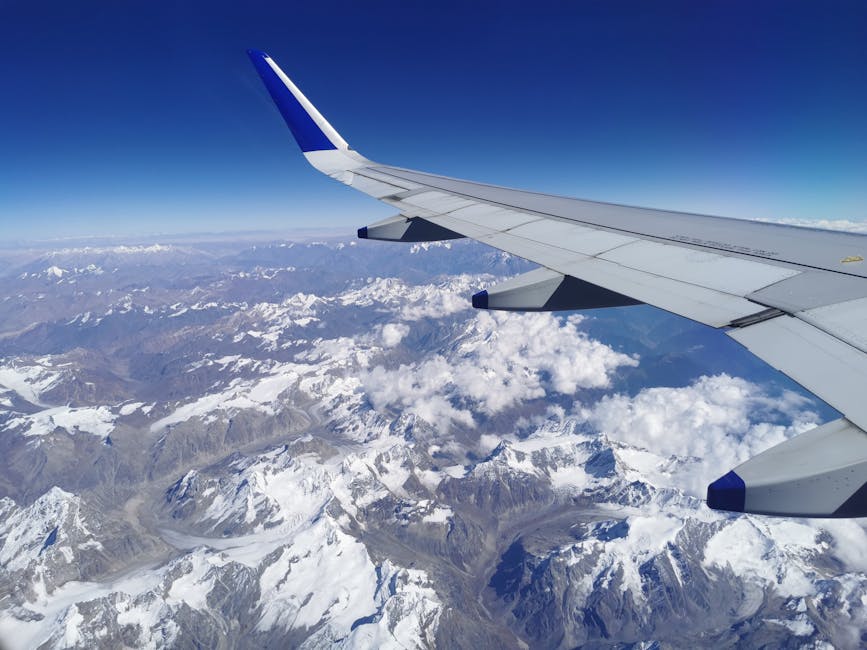
Seat-side strategy: on most turboprops in Nepal, seat A is the left-side window and seat F is the right. For Himalaya views:
- Kathmandu → Pokhara: right side (F) on the way out for the Ganesh Himal and distant Langtang, left side on the way back for the closest Annapurna pass
- Kathmandu → Lukla: left side (A) going in, right side coming out — you want to face the mountains, which are always north of the flight path heading east
- Pokhara → Jomsom: right side (F) going in for the Nilgiri and Dhaulagiri wall, either side coming back
- International arrival into Kathmandu from the west (Dubai, Doha, etc.): right side (F). You’ll see Everest if the weather plays ball.
- Mountain flight Everest loop: left side on the outbound leg, then the captain turns the aircraft and both sides get a view
Cockpit visits on mountain flights: on the Everest loop, the captain invites passengers to the cockpit one at a time for 60 seconds. It happens about halfway through the flight. The queue forms itself — cabin crew will cue you. Say yes.
Lukla-from-Ramechhap logistics: if your trek dates fall in peak season, 80% chance your Lukla flight is from Manthali Airport at Ramechhap, not Kathmandu. This means a 3 AM pickup and a 4-hour drive east before your 20-minute flight. It’s miserable but standard. Bring motion-sickness tablets for the drive — the road past Sindhuli is carved into a cliff and takes it out of you.
Mountain flight captains are actually pilots: unlike some of the “spot the mountain” services in other countries, the people flying Nepal’s scenic mountain loops are experienced line pilots. Ask them questions. Most are happy to chat when the workload is low.
Snacks and water: domestic flights in Nepal have no in-flight service of any kind, not even on an hour-long mountain loop. Bring water and something to eat, especially if you have an early start.
Altitude sickness at high airports: Lukla is 2,845 m. Jomsom is 2,736 m. Simikot is 2,910 m. If you land and immediately feel light-headed, sit down for half an hour before you start walking. Don’t start a trek from a STOL airport the same morning you fly in unless the first day is genuinely flat.
Photography: allowed in-flight on all domestic carriers. Bring a neutral-density filter if you’re shooting out of the cockpit — the direct sun through a windscreen is punishing for sensors.
Putting it all together
Flying within Nepal is never quite routine. The weather has a vote, the aircraft are older than you expect, and the airports that matter most to trekkers are also the ones most likely to close at short notice. But the flying itself — a Twin Otter nosing between two 8,000 m peaks on the way to Jomsom, a Buddha ATR kissing the runway at Pokhara with Annapurna South filling the left-hand windows — is one of the most memorable parts of a Nepal trip. Budget more time than you think you need, book morning, pick the bigger operators when you can, and treat every cancelled flight as the weather doing its job.
The Rara trek, by the way, has three flight segments end-to-end: Kathmandu–Nepalgunj on an ATR 72, Nepalgunj–Jumla on a Twin Otter, and Talcha–Nepalgunj on the way back. Our complete Rara guide covers those segments in detail — worth reading if you’re putting together the Karnali-west itinerary the rest of this site is built around.